
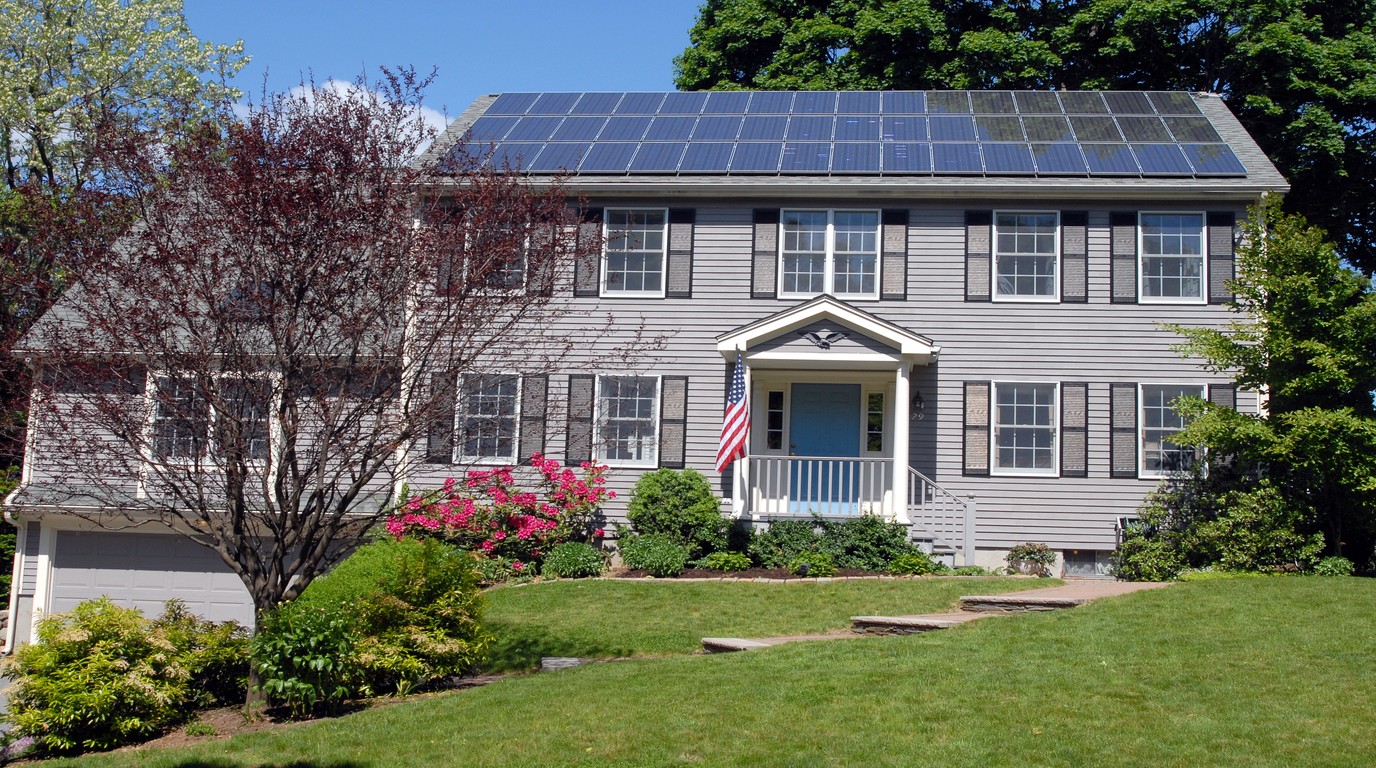
One of the most jarring real-world shocks for residential solar owners occurs during a severe storm: the utility power grid drops, the sun emerges brightly 30 minutes later, yet the entire home remains pitch black. Homeowners reasonably assume that having 8 kilowatts of premium photovoltaic modules soaking up direct midday irradiance should at least illuminate a few LED lamps or run a refrigerator. Instead, the solar inverter sits inert, with a red diagnostic indicator confirming grid disconnection.
Understanding why this happens—and evaluating the modern engineering solutions that unlock battery-free solar backup in 2026—requires dissecting electric code mandates, grid-forming versus grid-following inverter topology, and the physical thermodynamics of microgrids without kinetic or chemical buffers.
Why Do Standard Grid-Tied Solar Panels Shut Down During a Power Outage?
The vast majority of residential solar arrays installed over the past two decades utilize grid-following (grid-tied) inverters. These inverters do not generate their own independent 60 Hz alternating current (AC) reference sine wave. Instead, their internal phase-locked loop (PLL) electronics monitor the utility grid’s voltage, frequency, and phase angle hundreds of times per second, synchronizing photovoltaic output to push excess power outward through the service panel.
When utility power drops, grid-following inverters lose their external reference signal. Under the Institute of Electrical and Electronics Engineers (IEEE) Standard 1547 and Underwriters Laboratories (UL) 1741 certification standards, distributed energy resources are legally and physically required to sever power generation within 2.0 seconds of grid collapse. This mechanism—termed anti-islanding—serves two non-negotiable safety functions:
- Utility Lineworker Safety: If an isolated rooftop array continued injecting 240V AC power into the neighborhood secondary distribution circuit, it could energize a downed distribution transformer. That step-up transformer would boost 240V back up to 7,200V or 14,400V on primary overhead lines, creating a fatal electrocution hazard for emergency line crews repairing downed utility poles.
- Premises Overvoltage and Equipment Protection: Without the massive infinite sink of the utility grid to stabilize voltage, fluctuations in residential power demand against fluctuating rooftop solar production would cause extreme voltage and frequency swings (e.g., soaring above 300V AC or dropping below 90V AC), immediately frying home electronics, HVAC compressors, and consumer appliances.
How Does Sunlight Backup Power Critical Loads Without an Energy Storage Battery?
The breakthrough that changed battery-free solar resilience was the commercialization of digital microinverter signal processing capable of grid-forming operation. Unlike legacy string inverters that require external voltage to operate, grid-forming inverters can synthesize their own rock-solid 60 Hz voltage sine wave from raw direct current (DC) solar photons alone.
To comply with anti-islanding regulations while still supplying power to the home, a sunlight backup system requires three coordinated hardware modules:
- Grid-Forming Microinverters (e.g., Enphase IQ8): Integrated high-speed digital signal processors (DSP) continuously compute current and voltage characteristics, throttling output on a sub-millisecond basis to match instantaneous household demand exactly.
- Microgrid Interconnection Device (MID) / System Controller: A physical contactor switch placed between the main utility electrical meter and the home distribution panel. When utility grid loss is sensed, the MID mechanically uncouples the home within milliseconds, creating a zero-backfeed islanded microgrid as explored in our forensic teardown of Whole-Home Battery Islanding ATS vs. MID Solid-State Relays.
- Critical Loads Subpanel: A dedicated subpanel isolating essential low-draw daytime circuits: refrigerator, modem/router, LED lighting runs, phone charging outlets, and aquarium pumps. Heavy inductive loads (central air conditioning, electric dryers, EV wallboxes) are strictly segregated out.
| Architecture Type | Grid Disconnect Device | Battery Required? | Daytime Surge Capability | Cloud Shadow Behavior | Typical Installed Cost (2026) |
|---|---|---|---|---|---|
| Standard String Inverter (Grid-Tied) | None (Internal trip relay) | No | 0 kW (Complete Shutdown) | N/A (System off) | $0 (Standard system) |
| SMA Sunny Boy Secure Power Supply (SPS) | Manual switch to dedicated outlet | No | 1.9 kW / 15A max (Single outlet) | Outlets cut if irradiance drops below draw | $500 – $1,200 |
| Enphase Sunlight Backup (IQ8 + System Controller 3) | Automated Microgrid Interconnection Device (MID) | No | Up to 4.8 kW (Depending on array size & sun) | Auxiliary load shedding drops non-essential circuits | $4,500 – $7,000 |
| Hybrid Inverter + LFP Battery (Whole-Home) | Automated MID / Smart Transfer Switch | Yes (10 – 30 kWh) | 7.6 kW – 11.5 kW continuous (Sub-second surge) | Seamless zero-flicker battery buffering | $11,000 – $22,000 |
What Are the Technical Limitations and Voltage Collapse Risks of Battery-Free Solar Backup?
While sunlight backup sounds like the ultimate budget-conscious silver bullet, operating an AC microgrid without an electrochemical storage buffer is governed by unforgiving physics. In an electrical network, generation must equal consumption on a continuous, cycle-by-cycle basis.
When you have a battery bank or grid connection, sudden load spikes (such as a microwave starting or a refrigerator compressor engaging) are absorbed by the massive chemical or spinning reserves of the system. Without a battery, the rooftop solar array has zero inertia:
- Motor Inrush Current (Locked Rotor Amps): A typical residential refrigerator may only consume 150 watts while running, but when its compressor kicks on, it demands an instantaneous inrush current of 1,200 to 1,800 watts for 200 milliseconds. If the sun is partially veiled by high cirrus clouds and your array is only generating 800 watts at that second, the microinverters experience severe voltage sag. To prevent thermal destruction, the inverters instantly trip into fault mode, collapsing the microgrid and shutting down the entire home.
- The “Passing Cloud” Microgrid Crash: A cumulus cloud drifting across a solar array can slash irradiance by 70% to 85% in under 3.5 seconds. In a battery-buffered system, the battery instantly ramps discharge to fill the deficit. In a battery-free system, unless the home is equipped with intelligent automated load-shedding contactors that violently drop secondary circuits within 16 milliseconds, the sudden generation deficit forces an immediate frequency drop below 58 Hz, causing the microgrid to collapse.
- Zero Nighttime Resilience: The moment the sun dips below the horizon, power generation ceases completely. A battery-free backup system offers zero comfort during ice storms or nighttime weather crises.
As documented in our technical analysis of Solar Microinverters vs. String Inverters & DC Optimizers, solar designers frequently recommend installing at least a compact 5 kWh or 10 kWh lithium-iron-phosphate (LFP) buffer battery (such as an Enphase IQ Battery 5P) rather than relying exclusively on unbuffered sunlight backup.
Frequently Asked Questions About Solar Backup Without Batteries
Can a solar system power my house during a blackout if I have an SMA Secure Power Supply?
Yes, but only through a single dedicated 120V convenience outlet located adjacent to the inverter. SMA’s Secure Power Supply (SPS) provides up to 15 amps (approx. 1,800 to 2,000 watts) of daytime power directly from string solar panels. It does not power your main electrical panel or hardwired home circuits; you must run extension cords to essential devices, and power shuts off if clouds significantly dim solar output.
Why does adding Sunlight Backup cost $5,000+ if I already have solar panels?
Sunlight Backup requires replacing conventional microinverters with grid-forming IQ8 units, installing a physical System Controller / Microgrid Interconnection Device (MID) to safely disconnect your home from the utility grid, installing a critical loads subpanel, and pulling dedicated copper conductors. The equipment, labor, and electrical permitting account for the $4,500 to $7,000 installed cost.
Can I add a small battery later if I start with battery-free sunlight backup?
Yes. That is the primary architectural advantage of grid-forming AC-coupled microinverter ecosystems. Because the System Controller and critical loads subpanel are already installed and permitted, adding modular AC batteries (such as 5 kWh or 10 kWh LFP packs) is an effortless plug-and-play upgrade requiring no electrical rewiring of your roof modules.