
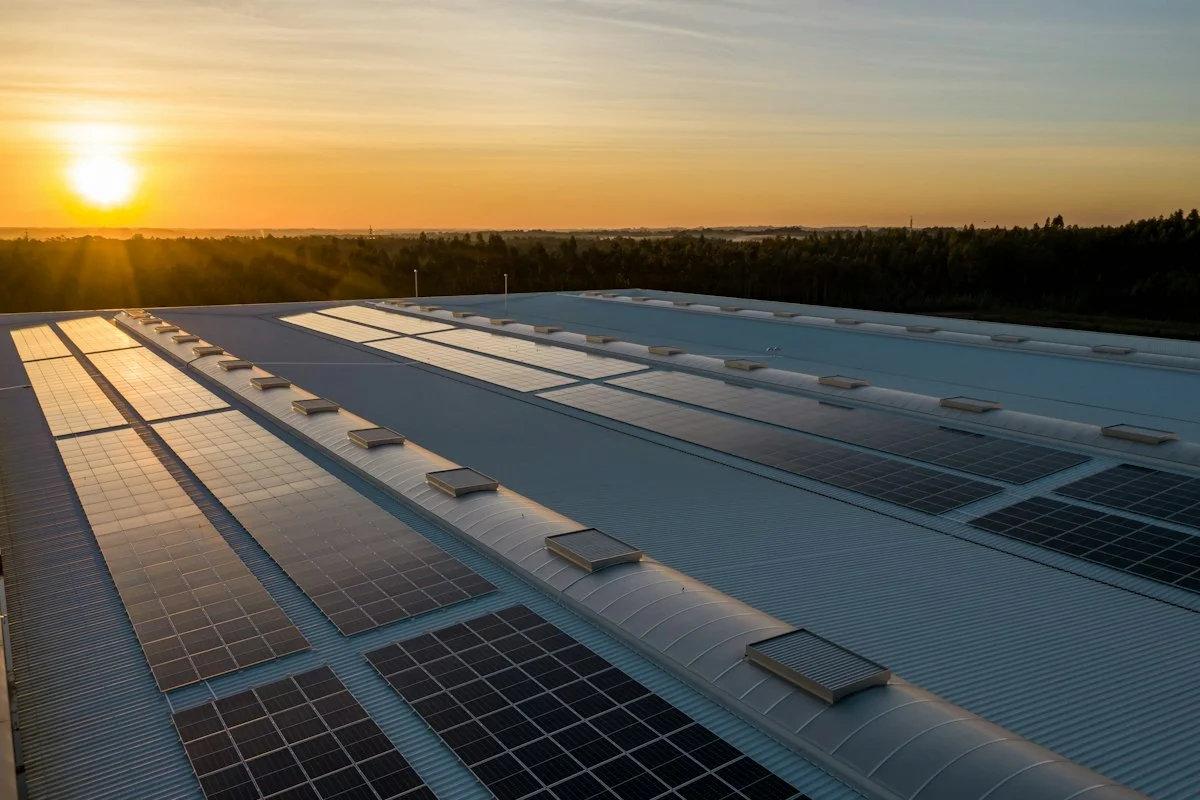
- The Cost-Per-Watt Delta: Standard racked monocrystalline solar panels cost between $2.60 and $3.20 per watt installed. Building-Integrated Photovoltaics (BIPV solar shingles) range from $4.50 to $7.00 per watt installed, representing a 50% to 100% price premium for architectural aesthetics.
- Roofing Lifecycle Synergy: Solar shingles are only economically viable when timed precisely with a planned full roof replacement. Paying to remove an existing 10-year-old asphalt roof to install solar shingles destroys financial return on investment.
- Thermal Ventilation & Efficiency: Traditional racked panels sit 3 to 5 inches above roof shingles, creating a natural thermal chimney that keeps cells cooler. Solar shingles mount flush against roof decking, operating at 15°C–20°C higher temperatures, which reduces electrical output by 5% to 8% due to negative temperature coefficients.
- Solar Policy Links: Cross-link with our solar PPA and lease buyout traps analysis and our NEM 3.0 solar billing and battery storage guide.
For two decades, residential solar adoption has been visually defined by heavy aluminum mounting rails, flashing brackets, and large rectangular glass modules bolted above existing roof shingles. While racked panels deliver unmatched efficiency and lowest cost per watt, many homeowners—and strict Homeowner Associations (HOAs)—resist their utilitarian industrial appearance.
This aesthetic friction fueled the rise of Building-Integrated Photovoltaics (BIPV), led by products like the Tesla Solar Roof and GAF Energy Timberline Solar. Understanding the engineering, financial, and durability tradeoffs determines whether solar shingles represent a smart architectural investment or a financial trap.
Solar Shingles vs. Racked Panels: What Is the Difference?
Solar shingles serve as both the primary water-shedding roof material and the electricity generator, offering a flush, luxury aesthetic that preserves architectural curb appeal. Traditional racked panels cost 40% to 50% less, produce 5% to 8% higher energy yield due to better airflow, and can be easily repaired or upgraded.
Evaluating both technologies requires examining upfront capital costs, installation methods, and long-term durability.
Architectural & Financial Comparison Matrix
The following engineering table outlines the fundamental differences between BIPV solar shingles and traditional roof-mounted panels:
| Evaluation Parameter | Solar Shingles (GAF / Tesla) | Traditional Racked Panels |
|---|---|---|
| Installed Cost per Watt | $4.50 to $7.00 / Watt (including roof) | $2.60 to $3.20 / Watt (panel system) |
| Cell Operating Temperature | High (flush to roof deck, zero airflow) | Moderate (convective cooling underneath) |
| Electrical Conversion Efficiency | 17.0% to 19.5% | 21.5% to 23.0% (Tier-1 TOPCon) |
| Wind & Hail Rating | Class A fire, 130 mph wind, Class 3/4 hail | Class A fire, 140+ mph wind, Class 4 hail |
| Installer Labor Pool | Certified roofing contractors only | Widespread competitive solar installers |
| Individual Module Replacement | Complex (requires un-nailing roofing) | Simple (unclamp single module in 15 min) |
The Thermal Physics Penalty: Why Shingles Run Hot
The primary engineering compromise of solar shingles is thermal management. Monocrystalline silicon cells lose approximately 0.35% of their power output for every 1°C increase in temperature above 25°C. Racked panels sit elevated on aluminum stanchions, allowing wind to circulate beneath the modules and dissipate heat.
Solar shingles, by contrast, are nailed flush against asphalt roofing underlayment and plywood decking. In mid-summer, roof decking temperatures can easily exceed 75°C (167°F). This trapped heat causes shingles to operate in severe thermal derating, reducing peak energy harvest precisely when household air conditioning demand is highest.
When Do Solar Shingles Make Financial Sense?
Solar shingles become financially viable under one specific scenario: your home requires an immediate roof tear-off and replacement, and your local neighborhood architecture or HOA strictly prohibits visible racking.
When you subtract the $15,000 to $25,000 cost of a new architectural asphalt roof from the total BIPV project invoice, the net solar cost-per-watt approaches racked panel parity. Furthermore, in the United States, the federal 30% Residential Clean Energy Credit (Section 25D) can apply to the solar-portion of the roofing installation under specific tax guidance.
If maximizing kilowatt-hour production, financial payback speed, and long-term maintenance simplicity is your primary goal, deploy premium Tier-1 TOPCon racked solar panels on all-black racking. Reserve BIPV solar shingles (such as GAF Timberline Solar) strictly for luxury custom homes undergoing concurrent roof replacement where HOA restrictions or historical neighborhood aesthetics mandate an invisible flush roofline.