
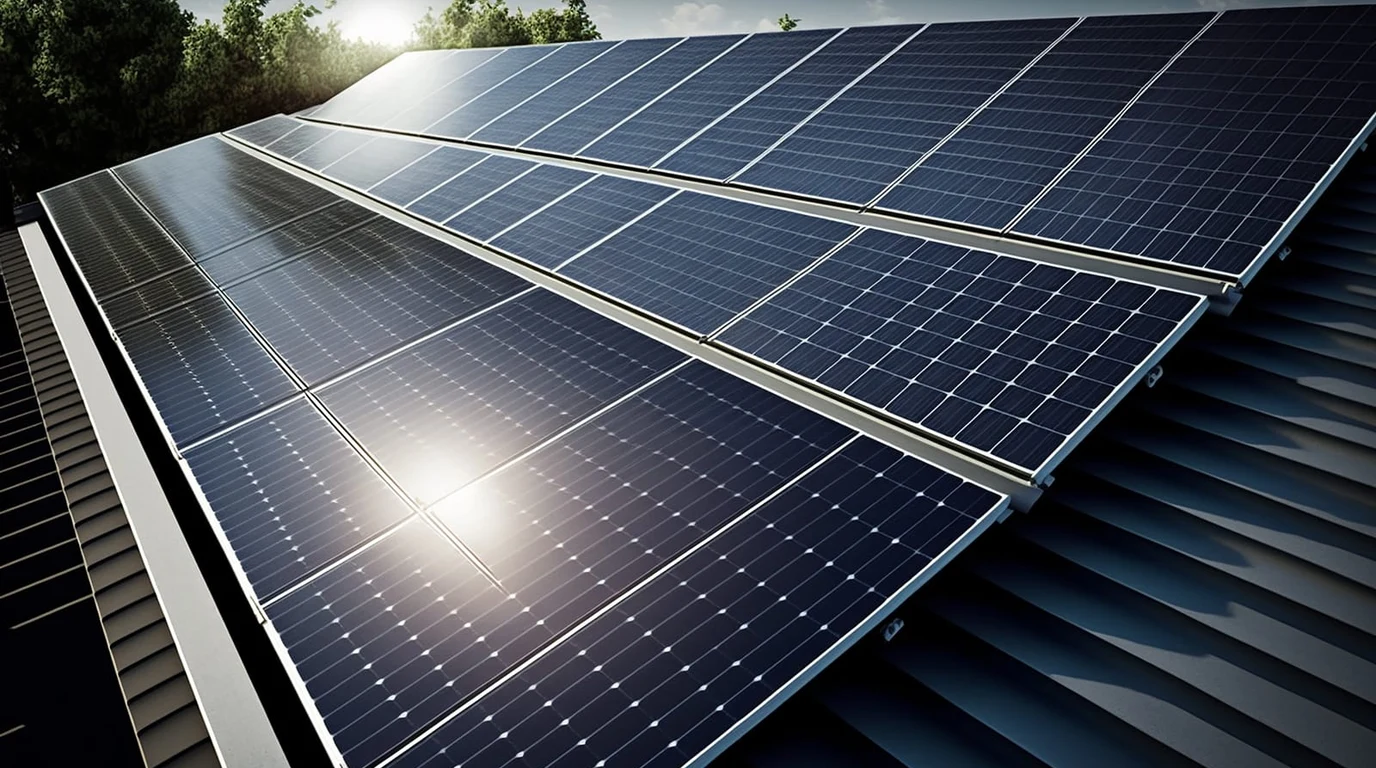
Across kitchen tables and aggressive door-to-door sales pitches, residential solar power is routinely sold with a seductively simple promise: ‘Put zero dollars down, get free solar panels installed on your roof tomorrow, and swap your unpredictable utility electric bill for a lower, fixed monthly rate.’ For cash-constrained homeowners facing soaring utility rates, a Power Purchase Agreement (PPA) or long-term third-party solar lease sounds like a financial windfall.
What the sleek sales presentation glosses over in the 40-page contract fine print is the mathematical time bomb buried inside: The Annual Rate Escalator. Typically set between 2.9% and 3.9% compounded annually, this escalator clause guarantees that the price you pay per kilowatt-hour of solar energy marches upward every single year for 25 consecutive years, regardless of utility grid prices, technology deflation, or system degradation. By year 15, millions of PPA signers discover their ‘cheap’ solar power costs more than the local utility rate, while encumbering their home title with a UCC-1 fixture filing that terrifies mortgage underwriters and blocks home sales.
This forensic financial analysis compares the true 25-year total cost of ownership (TCO) across three solar acquisition models: Cash Purchase, Fixed-Rate Solar Loan, and Solar PPA with Escalator. We model the compounded inflation curves, deconstruct contract buyouts, and outline the quantitative rules of engagement before you sign any residential energy contract.
- 25-Year Cumulative Cost Delta: For an 8 kW system, a Cash Purchase totals approximately $17,500 after the 30% federal tax credit, while a 2.9% escalating PPA forces the homeowner to pay between $54,000 and $68,000 over 25 years.
- The Escalator Math: A PPA that starts at an attractive $140/month at a 3.5% escalator compounds to $232/month by Year 15 and balloons to $331/month by Year 25.
- Home Resale Value Penalty: Over 45% of home buyers in major markets refuse to assume an inherited solar PPA contract, forcing sellers to pay a $15,000 to $25,000 cash buyout at closing to clear title.
What Is the Difference Between a Solar PPA, Solar Loan, and Cash Purchase?
The distinction between owning your energy asset and renting your roof to a corporate utility intermediary is the fundamental divide in residential clean energy economics. When you purchase a solar array with cash, your Levelized Cost of Energy (LCOE) is locked on Day 1. If an 8 kW system costs $25,000 before incentives, the 30% residential clean energy credit (Section 25D) drops the net cost to $17,500. Producing an average of 11,500 kWh annually over a 25-year warranted lifecycle yields an effective electricity cost of $0.061 per kilowatt-hour—permanently insulated from utility inflation.
In a Power Purchase Agreement, you own nothing. The PPA provider (e.g., Sunrun, Sunnova, or regional leasing entities) acts as an independent power producer. They claim the 30% federal investment tax credit, monetize accelerated depreciation (MACRS) through corporate tax equity partnerships, and retain all local Solar Renewable Energy Certificates (SRECs). In exchange, they agree to sell you the electricity the panels produce at a set price per kWh—for example, $0.18/kWh when the local utility charges $0.24/kWh. On the surface, you save 25% on Day 1 with zero upfront capital expenditure.
The 25-Year Compound Escalator Trap: Modeling the Mathematics
The danger lies in the compounding escalator clause. Most PPA contracts feature a mandatory annual rate increase of 2.9% to 3.9%. While 2.9% sounds modest in isolation, compound interest is a relentless financial force.
The table below models a typical residential 8.0 kW system generating 11,500 kWh annually, comparing Cash Purchase against a 2.9% escalating PPA and a 3.5% escalating PPA over a 25-year timeline:
| Timeline Milestone | Cash Purchase (Net $17,500) | PPA @ 2.9% Escalator | PPA @ 3.5% Escalator |
|---|---|---|---|
| Year 1 Monthly Bill | $0 / month (Paid in full) | $145 / month ($0.151/kWh) | $145 / month ($0.151/kWh) |
| Year 10 Monthly Bill | $0 / month (System paid off) | $189 / month ($0.197/kWh) | $197 / month ($0.206/kWh) |
| Year 20 Monthly Bill | $0 / month (Pure profit) | $251 / month ($0.262/kWh) | $278 / month ($0.290/kWh) |
| Year 25 Monthly Bill | $0 / month | $290 / month ($0.303/kWh) | $330 / month ($0.344/kWh) |
| Total 25-Year Payments | $17,500 net capital outlay | $63,140 total paid | $68,480 total paid |
The Real Estate Nightmare: UCC-1 Filings and Contract Transfers
Beyond the catastrophic cumulative cash outlay, the most acute pain point of a solar PPA arises when the homeowner attempts to sell their house. The average American homeowner stays in a home for 8 to 12 years—less than half the duration of a 25-year solar contract.
When you sign a PPA, the solar leasing company files a **UCC-1 Financing Statement** (a fixture filing) against your property title with the county recorder. When a prospective buyer submits an offer, their mortgage underwriter runs a title search and flags the fixture filing. The buyer must agree to submit their credit report to the solar company and formally assume the remaining 15 years of escalating monthly payments.
In competitive real estate markets, informed buyers routinely refuse: ‘Why would I take on a $240/month contract for 10-year-old solar panels when I could buy modern panels for half that price?’ If the buyer refuses, the home sale collapses unless the seller exercises the contract’s Early Buyout Clause. Under PPA terms, early buyouts are priced at ‘Fair Market Value’ calculated by the solar provider’s appraisers, routinely requiring the seller to write a check for $18,000 to $28,000 at the closing table just to remove the title encumbrance.
When Does a PPA Make Sense? The Narrow Exceptions
While escalating PPAs are predatory for prime-credit single-family homeowners, third-party ownership does serve a legitimate economic role in two specific scenarios:
- Zero Tax Liability (Retirees & Non-Profits): The federal Section 25D tax credit is non-refundable. If a retired homeowner has zero taxable income, they cannot monetize the 30% tax credit. A 0% escalator PPA (where rates remain flat for 25 years) allows the corporate provider to monetize the tax credit and pass a portion of savings down through lower fixed rates.
- High Commercial Utility Rates with Flat PPA Terms: If a homeowner negotiates a 0.0% escalator PPA in California or Hawaii where utility rates already exceed $0.40/kWh, a flat $0.18/kWh rate can deliver meaningful cash savings without future escalation traps.
For more forensic analyses on clean energy financial modeling and solar asset management, explore our investigation on Solar PPA & Lease Buyout Traps: Real Estate Transfer Forensics and cross-reference our guide on Time-of-Use Battery Arbitrage: Peak Shaving ROI Math.
Never sign a residential solar PPA with an annual escalator clause. The illusion of ‘free solar panels’ will cost you over $60,000 in long-term energy payments, surrender tens of thousands in federal tax credits to corporate intermediaries, and jeopardize your home’s resale value. If you can afford cash or secure a low-interest solar loan through a local credit union, own your clean energy assets directly. If a PPA is your only financial option, demand a strict 0.0% escalator contract and verify buyout terms before signing.
Residential Clean Energy ROI & Capital Expenditure Audits
Before allocating capital to emergency power resilience, audit your primary solar ownership structure to maximize tax credits and equity returns. Review our PPA forensics: