
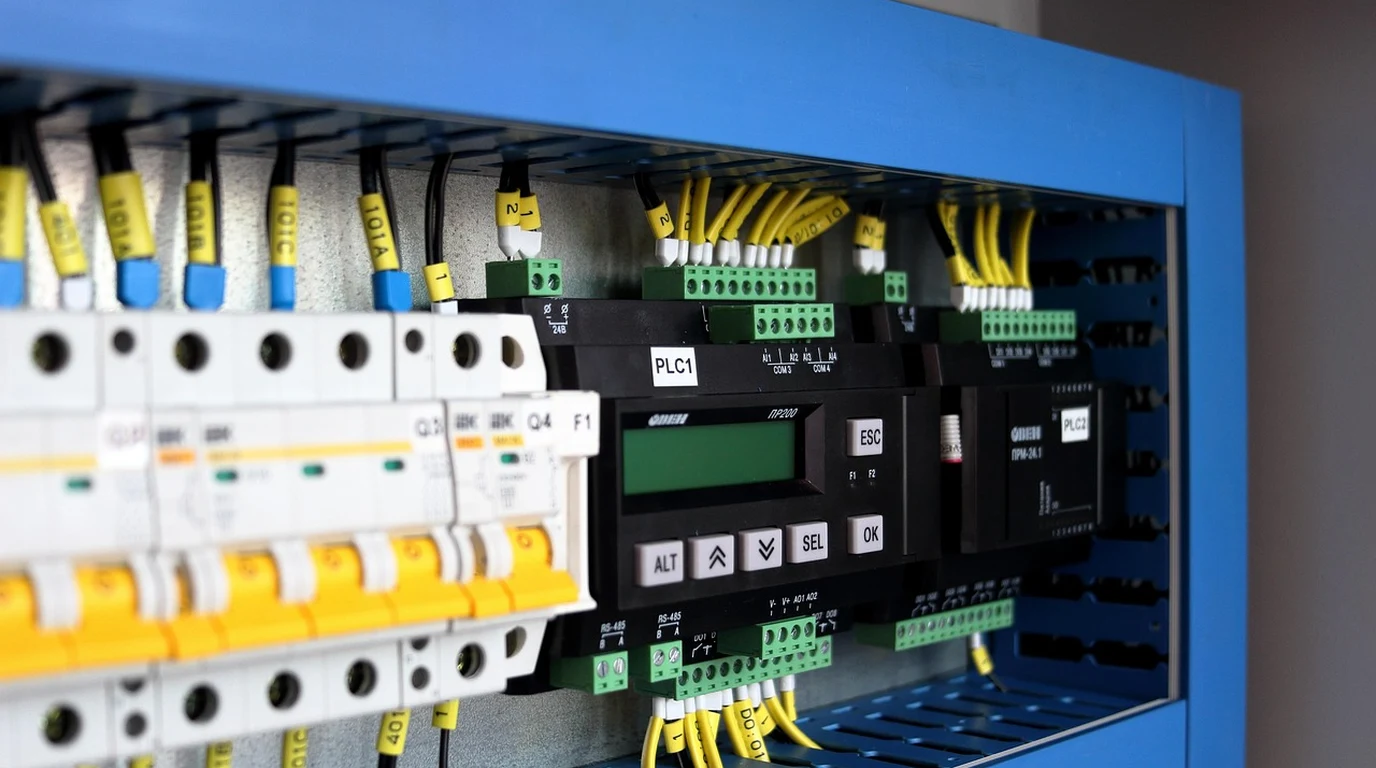
In the rapid transition toward whole-home electrification—integrating Level 2 electric vehicle chargers, cold-climate heat pumps, induction cooking ranges, heat pump water heaters, and bidirectional battery storage—residential electrical infrastructure has hit a hard physical wall. For over seventy years, the residential electrical breaker panel remained a purely mechanical, dumb metal enclosure filled with thermal-magnetic bi-metal breakers that performed exactly one function: physically tripping when downstream wire temperatures exceeded fire safety thresholds. In a modern electrified home, this dumb infrastructure is an operational bottleneck. When an electrical service load calculation indicates that adding an EV charger and an induction stove exceeds a home’s existing 100A or 200A utility service drop, utilities routinely demand a costly, bureaucratic Main Panel Upgrade (MPU)—costing between $4,000 and $10,000 and requiring months of utility engineering review. The modern engineering solution that eliminates utility service upgrades while unlocking autonomous microgrid orchestration is the Smart Electrical Panel. Led by innovators such as Span.io, Leviton Smart Load Center, and Schneider Electric / Square D Energy Center, smart panels replace analog breakers with solid-state, software-defined digital circuit control. Here is Graham Ward’s comprehensive hardware breakdown of smart panels, technical comparison matrices, dynamic load shedding algorithms, and whole-home energy ROI.
What is a Smart Electrical Panel and How Does It Prevent Service Upgrades?
To understand the revolutionary economics of smart panels, one must examine how electrical inspectors and engineers calculate household service sizing under the National Electrical Code (NEC Article 220). Traditional electrical code calculations assume a static worst-case scenario: the formula assumes that every high-draw appliance in the home—the oven, dryer, heat pump, water heater, and car charger—could turn on at the exact same minute.
Under this static calculation, a fully electrified home routinely calculates out to 240A or 280A of required service, forcing a 100A or 200A home into a mandatory utility service upgrade. In real-world living, these appliances almost never run simultaneously at maximum output. Under NEC Section 220.70 (Energy Management Systems) and Section 750, inspectors permit the installation of an approved Energy Management System (EMS). A smart panel functions as an approved EMS: if the electric vehicle is charging at 48A (11.5 kW) and the homeowner turns on an induction cooktop and oven, the smart panel’s internal computer instantly throttles the EV charger down to 16A or pauses it entirely, keeping total service draw safely beneath the 200A threshold.
Hardware Architecture Comparison: Span.io vs Leviton vs Schneider Pulse
| Smart Panel Hardware | Circuit Switching Architecture | Circuit-Level Metering | Battery Integration Depth | Hardware Price Point |
|---|---|---|---|---|
| Span.io (Span Gen 2 Panel) | 32 Fully Integrated Solid-State Relays | Revenue-Grade on ALL 32 circuits | Universal (Tesla, Enphase, Franklin, SolarEdge) | High (~$3,500 – $4,500 panel only) |
| Leviton Smart Load Center | Modular Smart Hydraulic-Magnetic Breakers | Per-breaker via modular smart plugs | Moderate (Third-party ATS required) | Moderate (~$1,800 + $80/smart breaker) |
| Schneider Electric / Square D Pulse | Hybrid Smart Relays + QO Breakers | Selected smart circuit branches | Deep (Schneider Boost & Invert eco) | Moderate (~$2,200 – $3,000) |
Microgrid Superpower: Extending Battery Backup Runtime by 200%
Beyond utility service management, the most transformative capability of a smart panel emerges during a grid outage. In a traditional battery backup installation, the installer creates an isolated “critical loads subpanel” containing 6 to 8 hardwired circuits (refrigerator, internet, a few lights, and well pump). If you want to change what circuits are backed up during an extended blackout, you must physically hire an electrician to rewire breakers.
With a smart panel like Span.io, every circuit in your home is backed up. You control load shedding dynamically from your smartphone app:
- Must-Have Circuits: Set to stay on continuously (medical equipment, refrigeration, internet router, essential heating).
- Nice-to-Have Circuits: Allowed to run when battery state-of-charge (SoC) is above 50%, but automatically severed when battery capacity drops below 50% (living room TV, kitchen outlets).
- Non-Essential Circuits: Instantly shed the millisecond the utility grid fails (EV charger, guest bedroom AC, pool pump).
By automatically shedding heavy non-essential loads, a modest 10 kWh to 15 kWh battery storage system that would normally deplete in 6 hours of unmanaged whole-home consumption can easily sustain a home for 48 to 72 hours of essential comfort and security.
Dynamic Sub-Panel Retrofits vs Full Panel Replacement
When evaluating smart panel economics, homeowners have two installation pathways: a Complete Service Panel Replacement (removing the old breaker panel entirely and installing a 32-circuit smart panel like Span.io) or an Add-On Modular Smart Monitor / Subpanel (such as Lumin Smart Panel or Leviton Smart Breakers).
A full panel replacement represents the cleanest, most capable architectural solution, providing revenue-grade energy metering and digital control across all 32 circuits. However, it requires extensive electrical labor: pulling all existing Romex home-run wiring out of the old enclosure and landing them on the new smart busbar, often requiring 12 to 16 hours of master electrician labor. For homeowners with newer existing breaker panels, modular smart subpanels or smart clamp-on energy monitors (e.g. Emporia Vue 3) provide a cost-effective alternative, delivering dynamic load monitoring and selected circuit shedding at less than half the total installed cost.
Smart Panel Utility Integration: Virtual Power Plants (VPPs)
In addition to household-level optimization, smart electrical panels represent the bridge to Grid-Interactive Efficient Buildings (GEBs) and Virtual Power Plants (VPPs). Forward-thinking utilities actively partner with smart panel manufacturers, offering cash incentives and monthly bill credits to homeowners who allow the utility to orchestrate minor, non-disruptive load shedding during regional grid emergencies.
When the regional grid experiences peak summer demand, the utility signals the smart panel via secure cellular APIs. The panel automatically pre-cools the home before the event, pauses pool pumps, and throttles EV charging for two hours, stabilizing the bulk power grid while putting hundreds of dollars in grid-service revenues directly back into the homeowner’s pocket.
Local Processing vs Cloud Dependency in Smart Panels
A critical architectural vulnerability in many consumer IoT devices is complete reliance on external cloud servers. If the internet connection drops during a severe storm, cloud-dependent devices cease functioning. In an electrical infrastructure device managing home energy during a disaster, cloud dependency is unacceptable.
High-reliability smart panels like Span.io execute all core load management, automated shedding algorithms, and local circuit switching 100% on-device via internal embedded microprocessors. The panel communicates locally with home battery systems over RS-485 Modbus or hardwired Ethernet. Even if cellular towers collapse and home fiber broadband is severed, the smart panel continues autonomously orchestrating microgrid load priorities, protecting batteries from overload and ensuring vital circuits remain energized throughout the blackout.