
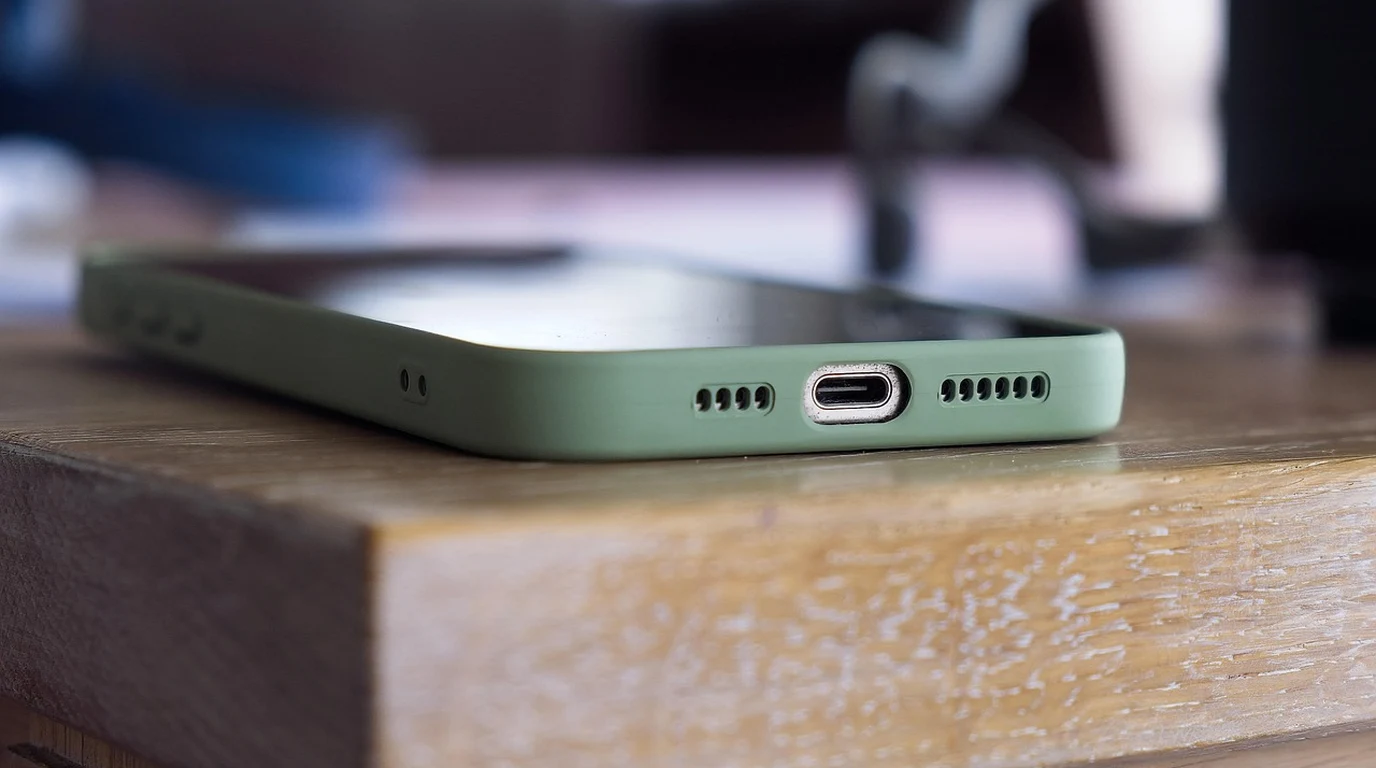
For more than a decade, electric vehicle ownership has followed a unidirectional energy paradigm: electricity flows from the centralized power grid, travels through residential Level 2 wall connectors or commercial DC fast chargers, and is stored as direct current inside the vehicle’s massive lithium-ion traction battery. However, from a macro energy systems perspective, a parked electric vehicle represents an astonishing, untapped energy reservoir. A typical modern EV battery pack stores between 60 kWh and 130 kWh of usable energy—enough electrical storage to power an average North American household for three to seven continuous days. Today, the clean energy revolution is crossing its most profound threshold: the commercialization of Vehicle-to-Home (V2H) and Vehicle-to-Grid (V2G) Bidirectional Charging. By enabling electrons to flow in reverse—extracting DC energy from the EV battery, converting it into split-phase 120/240V AC power, and feeding it directly into the residential electrical panel—bidirectional charging transforms an electric car into a massive whole-home backup battery on wheels. However, navigating bidirectional charging requires mastering a complex convergence of hardware standards and software communication protocols: the standardization of the North American Charging Standard (NACS / SAE J3400), the digital handshake protocols of ISO 15118-20, DC-coupled versus AC-coupled bidirectional inverters, and battery degradation impacts. Here is Graham Ward’s engineering guide to V2H bidirectional charging architecture, communication standards, and home electrification integration.
What is V2H Bidirectional Charging and How Does the Digital Handshake Work?
The engineering challenge of bidirectional charging lies in the complexity of the safety and communication interface. When an EV charges unidirectionally via basic AC Level 2, the interaction is simple: the J1772 or NACS control pilot pin transmits a basic pulse-width modulation (PWM) square wave indicating the maximum allowable circuit amperage (e.g. 32A or 48A), and the vehicle’s onboard AC-to-DC charger pulls current.
In bidirectional V2H operation, the vehicle’s high-voltage DC contactors must close to export high-voltage direct current (typically 400V to 800V DC) directly out of the battery pack through the charge port to an external, wall-mounted bidirectional inverter. This requires an advanced cryptographic digital communication protocol: ISO 15118-20 (Road vehicles — Vehicle to grid communication interface). Under ISO 15118-20, the vehicle and home energy management system establish an encrypted IP connection over the Control Pilot pin using HomePlug Green PHY Powerline Communication (PLC). The protocol negotiates real-time power limits, verifies ground fault isolation, synchronizes grid-forming frequency, and executes automated safety disconnects in less than 20 milliseconds if a fault occurs.
Hardware Topology: DC-Coupled Off-Board Inverters vs AC Onboard Inverters
| Bidirectional Topology | Power Inversion Location | Vehicle Hardware Burden | Continuous Output Capacity | Market Examples |
|---|---|---|---|---|
| DC Off-Board Architecture (Recommended) | Wall-Mounted Bidirectional Inverter | Low (Closes DC contactors to pins) | High: 9.6 kW to 19.2 kW continuous | Ford Charge Station Pro, Enphase Bidirectional, Tesla Cyberbeast |
| AC Onboard Architecture | Inside the Vehicle (Bi-directional OBC) | High (Heavy, costly onboard inverter) | Moderate: 3.6 kW to 7.2 kW | Hyundai/Kia V2L (E-GMP), Renault 5 |
The SAE J3400 (NACS) Consolidation: Unifying the Charging Connector
Until recently, bidirectional charging in North America was crippled by connector fragmentation. Japanese automakers (Nissan Leaf, Mitsubishi Outlander PHEV) utilized the aging CHAdeMO connector, which natively supported bidirectional power flow. Meanwhile, European and American automakers utilized the CCS1 (Combined Charging System Type 1) port, which required cumbersome multi-pin configurations.
The universal adoption of the SAE J3400 standard (Tesla NACS connector) across all major automakers—including Ford, GM, Hyundai/Kia, BMW, Toyota, Rivian, and Volvo—has permanently unified the physical interface. SAE J3400 utilizes the exact same two primary pins for both AC charging and high-voltage DC fast charging/discharging. Under the J3400 specification, bidirectional DC export is fully supported, allowing a single, compact, ergonomic NACS plug to deliver high-speed charging while seamlessly exporting up to 80A of DC current back into the home energy management gateway.
Battery Longevity and Warranty Realities: Does V2H Degrade Your EV?
A prevalent fear among EV owners is that discharging vehicle battery energy to power their home will accelerate battery degradation, destroying vehicle range and voiding manufacturer warranties. Empirical degradation studies conducted by battery laboratories (including NREL and Dalhousie University) demonstrate that V2H discharge creates minimal, near-negligible battery capacity degradation.
The reasoning is rooted in discharge C-rates. When an electric vehicle accelerates on a highway or climbs steep mountain grades, the battery pack discharges at rates between 1C and 3C (100 kW to 300 kW), generating substantial internal heat and mechanical electrode stress. When powering a home, a typical whole-home continuous draw is between 2 kW and 6 kW. Discharging a 80 kWh battery pack at 4 kW represents a benign 0.05C discharge rate. Operating at 0.05C produces virtually zero internal ohmic heating and maintains gentle electrochemical equilibrium.
Microgrid Islanding Safety: UL 1741 CRD and Anti-Islanding Protections
When an electric vehicle exports power to an isolated home during a utility blackout, strict electrical safety codes govern the boundary between the home and the public grid. Under UL 1741 CRD (Certification Requirement Decision) and NEC 705.13, a bidirectional V2H system must incorporate an approved Microgrid Interconnection Device (MID) or Automatic Transfer Switch (ATS).
The moment utility voltage drops below nominal limits, the MID mechanically severs the physical connection between the home’s electrical panel and the utility distribution transformer within 16 milliseconds. This rapid physical disconnection prevents Unintentional Islanding: backfeeding electricity into downed neighborhood utility powerlines, which would create lethal electrocution hazards for utility lineworkers executing repairs. Only when the home is physically isolated does the bidirectional inverter signal the EV to close its high-voltage DC contactors and begin energizing residential circuits.
Economic ROI: The Financial Value of Bidirectional Fleet Power
The economic value of V2H bidirectional charging extends far beyond emergency blackout security. In commercial and residential fleet operations, bidirectional charging unlocks lucrative revenue streams through Automated Peak Shaving and Demand Response Programs.
For a household with two electric vehicles parked in the garage overnight, the combined battery capacity represents 150 kWh to 200 kWh of flexible clean energy. During extreme heatwaves when regional electricity grids face rolling blackouts and wholesale electricity prices spike to thousands of dollars per megawatt-hour, bidirectional energy management systems can export a modest 20 kWh to 30 kWh back to the grid during peak pricing windows. Participating in utility virtual power plants transforms an electric vehicle from a passive transportation asset into an active, revenue-generating distributed energy power station.
As international automakers standardize on NACS hardware and utilities deploy bi-directional grid tariffs, vehicle-to-home charging is positioned to become standard equipment in the electrified residential home.