
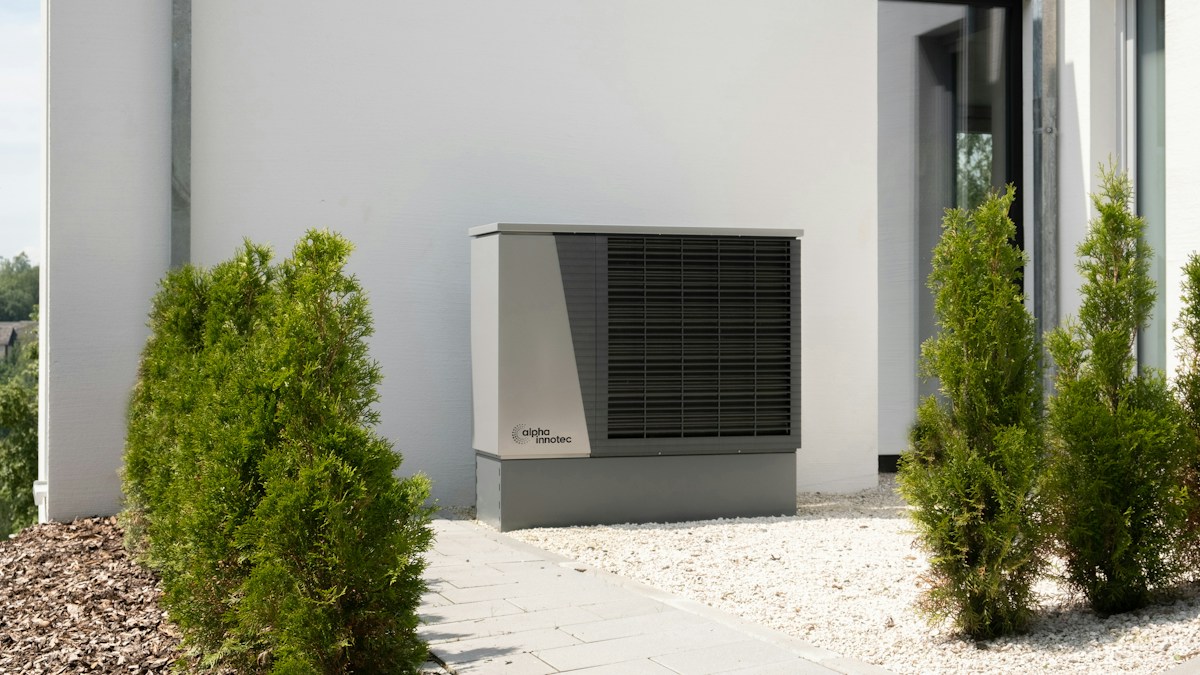
Heat pump water heaters (HPWH) operating in 2026 deliver a Uniform Energy Factor (UEF) between 3.75 and 4.05—slashing domestic water heating electrical consumption by 72% to 78% relative to standard electric resistance tanks. However, real-world thermodynamic performance hinges on ambient basement intake air temperatures, refrigerant thermodynamic limits (R-134a vs. R-513A vs. CO2 R-744), and compressor acoustic decoupling. For sub-zero ambient basements or unconditioned utility closets, the SANCO2 transcritical split system outpaces unitary hybrid tanks like the Rheem ProTerra and A.O. Smith Voltex by decoupling the heat absorption loop entirely to an outdoor inverter compressor.
- Thermodynamic Efficiency Floor: Unitary hybrid systems (Rheem ProTerra 80-gal and A.O. Smith Voltex 80-gal) achieve UEF ratings of 4.07 and 4.02 in Heat Pump Only mode at 68°F (20°C) ambient, but COP degrades from 3.85 down to 1.85 when ambient air drops to 37°F (2.8°C), forcing resistance element engagement below 35°F.
- Transcritical CO2 Advantage: The SANCO2 split architecture utilizes pure R-744 (CO2) in a transcritical cycle with a continuous gas cooler, delivering true heat-pump-only 150°F (65.5°C) water at outdoor ambient temperatures as low as -25°F (-31.7°C) with zero auxiliary electric resistance elements.
- Parasitic Cooling Load Physics: An 80-gallon unitary heat pump water heater extracts approximately 14,000 to 18,000 BTU/day from surrounding indoor air, generating a persistent 400–600 CFM cold air discharge at 45°F to 52°F that increases space heating loads during northern winter months unless dedicated exterior ducting is installed.
- Grid Integration & TOU Preheating: Integrated CTA-2045 and EcoNet/OpenADR protocols enable aggressive thermal energy storage, allowing households to preheat 80 gallons to 140°F during off-peak solar windows, eliminating 100% of peak evening grid power draw.
Direct Navigation: System Comparison Matrix | Refrigerant Thermodynamics & COP Curves | Basement Parasitic Cooling & Ducting | TOU Economics & Thermal Storage | Graham Ward’s Verdict | Engineering FAQ
2026 Residential Heat Pump Water Heater Benchmark
Evaluating heat pump water heaters requires analyzing first-hour ratings (FHR), compressor operating envelopes, standby thermal loss rates, and electrical service demands across unitary hybrid and split transcritical architectures.
| Architecture Specification | Rheem ProTerra Hybrid (80 Gal) | A.O. Smith Voltex AL Hybrid (80 Gal) | SANCO2 Split System (83 Gal) |
|---|---|---|---|
| System Topology | Unitary Hybrid (Top-Mount Compressor) | Unitary Hybrid (Top-Mount Compressor) | Split System (Outdoor Unit + Indoor Tank) |
| Refrigerant & GWP | R-134a / R-513A (GWP: 631) | R-134a / R-513A (GWP: 631) | R-744 Pure CO2 (GWP: 1.0) |
| Uniform Energy Factor (UEF) | 4.07 UEF | 4.02 UEF | 3.80 – 4.20 Equivalent (COP 3.5–5.0) |
| First Hour Rating (FHR) | 87 Gallons | 86 Gallons | 102 Gallons (Pure HP recovery) |
| Low-Ambient Cutoff Threshold | 37°F (2.8°C) fallback to resistance | 37°F (2.8°C) fallback to resistance | -25°F (-31.7°C) Pure Heat Pump Operation |
| Auxiliary Heating Elements | Dual 4.5 kW Copper/Incoloy | Dual 4.5 kW Incoloy | None (0 kW resistance elements) |
| Electrical Service Requirement | 240V / 30A (or dedicated 120V 15A plug-in) | 240V / 30A | 208/240V / 15A dedicated outdoor circuit |
| Acoustic Emission (dBA) | 45–49 dBA at 3 feet | 45–51 dBA at 3 feet | 37 dBA outdoor unit; Silent indoors |
| Installed Equipment Cost (2026) | $2,400 – $3,100 | $2,300 – $2,950 | $5,200 – $6,800 |
Refrigerant Thermodynamics: Subcritical Fluorocarbons vs. Transcritical CO2
The vast majority of residential hybrid water heaters on the market in 2026 utilize subcritical vapor-compression cycles charged with either R-134a or lower-GWP transition hydrofluoroolefins (HFO) like R-513A. While these refrigerants are cost-effective and operate at manageable working pressures (sub-300 PSI), their thermodynamic profile creates an inherent pinch-point limitation when heating domestic potable water.
In a subcritical cycle, the refrigerant condenses at a constant temperature. Transferring heat to domestic water—which enters the bottom of the tank at 45°F to 55°F and must be raised to 125°F to 140°F—results in large thermodynamic irreversibilities (entropy generation) across the wrap-around tank condenser heat exchanger. Furthermore, as explored in our forensic teardown of cold-climate heat pump COP curves at -25°C, standard fluorocarbon refrigerants experience steep density drop-offs on the suction side when ambient temperatures plunge, dramatically starving compressor mass flow.
Consequently, both the Rheem ProTerra and A.O. Smith Voltex must initiate safety compressor de-rates when the ambient air drawn into their evaporator drops below 40°F (4.4°C). When intake air hits 37°F (2.8°C), the onboard microcontrollers engage electric resistance mode, energizing the top 4.5 kW immersion element. At that transition point, electrical power demand spikes from 420W (pure compressor run) to 4,500W—collapsing your real-time Coefficient of Performance (COP) from 3.8 down to a flat 1.0.
In contrast, the SANCO2 system employs a transcritical CO2 (R-744) cycle operating above the thermodynamic critical point (87.8°F / 31.0°C and 1,070 PSI). In the supercritical region, the CO2 does not condense at a constant temperature; instead, it undergoes a continuous temperature glide through a counter-flow coaxial gas cooler. Cold potable water is drawn from the bottom of the unpressurized storage vessel, pumped through the outdoor heat pump’s gas cooler in a single pass, and returned to the top of the vessel at a scalding 150°F (65.5°C) without ever needing an electric element. Even when external winter air plunges to -20°F (-28.9°C), the high suction density and volumetric capacity of CO2 sustain a COP between 1.85 and 2.10.
Basement Parasitic Cooling, Ducting Physics, and Acoustic Decoupling
One of the most widely misunderstood operational aspects of unitary hybrid water heaters is their net thermodynamic interaction with the building envelope. A unitary hybrid water heater operating in a finished basement or mechanical room is essentially an air conditioner that dumps its waste heat directly into your domestic hot water tank.
Over the course of an average family’s daily hot water consumption (60–80 gallons), a Rheem ProTerra or A.O. Smith Voltex extracts between 14,000 and 18,000 BTUs of sensible and latent heat from the surrounding air. In a southern climate or during summer months, this provides welcome dehumidification and localized cooling. However, in northern climate zones (IECC Climate Zones 5 through 7), this cooling load occurs inside the conditioned envelope while the primary heating system is actively burning natural gas or consuming electricity to heat the home.
If installed in an un-ducted enclosure, manufacturer specifications require a minimum room volume of 700 to 750 cubic feet (e.g., approximately a 10′ x 10′ space with 7.5′ ceilings). In smaller utility rooms without louvers or ducting, the unit will rapidly recycle its own chilled exhaust air. Intake temperatures will plummet below 37°F in under 45 minutes of run time, forcing the system into high-cost electric resistance mode regardless of outside ambient conditions.
To prevent localized freezing and thermodynamic short-cycling, both Rheem and A.O. Smith offer 8-inch galvanized or flexible ducting adapter kits. Best-practice HVAC engineering dictates three possible ducting configurations:
- Exhaust-Only Exterior Ducting: Draws conditioned ambient air from the basement and exhausts chilled air outside. Risk: Induces negative pressure across the building envelope, causing infiltration of cold outdoor air through building seams and potential backdrafting of atmospheric gas appliances.
- Balanced Dual Exterior Ducting: Pulls outdoor air into the evaporator and discharges back outside. Limitation: In cold northern winters, drawing 10°F (-12°C) outdoor air immediately trips the low-ambient resistance threshold, entirely defeating the compressor.
- Seasonal Damper Bypass: Ducting chilled exhaust into the living envelope during summer cooling months, and venting to the exterior or unconditioned attic space during shoulder/winter seasons via manual or motorized barometric dampers.
Acoustically, unitary hybrid compressors produce between 45 and 52 dBA of low-frequency hum (primarily 60 Hz and 120 Hz harmonics) transmitted through concrete slabs or joists. Installing heavy-duty neoprene vibration isolation pads (such as Mason Industries super-compact spring mounts or ribbed elastomeric pads) beneath the tank footings is mandatory if the mechanical room is located adjacent to bedrooms or home offices.
Time-of-Use (TOU) Economics, Solar Self-Consumption & Smart Panel Integration
Modern residential electrification economics have shifted focus from pure annual kWh efficiency toward instantaneous load flexibility. Under dynamic Time-of-Use (TOU) utility rate tariffs—such as California NEM 3.0, Ontario Ultra-Low Overnight (ULO), and UK Octopus Agile—the value of electricity varies by more than 400% depending on the hour of consumption.
Water heaters represent an ideal 12 to 18 kWh thermal battery. By utilizing integrated smart grid communications (such as CTA-2045 ports or Wi-Fi EcoNet/iCOMM APIs), a hybrid water heater can be programmed to aggressively heat water up to 140°F (60°C) during off-peak windows or midday solar production surges. An external thermostatic mixing valve (such as a Honeywell or Taco ASSE 1017 certified anti-scald valve) tempers the domestic delivery down to 120°F (49°C), effectively boosting total stored usable hot water capacity by 35% without requiring an oversized physical tank footprint.
When paired with residential solar and home battery microgrids—such as the DC-coupled and AC-coupled architectures evaluated in our Enphase IQ Battery 5P vs. Tesla Powerwall 3 technical teardown—the HPWH can be coordinated via Home Assistant or smart electrical panels (SPAN or Schneider Pulse) to shed load completely during the expensive 4:00 PM to 9:00 PM peak export window. Operating an 80-gallon tank strictly in Heat Pump Only mode limits peak electrical draw to just 380–450W, making it trivial to run through grid blackouts on modest residential inverter backup circuits.
For 80% of North American and European retrofits where the mechanical equipment resides in a semi-conditioned basement or large garage with ambient temperatures maintaining 45°F (7.2°C) or higher year-round, the Rheem ProTerra 80-Gallon Hybrid remains the gold standard of practical residential electrification. Its built-in leak detection with motorized automatic water shutoff valve, ultra-quiet 45 dBA sound profile, and mature EcoNet TOU scheduling deliver a sub-3.5 year payback when capturing Section 25C federal tax credits and regional electric utility rebates.
However, if your installation requires zero parasitic cooling inside a tightly sealed passive house, or if your mechanical room is located in an unheated sub-zero garage in Climate Zones 6 through 8, unitary hybrid tanks are a thermodynamic mismatch. In those rigorous environments, investing in the SANCO2 Split Transcritical CO2 System is the only engineered method to achieve genuine 4.0+ seasonal COP and 150°F domestic water without ever burning high-cost resistance kilowatt-hours.
Frequently Asked Questions
Do heat pump water heaters really save $400+ per year compared to standard electric tanks?
Yes. A standard 50-to-80-gallon electric resistance water heater consumes between 3,500 and 4,800 kWh annually. At the 2026 US national average electricity rate of $0.17/kWh, operating costs range from $595 to $816 per year. An 80-gallon hybrid heat pump water heater operating at a 3.8 to 4.0 UEF consumes only 850 to 1,100 kWh annually for the identical thermal output, reducing annual operating costs to $145 to $187. In regions with elevated electricity tariffs (such as California, New York, or Massachusetts at $0.28 to $0.38/kWh), annual savings routinely exceed $700 to $950.
Why do manufacturers recommend sizing up to an 80-gallon tank for a heat pump water heater?
Compressor-only recovery rates are significantly slower than high-wattage electric resistance or rapid-fire gas burners. A 4,500W electric resistance element generates approximately 15,350 BTU/hr, whereas a 450W heat pump compressor generates approximately 4,200 to 5,000 BTU/hr. By sizing up from a standard 50-gallon tank to an 80-gallon hybrid tank, you create a substantially larger thermal buffer. This allows the water heater to satisfy heavy morning and evening shower draws entirely from stored volume, preventing the control board from switching into “Hybrid” or “High Demand” mode and firing the 4.5 kW auxiliary resistance elements.
What maintenance is required on heat pump water heaters compared to traditional water heaters?
In addition to standard annual tank flushing and sacrificial anode rod inspections, heat pump water heaters have two specialized maintenance requirements: air filter cleaning and condensate drain clearing. The top-mounted evaporator coil features a reusable mesh air filter that must be vacuumed or rinsed every 3 to 6 months to maintain airflow and prevent compressor head-pressure faults. Additionally, because the evaporator dehumidifies air as it operates, the condensate collection pan and drain line must be inspected semi-annually and treated with vinegar or algae tablets to prevent drain pan overflows.