
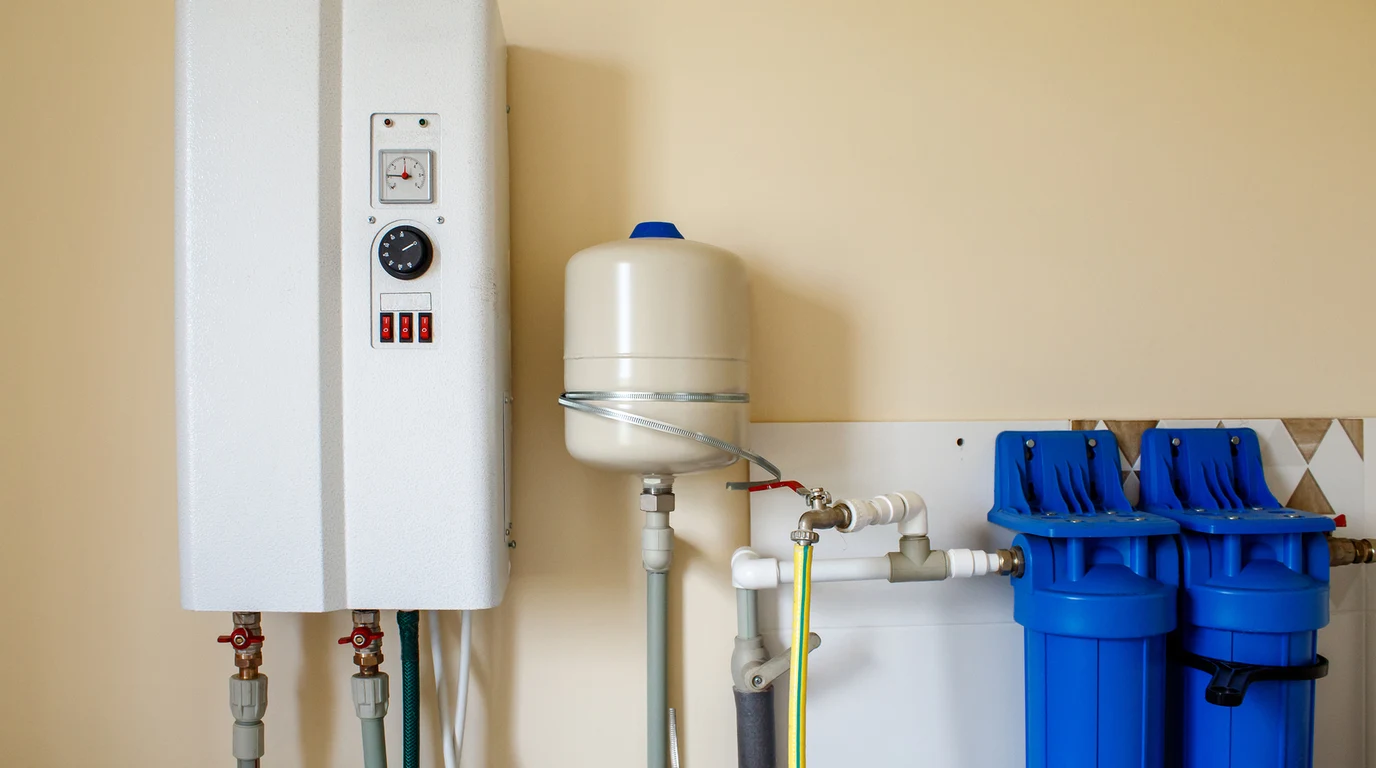
For decades across North America, residential clean heating discussions have been almost completely monopolized by forced-air HVAC systems. When homeowners look to abandon fossil gas or heating oil, HVAC contractors inevitably push ducted central heat pumps or ductless mini-split wall cassettes. But for millions of homes in New England, the Pacific Northwest, the Upper Midwest, and Canada—homes equipped with elegant radiant in-floor heating loops, cast-iron radiators, or baseboard hydronic heating—tearing open drywall to run bulky sheet-metal ductwork is structurally intrusive, aesthetically disastrous, and financially ruinous.
In Europe and Asia, the clean heating revolution followed an entirely different, vastly superior thermodynamic path: Air-to-Water (A2W) heat pumps. Instead of blowing hot air through dusty ductwork, an air-to-water heat pump extracts thermal energy from freezing sub-zero ambient outdoor air and transfers it directly into a closed water loop. That heated water is circulated through radiant floor tubing, high-surface-area modern radiators, and domestic hot water indirect tanks, delivering the most uniform, draft-free, and luxurious thermal comfort possible in residential construction.
In 2026, air-to-water hydronic heat pumps have finally broken through as the premier high-efficiency heating architecture in North America. Brands like Chiltrix, SpacePak, Daikin Altherma, and Taco Comfort Solutions are proving that modern vapor-injection compressors can generate 120°F (49°C) to 140°F (60°C) water at ambient temperatures down to -20°F (-29°C) while maintaining Coefficients of Performance (COP) above 2.0. However, when homeowners and hydronic engineers evaluate an air-to-water installation, they face a critical architectural fork in the road: Monobloc vs. Split System architecture. This comprehensive masterclass audits the thermodynamic physics, freeze protection mechanics, buffer tank design, and lifecycle economics of both architectures.
- Thermodynamic Efficiency Peak: Operating in low-temperature radiant floor applications with 95°F (35°C) supply water, air-to-water heat pumps achieve seasonal COPs of 3.8 to 4.4, cutting winter heating electricity consumption by up to 50% compared to high-temperature forced-air systems.
- Monobloc Freeze Protection Trade-Off: Monobloc outdoor units contain the entire closed refrigerant circuit and water heat exchanger in a single outdoor chassis, eliminating indoor refrigerant line-sets but requiring closed-loop glycol antifreeze or automated freeze protection dump valves.
- Split System Reliability: Split hydronic heat pumps keep the refrigerant-to-water plate heat exchanger safely inside the warm mechanical room, connected to the outdoor compressor via refrigerant lines. Water never exits the building envelope, eliminating freeze risks during winter power outages.
What is the Core Difference Between Monobloc and Split Air-to-Water Systems?
To understand the mechanical trade-offs, one must inspect how heat is transferred across the building envelope. An air-to-water heat pump operates on the vapor-compression refrigeration cycle. An outdoor evaporator coil absorbs ambient heat from the air, a variable-speed inverter compressor concentrates that heat to high temperatures and pressures, and a brazed-plate counterflow heat exchanger transfers that thermal energy into water.
In a Monobloc architecture (meaning “single block”), the compressor, expansion valve, evaporator, and water plate heat exchanger are all manufactured and hermetically sealed inside the outdoor cabinet. The installing plumber or HVAC technician does not need an EPA 608 refrigerant license; they simply run two insulated PEX-AL-PEX water pipes (Supply and Return) from the outdoor unit through the foundation wall and directly into the home’s mechanical room. Installation is fast, clean, and requires zero vacuum pumps, nitrogen pressure tests, or refrigerant charging in the field.
However, running water pipes outdoors in a climate that experiences -15°F (-26°C) winter temperatures introduces a critical failure mode: catastrophic freezing during power outages. If an ice storm knocks out utility power for 18 hours, the water sitting inside the outdoor Monobloc unit and the exposed exterior piping will freeze solid, bursting the brazed plate heat exchanger and destroying the $8,000 outdoor unit. Mitigating this risk requires either filling the entire home heating system with a 30% to 40% propylene glycol mix (which reduces heat transfer efficiency by 8% to 12% and increases pumping head) or installing automated mechanical freeze-protection dump valves that dump expensive water onto the ground when temperatures drop near freezing.
In contrast, a Split architecture separates the components. The outdoor unit contains only the fan, evaporator coil, and compressor. Two copper refrigerant line-sets run into the basement or mechanical room, where they connect to a compact indoor hydronic module (often called a “hydrobox”) that houses the plate heat exchanger, circulating pump, and electronic controls. Water never leaves the heated envelope of the home. Even if the power grid fails for a week in sub-zero weather, the outdoor refrigerant cannot freeze, and the indoor water pipes remain protected within the home’s thermal boundary.
Monobloc vs. Split Air-to-Water Heat Pumps: Architectural Matrix
The comparative matrix below benchmarks the thermodynamic performance, installation complexity, maintenance requirements, and capital costs between Monobloc and Split air-to-water hydronic heat pumps:
| Design Vector | Monobloc Hydronic Architecture | Split Hydronic Architecture (Hydrobox) | Engineering & Climate Assessment |
|---|---|---|---|
| Refrigerant Handling in Field | Zero refrigerant piping; factory-sealed sealed circuit | Requires brazing, nitrogen purge, vacuum, and charging | Monobloc eliminates field refrigerant leak risks |
| Freeze Protection Vulnerability | High: Water pipes run outdoors; freeze risk in outages | Zero: Water stays inside heated building envelope | Split is inherently fail-safe during winter blackouts |
| Working Fluid in Hydronic Loop | Requires 30%–35% Propylene Glycol or dump valves | 100% pure demineralized water with corrosion inhibitor | Pure water transfers heat 10% better than glycol |
| Indoor Mechanical Room Space | Minimal: Small buffer tank, expansion vessel, circulator | Larger: Requires wall space for indoor Hydrobox module | Monobloc preserves precious basement/utility closet floor space |
| Installation Labor Cost | $2,500 – $4,000 (Plumbing-only labor) | $4,500 – $6,500 (Requires licensed HVAC refrigeration tech) | Monobloc cuts contractor installation labor by ~35% |
| Sub-Zero COP @ -15°F (-26°C) | COP 1.95 – 2.15 (EVI scroll compressor) | COP 2.05 – 2.25 (No glycol thermal penalty) | Split achieves slightly higher COP due to water purity |
The Critical Importance of Supply Water Temperature & Low-Temp Emitters
The single most critical rule of air-to-water heat pump engineering is that efficiency is dictated by supply water temperature. The lower the water temperature required to heat your home, the higher the COP and the lower your monthly electric bill.
Consider the thermodynamic variance across typical residential heating emitters:
- Radiant In-Floor Tubing (Optimal): Embedded PEX tubing requires water supply temperatures of only 90°F to 105°F (32°C to 40°C). At this low lift, an air-to-water heat pump operates in its thermodynamic sweet spot, delivering seasonal average COPs between 3.6 and 4.2. For every 1 kWh of electricity consumed, the system generates over 3.6 kWh of heat.
- High-Output Modern Fan Coils (Excellent): Hydronic fan coils with multi-row coils deliver full room heating with 110°F to 120°F (43°C to 49°C) water, delivering COPs around 3.0 to 3.4.
- Legacy Cast-Iron Radiators (Requires Retrofit Sizing): Old cast-iron radiators were originally sized for 180°F (82°C) water from coal or gas boilers. Running an air-to-water heat pump at 140°F (60°C) reduces radiator heat output by approximately 45%. In a well-insulated or air-sealed home, existing radiators are often oversized enough to heat the home with 130°F water. If not, high-surface-area European panel radiators (such as Myson or Biasi) must be swapped in to maintain low supply water temperatures.
Buffer Tank Engineering: Stopping Inverter Short-Cycling
The most common design blunder in air-to-water installations is eliminating the buffer tank to save floor space. Unlike a fossil fuel boiler that burns on-off at 100% capacity, a modern inverter heat pump modulates its compressor down to 25% capacity. However, during mild shoulder seasons (45°F to 55°F ambient), the home’s micro-zones may only call for 8,000 BTUs of heat, while the heat pump’s minimum modulated output is 18,000 BTUs.
Without a properly sized buffer tank (typically 30 to 50 gallons wired in a 2-pipe or 4-pipe configuration), the water in the small hydronic loop heats up in three minutes, forcing the heat pump to shut down. Five minutes later, it restarts. This rapid short-cycling destroys compressor electronics, causes severe temperature fluctuations, and cuts system lifespan in half.
Furthermore, a buffer tank stores the essential thermal energy required to execute the heat pump’s reverse-cycle defrost cycle in winter. When the outdoor coil frosts over at 30°F (-1°C), the heat pump reverses into cooling mode for four minutes to melt the ice. The buffer tank supplies the heat for the defrost cycle without stealing warmth from your radiant floors or causing cold drafts in the house.
Domestic Hot Water (DHW) Integration & Anti-Legionella Pasteurization
One of the most compelling advantages of an air-to-water heat pump architecture is its ability to produce both space heating and Domestic Hot Water (DHW) using a single outdoor compressor. In a modern hydronic mechanical room, an automated 3-way diverting valve prioritizes DHW production. When an aquastat sensor inside an indirect stainless steel hot water tank detects temperatures dropping below 120°F (49°C), the heat pump pauses space heating and ramps its compressor to deliver high-temperature water to the tank’s internal submerged heat exchange coil.
However, heating domestic water with a heat pump introduces a critical microbiological consideration: Legionella bacteria prevention. Legionella pneumophila proliferates in warm stagnant water between 68°F and 113°F (20°C to 45°C) and is only eradicated at temperatures above 140°F (60°C). While modern cold-climate R-32 and R-454B heat pumps can achieve 135°F (57°C) water independently, forcing a heat pump to generate 145°F water drops its COP down to 1.8 and subjects compressor scroll wraps to excessive thermal stress.
The optimal engineering solution is a hybrid pasteurization cycle. The air-to-water heat pump efficiently preheats the indirect water tank to 120°F (49°C) at a high COP of 2.8 to 3.2. Once per week, the smart heat pump controller engages an internal 3kW electric immersion booster element inside the tank for 45 minutes, raising the water to 145°F (63°C) to execute an automated thermal disinfection shock. This hybrid approach guarantees 100% bacteriological safety while minimizing electric resistance backup consumption.
Glycol vs. Pure Water Heat Transfer & Hydraulic Pumping Head
When selecting a Monobloc air-to-water system, engineers must account for the physical fluid dynamics of inhibited propylene glycol solutions. Pure demineralized water is the gold standard of hydronic heat transfer fluids, featuring a specific heat capacity of 1.00 BTU/lb·°F and low kinematic viscosity. Adding 30% to 35% propylene glycol to provide burst protection down to -20°F (-29°C) fundamentally alters fluid properties:
- Specific Heat Capacity Drop: A 35% glycol mixture reduces specific heat capacity by approximately 9% (down to ~0.91 BTU/lb·°F). To deliver the same quantity of BTUs to your radiant floor manifold, the circulator pump must circulate roughly 10% more fluid volume per minute (GPM).
- Kinematic Viscosity Expansion: At cold operating temperatures (35°F to 40°F), glycol becomes significantly more viscous than pure water. Higher fluid viscosity increases friction along pipe walls, increasing total system head loss by 18% to 25%.
- Circulator Pump Sizing: Standard variable-speed ECM circulator pumps (such as the Taco 0018e or Grundfos Alpha) must be sized with sufficient pump curves to overcome this additional friction head. Failing to account for glycol viscosity leads to flow starvation, causing the heat pump to trip on low-flow (Delta-T) error codes.
The 4:00 PM Actionable Implementation Playbook
If you are planning to replace an aging oil or gas boiler with an air-to-water heat pump, follow this 4-step engineering roadmap:
- Perform a Room-by-Room Manual J Heat Load Calculation: Never size an air-to-water heat pump based on the nameplate rating of your old boiler. Boilers installed in the 1980s and 1990s were routinely oversized by 200% to 300%. Size the heat pump to match your home’s calculated 99% design heat loss at outdoor design temperatures.
- Choose Monobloc for Moderate Climates; Split for Extreme Sub-Zero: If your local climate rarely experiences multi-day power outages below 0°F (-18°C), install a Monobloc unit to save on refrigerant labor. If you live in an extreme cold climate with frequent winter grid failures (e.g., Maine, Vermont, Minnesota, Canada), choose a Split system to keep water entirely inside the building envelope.
- Incorporate a 4-Pipe Buffer Tank with Hydraulic Separation: Protect your inverter compressor by installing a minimum 40-gallon buffer tank. This decouples the variable flow rate of the heat pump’s primary loop from the secondary distribution circulator pumps serving your radiant floor manifold zones.
- Lower Your Heating Curve via Outdoor Reset: Program your heat pump controller with an aggressive outdoor reset curve. As outdoor temperatures rise from 0°F to 40°F, automatically reduce supply water temperature from 115°F down to 90°F, maximizing seasonal COP and slashing electrical consumption.
Air-to-water heat pumps represent the pinnacle of residential heating comfort and efficiency. They eliminate noisy, drafty forced-air ducts and deliver luxurious radiant heat with COPs above 3.5. Monobloc units offer the lowest installation labor, while Split systems offer ultimate sub-zero freeze protection during power blackouts. Pair them with a properly sized buffer tank and low-temperature radiant floors for the ultimate clean energy home.