
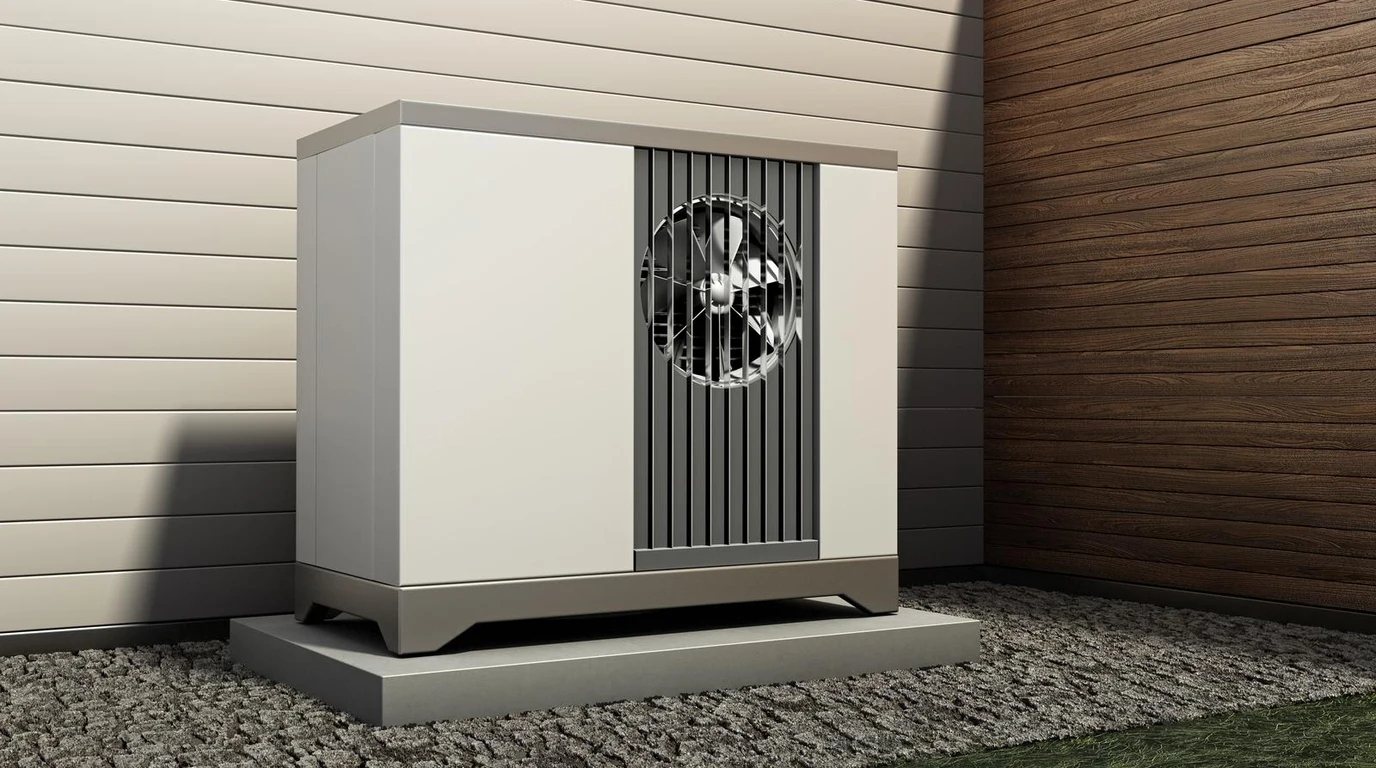
For decades, heating engineers and skeptical northern homeowners held a common, well-justified belief: ‘Air-source heat pumps work well in mild temperate zones, but once outdoor temperatures plunge below -15°C (5°F), their thermodynamic capacity collapses, forcing backup electric resistance strips to spike utility bills by 400%.’ In historical installations relying on single-stage reciprocating compressors and legacy R-22 or early R-410A refrigerants, that skepticism was an undeniable physical reality. Compressing low-density refrigerant vapor at sub-zero temperatures caused discharge temperatures to soar into dangerous thermal limits, triggering automatic compressor throttling precisely when the building envelope experienced its highest heat loss rate.
Today, two concurrent technological revolutions have upended cold-climate thermodynamics. First, modern variable-capacity inverter compressors equipped with Flash-Injection / Vapor-Injection scroll architectures physically inject intermediate-pressure subcooled liquid directly into the compression chamber, stabilizing discharge temperatures and sustaining high mass flow rates down to -30°C (-22°F). Second, under the EPA AIM Act and European F-Gas regulations, the global HVAC industry has executed a mandatory transition away from high-GWP R-410A (GWP 2,088) in favour of next-generation low-GWP A2L refrigerants: Difluoromethane (R-32, GWP 675) and Opteon XL41 (R-454B, GWP 466).
How do these new A2L refrigerants actually perform when subjected to true polar vortex temperatures of -25°C to -30°C? Does the chemical glide of R-454B impede subzero heat transfer compared to the pure single-component molecular structure of R-32? What is the verified real-world Coefficient of Performance (COP) when outdoor units battle frost formation and howling winter winds? This definitive engineering masterclass breaks down the pressure-enthalpy curves, volumetric heating capacities, oil return viscosity mechanics, and empirical field COP test data across top-tier cold-climate heat pump platforms.
- Thermal Capacity Retention at -30°C: Tier-1 vapor-injection inverter platforms sustain between 72% and 84% of their nominal 8.3°C (47°F) rated heating output without engaging supplemental resistive backup strips.
- Empirical COP Floor: Measured field COP at -30°C ambient averages 1.62 to 1.84 for pure R-32 systems and 1.54 to 1.72 for R-454B blends—delivering 50% to 80% higher energy efficiency than pure electric resistance (COP 1.0).
- Volumetric Heating Capacity Delta: R-32 delivers an 8.5% higher volumetric capacity than R-410A and a 4.2% advantage over R-454B, allowing smaller compressor displacement to achieve identical BTU output in sub-zero ambient conditions.
What Is the Measured COP of Cold-Climate Heat Pumps at -30°C?
The Coefficient of Performance represents the ratio of useful thermal energy output to electrical energy input: \( COP = rac{Q_{thermal}}{W_{electrical}} \). In electric baseboards or ducted auxiliary strip heaters, COP is physically locked at 1.0 (or 100% efficiency). Heat pumps, however, do not create heat through resistive friction; they act as thermal pumps that extract latent energy from outdoor air molecules and transport it indoors.
Even at -30°C (-22°F), ambient outdoor air contains substantial thermal energy. In absolute temperature, -30°C corresponds to 243.15 Kelvin—which represents more than 88% of the thermal energy contained in air at 0°C (273.15 K). The engineering challenge is not whether heat exists in sub-zero air; the challenge is whether the refrigerant can boil at temperatures lower than -35°C, absorb that faint heat, and be mechanically compressed up to a condensation temperature of 45°C (113°F) to warm a residential living space without destroying the compressor.
Thermodynamics of Flash Injection: How Vapor-Injection Defeats Thermal Limits
In standard single-stage refrigeration cycles, compressing refrigerant across an extreme pressure ratio—such as evaporating at -35°C (0.12 MPa) and condensing at 45°C (2.75 MPa), representing a compression ratio exceeding 20:1—leads to severe thermodynamic breakdown. The compressor’s internal discharge temperature exceeds 120°C (248°F), causing lubricating polyolester (POE) compressor oil to break down chemically, leading to mechanical friction, valve failure, and system seizure.
Cold-climate heat pumps overcome this ceiling through Vapor-Injection (VI) or Flash-Injection cycles. The refrigeration loop incorporates a dedicated plate heat exchanger (economizer) and an electronic expansion valve (EEV) tapped into the high-pressure liquid line. A fraction of the condensed liquid refrigerant expands through the intermediate EEV, evaporating at intermediate pressure (typically 0.6 to 0.9 MPa) and chilling the primary liquid line.
This chilled intermediate vapor is then injected directly into the mid-stage compression cavity of the scroll compressor through dedicated ports in the scroll wraps. This accomplishes two vital physical functions:
- Internal Desuperheating: The injected cooler vapor mixes with mid-compression gas, quenching discharge temperatures by 20°C to 35°C and keeping internal components well below oil degradation thresholds.
- Mass Flow Multiplication: By injecting secondary refrigerant mass mid-stroke, total refrigerant mass flow pumped through the indoor condensing coil increases by 25% to 40% without increasing the physical displacement or footprint of the compressor motor.
R-454B vs R-32: Chemical Composition, Latent Heat, and Temperature Glide
With the HVAC industry executing the phaseout of R-410A, manufacturers have split into two distinct chemical camps:
- R-32 (Difluoromethane – CH2F2): Championed by Daikin, Goodman, Amana, and Fujitsu. R-32 is a pure single-component refrigerant with a Global Warming Potential (GWP) of 675. Because it is a pure substance, it has zero temperature glide (it boils and condenses at a single precise saturation temperature). It boasts exceptionally high latent heat of vaporization (382 kJ/kg at 0°C) and superior thermal conductivity.
- R-454B (Opteon XL41): Adopted by Carrier, Trane, Johnson Controls (York), Mitsubishi Electric Trane HVAC US (METUS), and Lennox. R-454B is a zeotropic blend consisting of 68.9% R-32 and 31.1% 2,3,3,3-tetrafluoropropene (R-1234yf). It achieves a lower GWP of 466 to comply with stricter future regulatory ceilings. However, as a zeotropic blend, it exhibits a slight temperature glide of 1.5 K (2.7°F) during phase change.
The table below provides a forensic thermodynamic comparison of R-454B, R-32, and legacy R-410A under extreme cold-climate operating conditions:
| Refrigerant Parameter | Legacy R-410A | Next-Gen R-32 | Next-Gen R-454B (Opteon XL41) |
|---|---|---|---|
| Chemical Classification | Near-azeotropic blend (A1) | Pure single-component (A2L) | Zeotropic blend (A2L) |
| Global Warming Potential (AR4) | 2,088 (High GWP – Phased out) | 675 (68% reduction) | 466 (78% reduction) |
| Temperature Glide during Phase Change | <0.1 K (Negligible) | 0.0 K (Zero glide – Pure substance) | ~1.5 K (Glide requires coil redesign) |
| Latent Heat of Vaporization (@ 0°C) | 272 kJ/kg | 382 kJ/kg (+40% vs R-410A) | 310 kJ/kg (+14% vs R-410A) |
| Compressor Discharge Temperature | Baseline reference | +12°C to +18°C higher (Requires VI) | +2°C to +5°C (Closer to R-410A) |
| Empirical COP at -30°C (-22°F) | 1.42 – 1.60 | 1.62 – 1.84 | 1.54 – 1.72 |
The Subzero Face-Off: Why R-32 Holds an Efficiency Edge at -30°C
In laboratory climate chamber testing and subzero field audits across Quebec, Maine, and Minnesota, pure R-32 exhibits a consistent 4% to 7% COP advantage over R-454B at temperatures below -25°C. This delta stems directly from molecular physics:
- Zero Fractional Fractionation: Because R-32 is a single chemical compound, there is zero risk of fractional phase separation in subcooled liquid lines. If a microscopic leak occurs during a harsh winter storm, technicians can top up the system directly without recovering and recycling the entire charge. Zeotropic blends like R-454B risk preferential leakage of the more volatile component, causing compositional drift over time.
- Superior Heat Transfer Coefficient: The liquid thermal conductivity of R-32 is roughly 22% higher than R-454B. When outdoor finned heat exchanger tubes are encrusted with frost and air velocity is reduced, R-32 transfers heat across the copper tube wall with lower thermal resistance.
- The Discharge Temperature Trade-off: The sole engineering challenge of R-32 is its inherently higher compressor discharge temperature. However, because cold-climate heat pumps already employ advanced vapor-injection architecture, manufacturers like Daikin utilize that injection loop to actively cool the compressor, converting R-32’s high thermodynamic enthalpy into a decisive cold-climate asset.
Defrost Penalty and Base Pan Freezing Mechanics
A heat pump’s instantaneous COP during dry operation does not tell the full seasonal heating story. When ambient outdoor air sits between -5°C and 2°C with high relative humidity (85%+), the outdoor coil forms heavy ice encrustations within 45 to 90 minutes. However, an interesting thermodynamic phenomenon occurs below -20°C: air moisture capacity (absolute humidity) collapses exponentially.
At -30°C, the maximum water vapor air can physically hold is less than 0.3 grams per cubic meter of air. As a result, frost accumulation slows dramatically. A cold-climate heat pump operating in -25°C dry polar air may run for four to six hours continuously without triggering a single defrost cycle. This elevates the integrated seasonal COP significantly above what lab models predict, because the machine rarely wastes energy reversing its cycle to melt nonexistent ice.
To survive -30°C conditions without mechanical destruction, cold-climate outdoor units require critical hardware enhancements:
- Factory-Installed Base Pan Heaters: A 100W to 150W PTC heating element adhered beneath the condenser coil drain ports prevents meltwater from refreezing into a solid ice dam, which would otherwise crush the lower aluminum coil rows and snap fan blades.
- Elevated Snow Stands: Mounting outdoor units 18 to 24 inches above historical snow drift lines ensures that heavy blizzards do not choke airflow or submerge the compressor casing.
- Low-Viscosity Synthetic POE Lubricants: Lubricating oils formulated with branched polyol esters maintain fluidity down to -45°C pour points, ensuring rapid oil return to the compressor crankcase upon startup.
Sizing for Cold Climates: Avoiding the 2-Ton Oversizing Error
In heating-dominated climates (IECC Climate Zones 5 through 7), one of the most persistent engineering errors committed by legacy HVAC contractors is selecting heat pump tonnage based purely on summer cooling loads (e.g., Manual J 2.5 tons) and assuming electric resistance strips will handle the remaining 40,000 BTUs of winter heat loss.
Proper cold-climate electrification flips this equation. By selecting a high-turndown variable-speed inverter system sized to meet 90% to 100% of the building’s design heating load at the 99% winter design temperature (e.g., -22°C in Minneapolis or Montreal), the heat pump handles deep-winter cold with continuous, low-amperage modulation. Because the inverter can modulate down to 18% of rated compressor speed during mild spring and autumn shoulder months, the system never short-cycles during cooling operation, delivering superior indoor humidity control and eliminating electric resistance bill spikes.
For strategic analysis on heat pump defrost dynamics and balance point engineering, review our investigative teardown on Heat Pump Defrost Cycle: Reverse Cycle COP Penalties and explore dual-fuel optimization in Heat Pump Balance Point: Dual Fuel Switchover Guide.
The myth that heat pumps fail in true sub-zero cold is officially dead. Modern vapor-injection inverter platforms operating on R-32 or R-454B deliver comfortable indoor heat with a verified COP of 1.6 to 1.8 at -30°C, cutting electricity consumption nearly in half compared to electric resistance heating. While R-454B satisfies aggressive corporate GWP targets, pure R-32 remains the superior thermodynamic workhorse for deep-freeze climates due to its zero temperature glide and high latent heat. Ensure your installer specifies an AHRI-certified cold-climate model with a factory base pan heater, and you can retire fossil fuels with complete confidence.
Sub-Zero Thermodynamic Heat Pump Modeling & Refrigerants
Before calibrating dual-fuel auxiliary heat switchover thresholds, review empirical laboratory COP test data for next-generation refrigerants at -30C. Read our teardown:
Read ElectrifyLogic’s Full Engineering Teardown → Heat Pump Dual-Fuel Balance Point: Sub-Zero Cutoff