
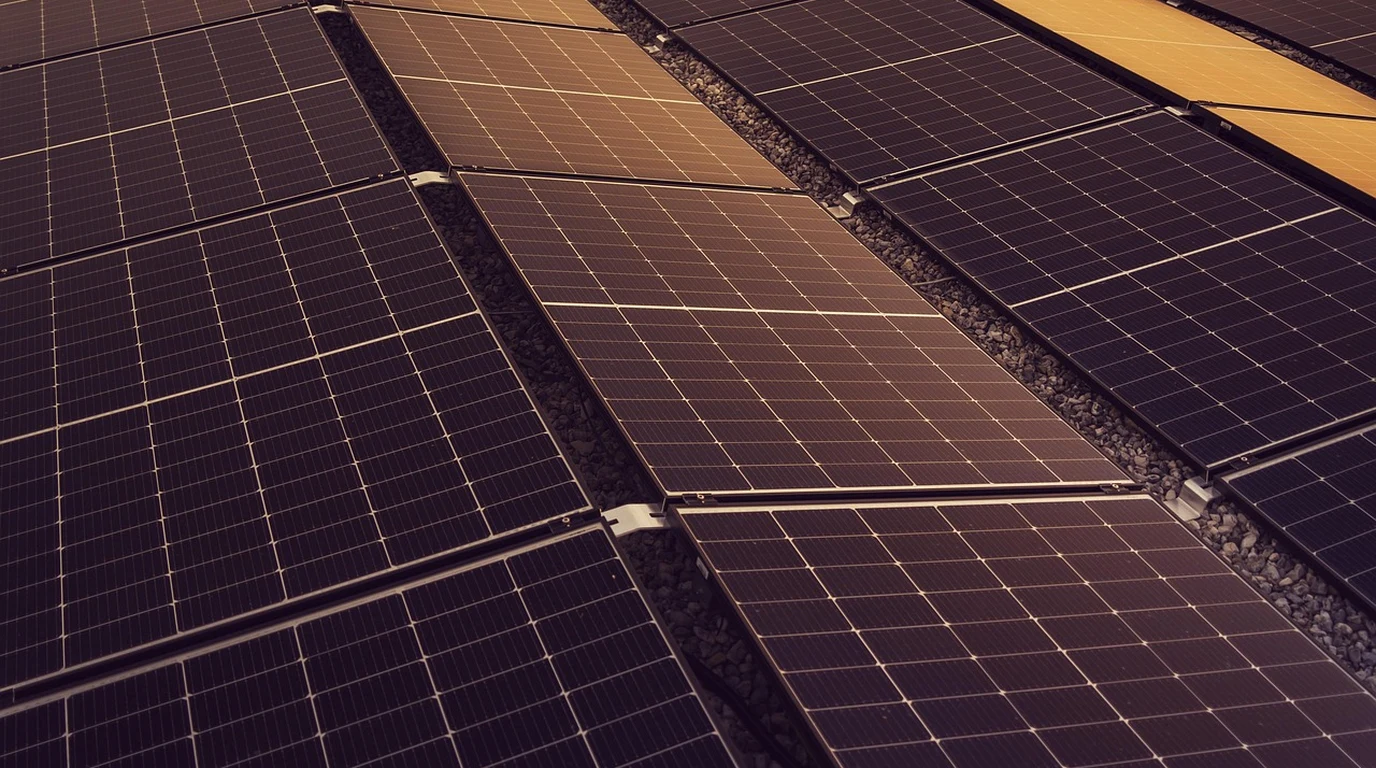
If you have spent any time interviewing residential solar installation contractors, you have undoubtedly been subjected to the famous “Christmas light” analogy. The sales representative leans across your kitchen counter and warns you: “If you choose a traditional string inverter, your solar panels are connected like an old string of Christmas lights. The moment a single shadow from a chimney or a solitary tree branch falls across one corner of one panel, your entire roof array stops producing electricity!” To prevent this supposed catastrophe, the installer urges you to upgrade to microinverters at a premium of $2,500 to $4,500.
Like most persistent retail solar sales pitches, this analogy is an engineering distortion rooted in 1990s technology that completely ignores modern solar module architecture. Modern photovoltaic panels are equipped with integrated internal bypass diodes that isolate shaded cell strings with surgical precision. Simultaneously, the residential solar industry has evolved into a fierce architectural battle between Module-Level Power Electronics (MLPE)—dominated by microinverters like Enphase IQ8—and DC-Optimized String Inverters like SolarEdge and Tesla Solar Inverter.
Every dollar you spend on solar hardware must be justified by real-world kilowatt-hour generation and long-term equipment reliability. To determine whether microinverters are an indispensable necessity for your roof or an overpriced sales upsell, you must evaluate the real physics of shading losses, inverter replacement economics, and National Electrical Code rapid shutdown mandates.
Do Microinverters Outperform String Inverters Under Shading?
To understand where the performance delta truly lies, one must dissect the electrical circuit topology of each inverter architecture. In a traditional pure string inverter system, 8 to 14 solar panels are wired in series to form a high-voltage direct-current string (typically operating at 300V to 500V DC). Because current in a series circuit is constrained by the weakest component, if one panel experiences severe shading and its bypass diodes fail to engage properly, the current flow across the entire series string can be throttled.
However, modern solar panels do not operate as monolithic electrical blocks. A standard 400W residential panel contains 108 or 120 half-cut monocrystalline cells divided into three distinct vertical zones, each protected by an internal Schottky bypass diode. When a shadow falls across one third of the panel, the voltage across that cell group drops, biasing the diode forward. Current effortlessly bypasses the shaded segment through the diode, allowing the remaining two-thirds of the panel—and the rest of the string—to continue exporting clean solar energy.
In a microinverter system (such as the Enphase IQ8 series), every individual solar panel on the roof is fitted with its own miniature, grid-tied inverter mounted directly to the racking beneath the module. Each microinverter executes independent Maximum Power Point Tracking (MPPT) for its specific panel, converting low-voltage DC power into 240V AC right on the roof. If a chimney casts a shadow across Module #4, only Module #4’s output is reduced. The remaining 19 panels on your roof continue generating maximum power, completely unbothered by their neighbor’s shade.
Forensic Architecture Matrix: Microinverters vs. String Inverters
The table below provides a forensic engineering comparison of system voltage, shading mitigation, failure points, installation cost, and warranty structures contrasting microinverters, DC-optimized string inverters, and standard central string inverters.
| Architecture Category | Microinverters (e.g., Enphase) | DC-Optimized String (e.g., SolarEdge) | Standard Central String Inverter |
|---|---|---|---|
| Rooftop Voltage | Low-Voltage AC (<= 240V AC) | Fixed High-Voltage DC (380V – 480V DC) | Variable High-Voltage DC (300V – 600V DC) |
| MPPT Granularity | Module-Level (1 MPPT per panel) | Module-Level (1 Optimizer per panel) | String-Level (1 or 2 MPPTs per system) |
| Severe Shading Performance | Exceptional (100% Isolation) | Excellent (Impedance Matching) | Poor (String current constrained) |
| Hardware Failure Impact | Single Panel Lost (Remaining Array Operates) | Central Inverter Failure Halts Entire Array | Central Inverter Failure Halts Entire Array |
| Rooftop Thermal Exposure | High (20+ Inverters exposed to 65°C roof heat) | Moderate (Passive optimizers on roof; inverter in garage) | Zero Electronics on Roof (Inverter in garage) |
| Installed Equipment Premium | +$0.35 to +$0.55 per Watt | +$0.15 to +$0.25 per Watt | Baseline Lowest Cost |
| Standard Hardware Warranty | 25 Years | 12 Years (Inverter) / 25 Years (Optimizers) | 10 to 12 Years |
The Rooftop Reliability Paradox: Replacing Inverters at 30 Feet
Proponents of microinverters correctly highlight their 25-year manufacturer warranties and the absence of a “single point of failure.” If one microinverter fails in year seven, your other 23 panels continue producing power unhindered. This is a legitimate architectural benefit.
However, microinverters introduce what electrical reliability engineers term the Component Density Paradox. In a 24-panel microinverter system, you are installing 24 individual microinverters, 24 complex AC cable drops, and dozens of high-temperature electrolytic capacitors directly onto a blistering asphalt shingle roof that reaches temperatures of 65°C to 75°C (150°F to 167°F) every summer afternoon.
While the manufacturer will readily ship you a free replacement microinverter under its 25-year warranty if a unit fails in year eight, the warranty almost never covers the residential truck-roll labor or roofing technician costs. To replace a single failed microinverter located in the middle of a rooftop array, a solar technician must climb onto a steep two-story roof, unbolt two neighboring solar modules, disconnect the mounting hardware, swap the unit, and remount the modules. In North America, a single residential solar repair truck roll costs between $350 and $600 in skilled labor. If four separate microinverters fail sporadically across a 15-year period, your “free warranty replacement” will extract $1,800 in out-of-pocket labor expenses.
In contrast, a DC-optimized string system keeps the complex inversion electronics, cooling fans, and high-power capacitors housed inside a clean, single central inverter box mounted at eye level on your garage wall. If the central inverter fails in year 12, a technician unplugs the wall unit and mounts a replacement in 45 minutes with zero ladders, zero roof disassemblies, and minimal labor cost.
NEC 690.12 Rapid Shutdown: The Equalizing Regulatory Factor
For decades, standard central string inverters held a massive cost advantage over MLPE. However, the adoption of NEC 690.12 (Rapid Shutdown of PV Systems on Buildings) by the National Electrical Code fundamentally altered residential solar economics.
NEC 690.12 mandates that within 30 seconds of utility power loss or rapid shutdown initiation, all DC conductors located within the array boundary (within 1 foot of solar panels) must be dropped to 80 volts or less, and all conductors outside the array boundary must drop to 30 volts or less. The regulatory objective is firefighter safety—guaranteeing that first responders cutting through a residential roof during a house fire do not strike live 500V DC cables energized by daytime sunlight.
Because microinverters naturally emit low-voltage AC and drop to zero volts the microsecond grid power is severed, they are inherently compliant with NEC 690.12 out of the box. Traditional string inverters, on the other hand, cannot meet NEC 690.12 without adding module-level rapid shutdown receivers (such as Tigo TS4-A-F units) behind every single panel on the roof. Once you factor in the hardware and labor cost of installing module-level rapid shutdown boxes on every panel for a string inverter, the historical price gap between string inverters and microinverters narrows significantly.
Base your inverter selection strictly on roof geometry and tree canopy obstructions, not sales fearmongering. If your roof features complex multi-directional planes (e.g., hip roof facing East, South, and West) or suffers from severe dynamic tree shade throughout the afternoon, microinverters (Enphase IQ8) are worth every penny of their price premium. However, if you have a clean, unshaded south-facing or east-west gable roof, a DC-optimized string inverter (SolarEdge or Tesla Inverter) will deliver virtually identical annual kilowatt-hour yields, keep your power electronics off the scorching roof, and save you $2,500 to $4,000 upfront.
The 4:00 PM Actionable Inverter Decision Checklist
To choose the correct inverter architecture for your residential rooftop this afternoon, follow this four-step engineering decision tree:
- Request a Comprehensive LiDAR / Aurora Shading Report: Demand that your solar installer provide a certified Solar Pathfinder or Aurora Solar LiDAR Shading Report showing monthly Solar Availability percentages for every roof plane. If your roof shows greater than 90% unshaded solar access across the primary solar window (9 AM to 3 PM), microinverter shading benefits will be negligible.
- Count Your Roof Planes and Azimuth Orientations: If your system requires splitting panels across three or more separate roof azimuths (e.g., 6 panels East, 8 panels South, 10 panels West), microinverters are technically superior because central string inverters have limited independent MPPT channels (typically 2 to 4).
- Evaluate Battery Coupling Architecture: If you plan to install a high-voltage DC-coupled home battery (such as Tesla Powerwall 3), pair it with a compatible string architecture to eliminate unnecessary DC-to-AC-to-DC conversion losses. If you prefer AC-coupled modular batteries (like Enphase 5P), microinverters integrate seamlessly.
- Verify Labor Coverage in the Contractor Warranty: Demand written clarification on who pays for technician labor if a rooftop microinverter or DC optimizer fails in year seven. Insist on a 10-year or 25-year “Workmanship and Labor Warranty” that explicitly covers rooftop component replacement truck rolls.
Partial snow coverage impacts module string voltages identically to tree shading. Compare string and microinverter performance in Solar Snow Shedding: Pitch Angles & Thermal Coatings.