
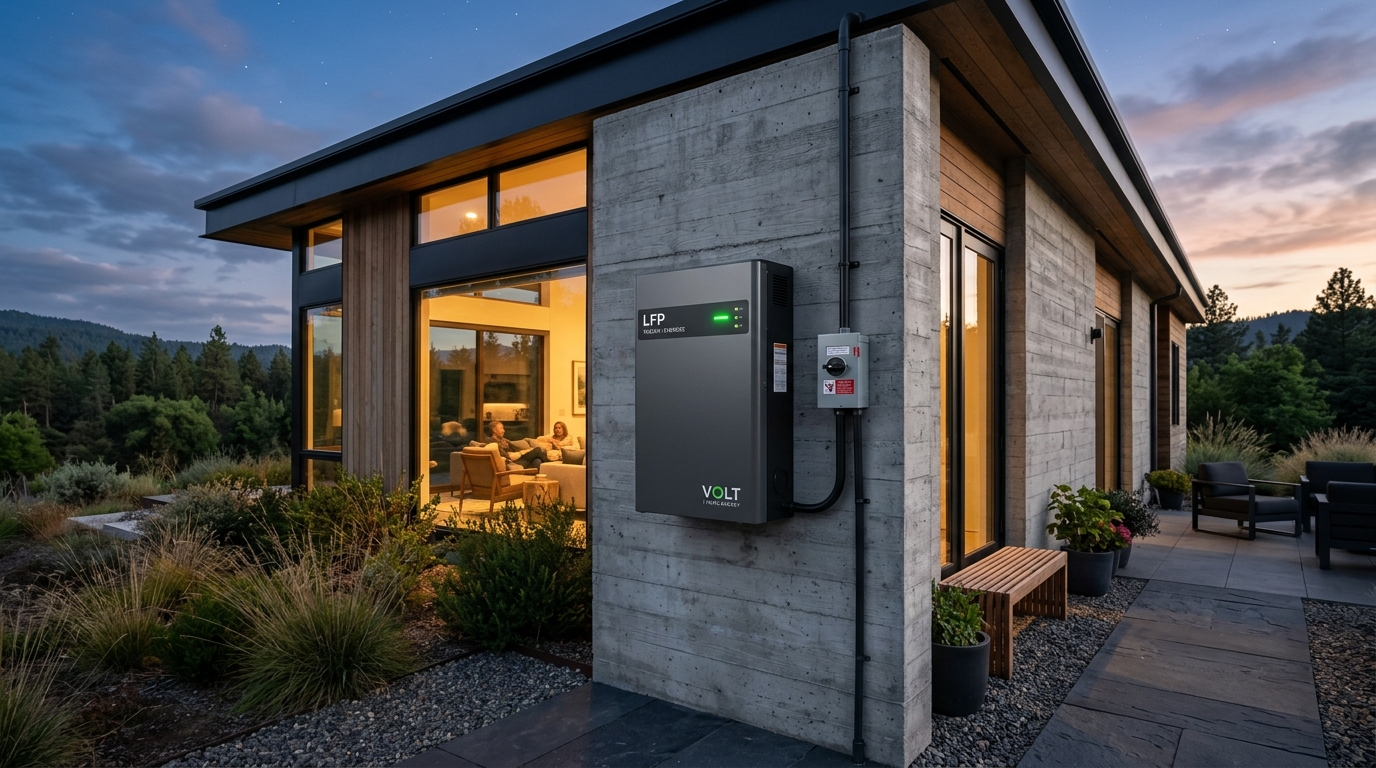
- Thermal Runaway Initiation: Lithium Iron Phosphate (LFP) exhibits decomposition onset at 270°C vs. 150°C for Nickel Manganese Cobalt (NMC).
- NFPA 855 / IRC R328 Compliance: Mandates 36-inch separation between ESS enclosures and maximum 20kWh per unit / 40kWh per aggregate residential installation.
- Permitting Clearance: Exterior wall mounting slashes Authority Having Jurisdiction (AHJ) permitting review times by 65% compared to interior garage installations.
As residential energy storage systems (ESS) transition from early-adopter luxuries to mainstream home infrastructure, local building codes and fire safety regulations have undergone a dramatic tightening. In 2026, the updated National Fire Protection Association standard (NFPA 855) and International Residential Code (IRC Section R328) dictate strict physical constraints on where and how home batteries can be commissioned.
Homeowners seeking to install energy storage to escape grid outages or leverage time-of-use rates routinely encounter surprise red-tags from municipal inspectors over clearance setbacks, heat detectors, and unit spacing. Understanding these safety standards connects directly with our forensic teardowns of high-voltage 400V vs. low-voltage 48V battery systems and smart electrical panels for load shedding.
What Are the Mandatory NFPA 855 Setback Rules for Home Batteries in 2026?
NFPA 855 requires residential battery storage systems to maintain a minimum 36-inch (3 feet) clearance from doors, operable windows, and property lot lines. Individual enclosures cannot exceed 20kWh, with a mandatory 3-foot buffer between multiple battery units up to an aggregate residential ceiling of 40kWh.
These clearance buffers exist to ensure that in the rare event of a thermal event or cell off-gassing, toxic combustion gases (such as hydrogen fluoride and carbon monoxide) cannot penetrate interior living quarters through open windows or ventilation intakes. Furthermore, installations inside attached garages require interconnected heat alarms (not standard ionization smoke alarms, which trigger false positives from automotive exhaust) hardwired directly to the home’s main fire notification panel.
| Installation Parameter | NFPA 855 / IRC R328 Rule | LFP Chemistry Advantage | AHJ Permitting Friction |
|---|---|---|---|
| Maximum Unit Sizing | 20 kWh per discrete enclosure | Stable cell chemistry allows modular stacking | Standard approval across all jurisdictions |
| Aggregate System Limit | 40 kWh total in attached structures | Enables 2-3 powerwall/battery configurations | Exceeding 40kWh requires commercial NFPA 855 chapter review |
| Unit Separation Distance | 36 inches between units | UL 9540A large-scale fire testing can waive to 0 inches | Requires submitting certified UL 9540A summary reports |
| Impact Protection | Mandatory bollards in vehicle path | N/A (Structural requirement) | Concrete-filled 4-inch steel pipe bollard in garages |
LFP vs. NMC Chemistry: Why Thermal Runaway Physics Dictates Permitting
The transition from older Nickel Manganese Cobalt (NMC) chemistries to Lithium Iron Phosphate (LFP) has revolutionized home battery safety. In an NMC cell, the cathode releases oxygen at approximately 150°C, creating a self-sustaining combustion loop that is nearly impossible to extinguish with residential water supplies.
In contrast, LFP cells utilize strong covalent phosphorus-oxygen bonds (P-O). LFP does not release oxygen upon thermal decomposition, requiring extreme temperatures exceeding 270°C before venting occurs. Under UL 9540A fire test protocols, leading LFP units demonstrate zero thermal runaway propagation between adjacent cells, enabling manufacturers to qualify for reduced unit-separation waivers from local fire marshals.
People Also Ask: Home Battery Fire Safety
Can I install a home battery in my basement?
In most North American jurisdictions adopting the 2021/2024 IRC and NFPA 855, installing lithium-ion battery storage in habitable basements or utility rooms beneath living areas is strictly prohibited. Approved locations are restricted to attached/detached garages, dedicated exterior utility sheds, or exterior building walls.
What is UL 9540 vs. UL 9540A?
UL 9540 is the overarching safety standard certification for an entire energy storage system (battery, inverter, and software). UL 9540A is an advanced test method that evaluates thermal runaway fire propagation. Having a favorable UL 9540A test report allows installers to petition AHJs for reduced separation clearances between battery units.
Do home batteries require a dedicated fire sprinkler system?
For standard residential installations conforming to the 40kWh aggregate limit, residential fire sprinklers are generally not required by code, though an interconnected heat detector hardwired to the home’s alarm system is universally mandatory in garage spaces.
Safety codes are written in lessons learned from early battery failures. In 2026, there is no justifiable reason to specify NMC chemistry for stationary residential storage. Insist on Lithium Iron Phosphate (LFP) systems with verified UL 9540A test credentials. Plan your installation location around exterior concrete walls or garage setback zones with proper vehicle bollard protection to ensure effortless AHJ sign-off and complete peace of mind.