
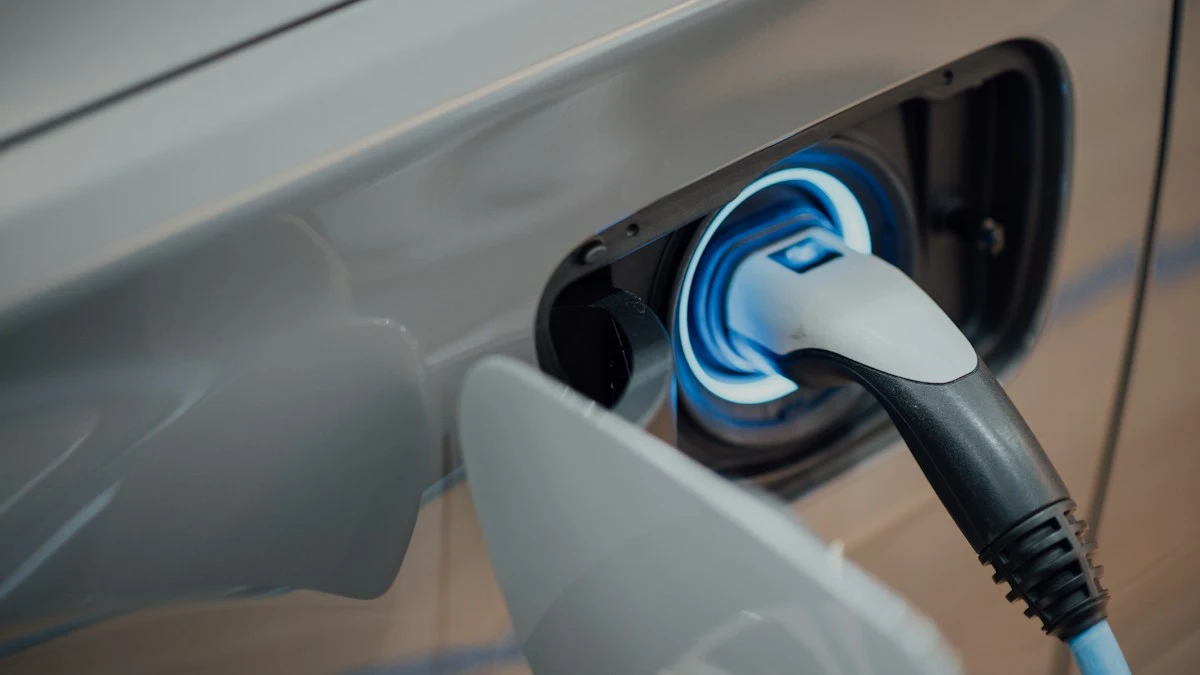
- Inverter Architecture: AC-coupled bidirectional topology utilizing internal Enphase IQ8-series microinverters operating in grid-forming mode.
- Discharge Rating: Up to 9.6 kW continuous output (40A at 240V AC) with sub-second microgrid synchronization via IQ System Controller 3.
- Black Start Capability: Autonomous microgrid initiation via auxiliary IQ Battery 5P buffer; eliminates dead-battery grid lockouts.
- Interconnection Standard: Native compliance with UL 1741 SB, IEEE 1547-2018, and ISO 15118-20 bidirectional protocols.
What Is the Enphase IQ Bidirectional Charger and How Does It Differ From DC V2H Systems?
Most first-generation Vehicle-to-Home implementations—such as the Ford Charge Station Pro or Wallbox Quasar 2—rely on massive, specialized DC fast-charging wall boxes that dump raw high-voltage DC (300V–450V) directly into a separate hybrid central inverter. While functional, these proprietary DC topologies introduce single-point-of-failure bottlenecks, expensive dedicated DC conduit runs, and vendor lock-in.
Enphase has engineered a radically different path: modular AC-coupled bidirectional power conversion. By clustering multiple bidirectional microinverter cores inside the charger chassis, Enphase achieves seamless synchronization with existing IQ7 and IQ8 rooftop solar arrays, eliminating the need to replace existing string inverters or rewire rooftop arrays. To understand how this compares with Tesla’s ecosystem, read our forensic teardown of NACS Bidirectional V2H in 2026: Tesla Powershare vs. Open DC Architecture, as well as our benchmark on Enphase vs. Wallbox Quasar 2.
The Architecture: Inside the IQ System Controller 3 & Microgrid Interconnection
To safely isolate the home from the utility grid during a blackout (preventing hazardous backfeeding into repair crews), the Enphase bidirectional charger communicates directly with the IQ System Controller 3 (or 3G) via wireless Zigbee / proprietary sub-GHz RF mesh:
- Sub-Cycle Grid Islanding: Upon utility voltage loss, the IQ System Controller opens its internal 200A microgrid interconnection device (MID) contactor within 100 milliseconds, establishing an isolated microgrid island.
- Grid-Forming Clock Generation: Unlike standard grid-following solar inverters that shut down when utility grid reference disappears, the internal IQ8 microinverters synthesize an independent 60 Hz sinusoidal voltage waveform.
- Dynamic Load Shedding: The controller pairs with Enphase auxiliary load controllers or smart breaker subpanels to shed non-essential loads (electric water heaters, HVAC compressors) if total home demand exceeds the vehicle’s 9.6 kW discharge ceiling.
| V2H System Architecture | Coupling Type | Continuous Discharge | Round-Trip Efficiency (RTE) | Black Start Architecture |
|---|---|---|---|---|
| Enphase IQ Bidirectional | AC-Coupled (Modular IQ8) | 9.6 kW (40A @ 240V) | 88.5% – 90.2% | Autonomous via IQ Battery 5P buffer |
| Tesla Powershare (Cyberbeast) | AC-Coupled (Vehicle Inverter) | 11.5 kW (48A @ 240V) | 89.0% – 91.5% | Vehicle low-voltage DC-DC boot |
| Wallbox Quasar 2 (CCS/NACS) | DC-Coupled (Central Inverter) | 11.5 kW (48A @ 240V) | 91.0% – 92.5% | External 12V supply required |
| Ford Intelligent Backup Power | DC-Coupled (Delta Hybrid Inverter) | 9.6 kW (40A @ 240V) | 86.5% – 88.0% | Ford Charge Station 12V relay line |
The Black Start Engineering Challenge: Why You Still Need a Small Home Battery
A fatal vulnerability in early standalone V2H marketing was the assumption that an electric vehicle with a 100 kWh battery pack could replace a stationary home battery entirely. In practical electrical engineering, this collapses during a blackout due to the Black Start Boot Paradox:
- When the utility grid collapses, the microgrid contactor opens, killing all AC voltage in the house.
- To initiate bidirectional DC discharge, the electric vehicle’s on-board battery management system (BMS) requires high-voltage contactor pre-charging and high-speed digital handshakes via ISO 15118-20 protocols.
- If the vehicle is unplugged when the blackout occurs, or if the charger loses auxiliary power, the EV cannot establish communication with the house. You have 100 kWh of energy sitting in the garage that cannot power a single lightbulb.
Enphase solves this engineering deadlock by pairing the IQ Bidirectional Charger with a single, compact stationary battery—such as an IQ Battery 5P (5 kWh LFP). The 5P provides continuous microgrid clock reference and immediate black start boot power. The instant the vehicle is plugged in, the system brings the EV traction battery online, scaling total available capacity from 5 kWh to 80–130 kWh. To evaluate stationary battery pairing, review our technical breakdown on Enphase IQ Battery 5P vs. Tesla Powerwall 3.
Real-World Installation Costs: Panel Upgrades and BOS Realities
While the hardware MSRP of the Enphase Bidirectional Charger is projected at approximately $3,500–$4,500, total turnkey installation costs depend heavily on the home’s service entrance:
- IQ System Controller 3: $2,200 – $2,800 equipment cost.
- 200A Service Upgrade (if needed): Homes with 100A or 125A main panels must undergo a utility transformer service upgrade ($2,500–$6,000) or install an intelligent load management device, as audited in V2H Bidirectional EV Charging Installation Costs in 2026.
- Total Turnkey Expenditure: Expect $7,500 to $12,000 before federal tax credits for a fully permitted, inspection-ready V2H microgrid.
Enphase’s AC-coupled microinverter approach is the most elegant, future-proof bidirectional architecture for residential solar owners. By keeping conversion modular and avoiding proprietary high-voltage DC string equipment, it integrates cleanly into existing solar installations. However, prospective buyers must abandon the fantasy that an EV eliminates stationary storage: pairing the bidirectional charger with at least 5 kWh of dedicated stationary LFP storage is non-negotiable for foolproof, zero-interruption black start resilience.