
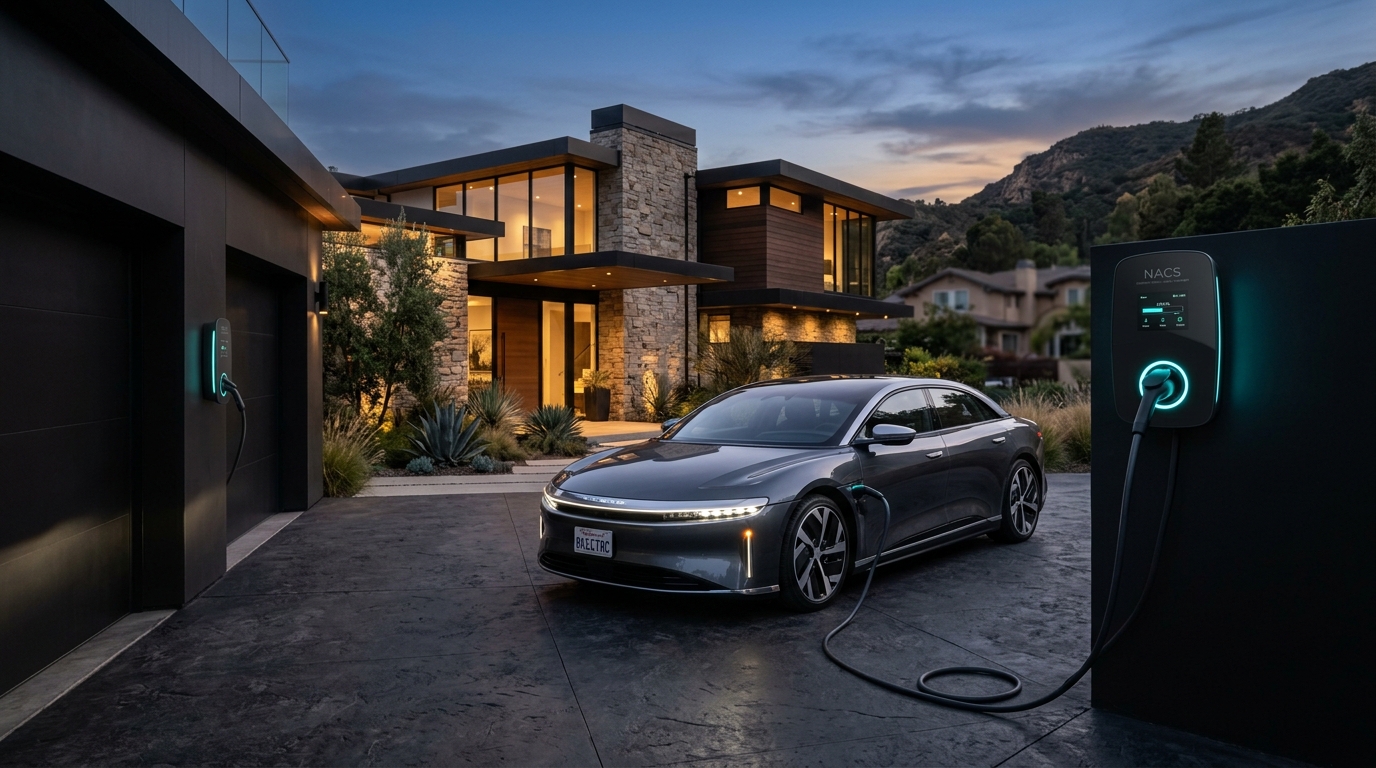
The North American transition to SAE J3400 (NACS) has fundamentally disrupted residential Vehicle-to-Home (V2H) engineering. While legacy unidirectional Level 2 charging operates on simple PWM signaling over control pilot pins, bidirectional DC power export demands the complex digital communication layer codified in ISO 15118-20. As automakers migrate away from CCS1 ports, homeowners face a critical architectural fork: proprietary closed ecosystems like Tesla Powershare versus standards-compliant open DC microgrids using universal bidirectional inverters.
What Is the ISO 15118-20 Standard for Bidirectional V2H in 2026?
ISO 15118-20 is the international communication standard that governs bidirectional Vehicle-to-Home (V2H) and Vehicle-to-Grid (V2G) power flow between electric vehicles and supply equipment. It utilizes encrypted HomePlug Green PHY Power Line Communication (PLC) over the control pilot pin to automate dynamic load matching, galvanic isolation verification, and sub-second anti-islanding disconnects during utility outages.
For residential clean energy adopters, using a 70 kWh to 130 kWh electric vehicle battery as whole-home emergency backup is the ultimate microgrid realization. An average home drawing 1.5 kW continuous power can operate for 4 to 8 consecutive days on a single EV charge, rendering conventional 10–20 kWh stationary home batteries functionally redundant.
However, extracting high-voltage direct current (350V–800V DC) from a vehicle battery pack to power alternating current (120V/240V AC) home panelboards requires rigorous safety interlocks. As detailed in our foundation study on ISO 15118-20 and NACS Home Backup Architecture, bidirectional power transfer is not merely a software update; it is an active physical handshake requiring synchronized microgrid islanding.
The Physics of DC vs. AC Bidirectional Power Transfer
A persistent point of confusion among EV owners is whether V2H export happens in AC or DC:
- AC Bidirectional Charging (V2H via Onboard Inverter): The vehicle’s internal onboard charger is engineered to reverse power flow, converting battery DC into 240V AC before sending it out the charging port (exemplified by the Ford F-150 Lightning Pro Power Onboard 9.6 kW system). While this minimizes wall hardware cost, it limits maximum home backup capacity to the vehicle’s onboard inverter limits (typically 7.2 kW to 9.6 kW).
- DC Bidirectional Charging (Direct Traction Battery Tap): The vehicle bypasses onboard conversion, engaging high-voltage contactors to deliver raw 400V or 800V DC directly through the charging cable to a stationary off-board hybrid inverter mounted on the home wall. This architecture supports continuous export rates of 11.5 kW to 22.0 kW, capable of running whole-home inductive loads including central heat pumps, well pumps, and electric ranges simultaneously.
| V2H Architecture | Physical Interface | Continuous Output | Protocol Standard | System Interoperability |
|---|---|---|---|---|
| Tesla Powershare | Native NACS (J3400) | 11.5 kW (48A @ 240V) | Proprietary CAN over PLC | Locked to Tesla vehicles & Gateway 3V |
| Open DC Universal (Enphase / Wallbox) | NACS / CCS1 Native | 11.5 kW – 19.2 kW | ISO 15118-20 | Universal (Any ISO 15118-20 compliant EV) |
| Ford Intelligent Backup Power | CCS1 (Dual DC Pins) | 9.6 kW (40A @ 240V) | Proprietary / Pre-ISO 15118 | Locked to Ford Charge Station Pro & Delta Inverter |
The Fatal Flaw of Passive CCS-to-NACS Adapters for V2H
With millions of legacy CCS1 EVs on the road and charging networks transitioning to NACS (SAE J3400), many homeowners assume a simple $150 passive CCS-to-NACS adapter will enable bidirectional V2H power export.
This is an electrically dangerous misconception. Passive adapters bridge mechanical pin contacts for unidirectional charging. However, bidirectional DC export under ISO 15118-20 requires:
- Active Thermal Sensor Telemetry: Continuous monitoring of contact pin temperature inside the connector head to throttle or terminate discharge if junction heat exceeds 85°C.
- Hardware Contact Interlocking: Secondary pilot circuit verification to ensure high-voltage DC contactors inside the EV cannot close if the mechanical latch is released, eliminating catastrophic arc-flash risk.
- Ground Fault Isolation Verification: Direct continuous galvanic leakage detection between the vehicle’s floating DC bus and the home’s neutral-ground bonding point.
As explored in our comprehensive V2H Installation Costs & Panel Upgrade Audit, attempting bidirectional power export through an uncertified passive adapter trips internal vehicle battery management system (BMS) safety faults and risks voiding your vehicle’s 8-year traction battery warranty.
Tesla Powershare vs. Open DC Microgrid Inverters
In 2026, homeowners face a fundamental platform selection:
Tesla Powershare: Engineered exclusively for the Cybertruck and upcoming refreshed Model Y/3 architectures, Powershare delivers seamless 11.5 kW home backup via the Universal Wall Connector and Tesla Gateway 3. However, it operates on closed proprietary signaling. If a household owns a Hyundai Ioniq 5, Rivian R1T, or Chevy Silverado EV alongside a Tesla, Powershare cannot export power from the non-Tesla vehicle.
Open-Standard ISO 15118-20 Inverters: Next-generation hardware like the Enphase Bidirectional EV Charger (integrated with IQ8 microgrids) and the Wallbox Quasar 2 (analyzed in our Enphase vs Wallbox Quasar 2 Teardown) adhere strictly to universal open protocols. By communicating over standardized ISO 15118-20 stacks, these systems guarantee that any compliant EV manufactured by GM, Ford, Hyundai-Kia, BMW, or Rivian can serve as the home energy reservoir without brand lock-in.
Do not build your home’s 20-year energy resilience around a single automaker’s closed proprietary charging protocol. Vehicle-to-Home backup is transformative, but true microgrid security requires adherence to open engineering standards. Insisting on ISO 15118-20 compliant bidirectional DC hardware guarantees that your residential electrical infrastructure will gracefully accommodate every future EV parked in your driveway for decades to come.