
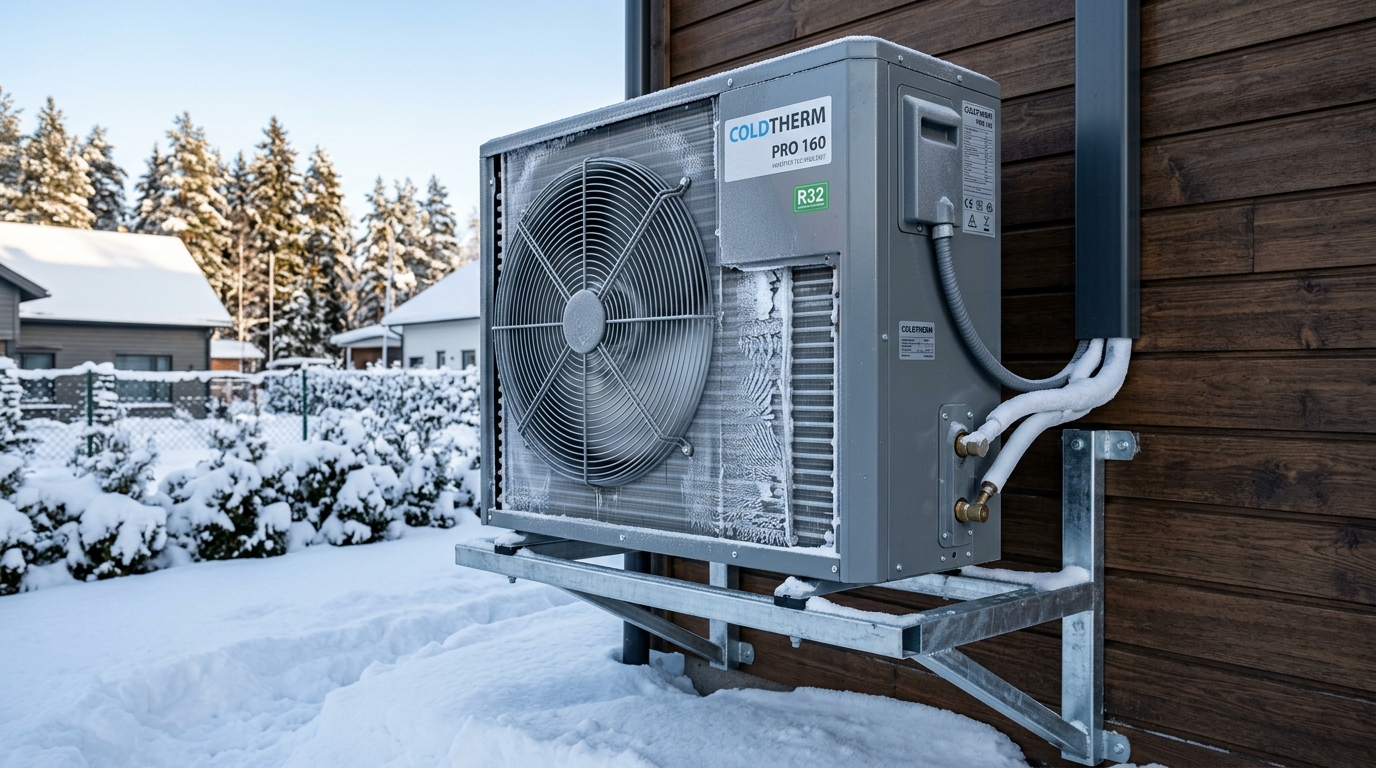
- Defrost Efficiency Penalty: Inefficient timed defrost logic reduces seasonal heating performance (COP) by 14% to 22% during humid freezing conditions (-3°C to +2°C).
- Demand Defrost Algorithm: Differential temperature sensing (coil vs. ambient thermistors) eliminates up to 60% of unnecessary reverse-cycle defrost events.
- Physical Mounting Height: Elevating condensers 18 to 24 inches above local snow accumulation lines prevents ice damming and drain pan refreezing failures.
When sub-zero winter temperatures strike, heat pumps operate at the frontier of thermodynamic physics. As humid outdoor air passes across cold evaporator coils, moisture condenses and freezes into frost. To maintain airflow and heat transfer, the system must periodically initiate a defrost cycle—reversing the flow of refrigerant to temporarily heat the outdoor coil using indoor heat.
For cold-climate homeowners, the defrost cycle represents the single largest source of comfort disruption and efficiency loss. During defrost, the system reverses cycle, the outdoor fan cuts off, and electric resistance backup elements engage to prevent blowing cold air into the living room. Understanding defrost mechanics connects directly with our research on ductless mini-splits vs. central ducted heat pumps and refrigerant transitions (R-454B vs. R-32).
Timed Defrost vs. Demand Defrost: The Efficiency Differential
Timed defrost initiates a reverse cycle at fixed intervals (typically every 30, 60, or 90 minutes) whenever the coil thermistor drops below 0°C, regardless of actual frost accumulation. Demand defrost utilizes optical sensors or differential temperature algorithms to initiate defrost only when genuine airflow restriction occurs, saving 15% to 25% in annual winter power consumption.
Timed defrost is a relic of legacy builder-grade equipment. On dry winter days at -10°C, relative humidity may be under 30%, meaning frost accumulation is minimal. Yet, a timed system will dutifully halt heating every 60 minutes, reverse its 4-way valve, run the compressor at high frequency, and scorch kilowatts of electric resistance heat just to melt nonexistent frost.
| Defrost Architecture | Trigger Mechanism | Energy Penalty | Field Reliability |
|---|---|---|---|
| Time / Temperature (Legacy) | Fixed timer (30/60/90m) + simple snap-disc thermostat | High (Triggers even when coils are dry) | High failure rate; premature reversing valve wear |
| Microprocessor Demand Defrost | Differential thermistor curve (Outdoor Ambient vs. Liquid Line) | Low (Only initiates when Delta-T indicates airflow blockage) | Premium inverter standard (Mitsubishi Hyper-Heat, Daikin Aurora) |
| Hot Gas Bypass (Continuous) | Modulating valve diverts hot discharge vapor without reversing | Near-Zero (Uninterrupted indoor heating during defrost) | Complex mechanical architecture; premium industrial systems |
Preventing Ice Damming: Elevation, Wind Baffles, and Base Pan Heaters
In cold climates, physical installation design is just as critical as software algorithms. When a heat pump completes a defrost cycle, hundreds of milliliters of melted water cascade into the bottom pan. If the condenser is mounted directly on a ground slab, snow will bury the base pan, causing meltwater to refreeze into a solid sheet of ice. Over several cycles, this ice climbs up the aluminum fins, crushing the copper tubing and causing catastrophic refrigerant loss.
Best practices for cold-climate condenser placement include:
- Elevated Wall Brackets or Snow Stands: Elevate the unit a minimum of 18 to 24 inches above local historical snow lines to allow free drainage beneath the chassis.
- Integrated Base Pan Heaters: A dedicated, PTC electric heating cable in the drain pan prevents water from freezing before it escapes the drain ports.
- Wind Baffles: In exposed, windy locations, prevailing winter winds blowing directly against the outdoor fan can stall defrost cycles and degrade heating capacity. Installing factory-certified wind baffles preserves aerodynamic efficiency.
People Also Ask: Heat Pump Defrost Cycles
Why does steam come out of my heat pump in winter?
White vapor billowing from an outdoor heat pump in winter is not smoke; it is water vapor produced during the defrost cycle. When the outdoor coil is rapidly heated to 15°C–20°C to melt frost, the melted ice evaporates into dense clouds of steam. This is completely normal operation.
How long should a heat pump defrost cycle last?
A properly functioning defrost cycle on a modern inverter heat pump lasts between 2 and 10 minutes. If a system stays in defrost for more than 15 minutes, it indicates an issue such as a failed reversing valve, low refrigerant charge, or a malfunctioning coil thermistor.
At what temperature does a heat pump frost up the most?
Heat pumps frost up most heavily between -3°C and +2°C (26°F to 35°F). In this temperature window, the ambient air contains high amounts of relative humidity, but the outdoor coil is operating below the freezing point of water, maximizing moisture deposition.
Never purchase a cold-climate heat pump that relies on crude timed defrost logic. True cold-climate performance requires variable-speed inverter compressors paired with micro-stepping demand defrost algorithms and factory base-pan heaters. Mount your condenser high above the snow line on isolated wall brackets, and your system will deliver reliable, uninterrupted comfort down to -25°C without unnecessary electric strip penalties.