
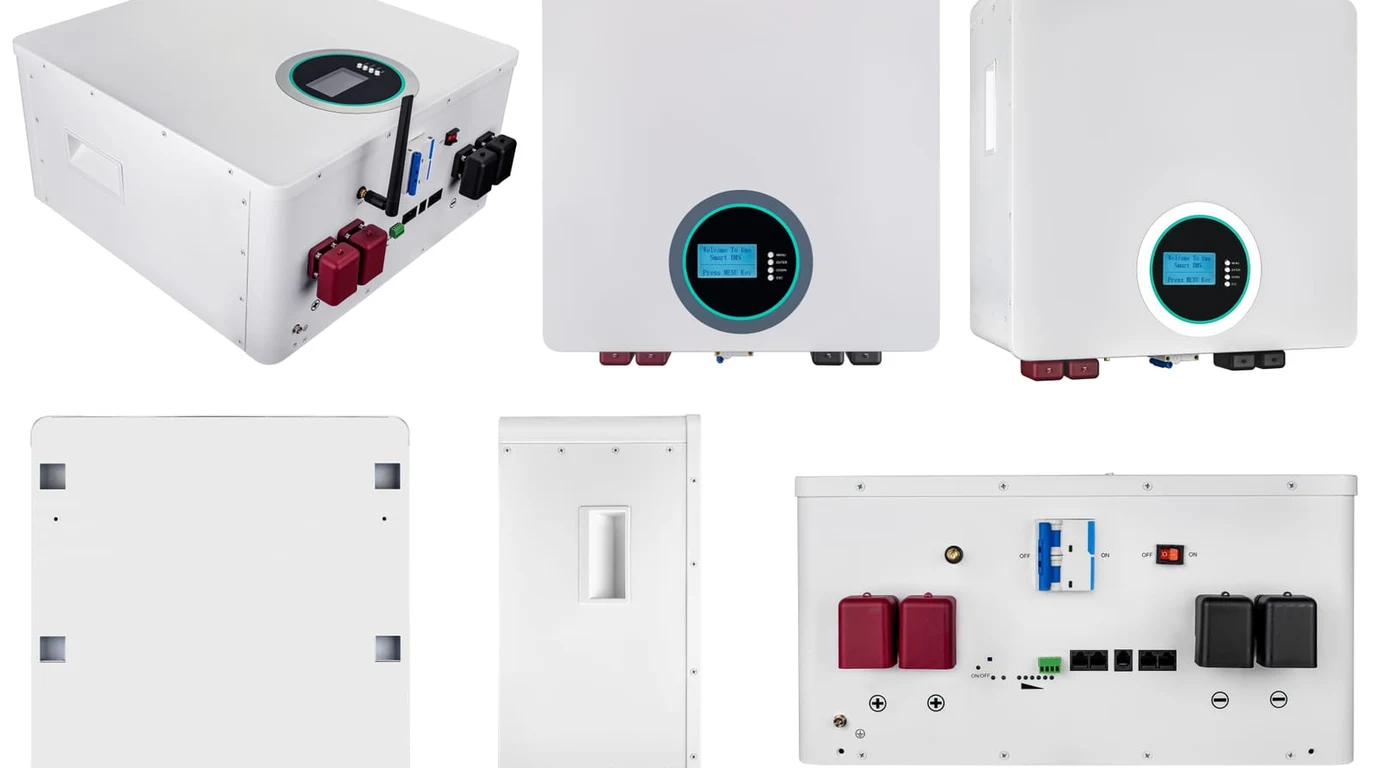
In residential energy storage, a decisive architectural divide shapes every system proposal: the choice between a 48-volt low-voltage (LV) DC bus and a 350V to 500V high-voltage (HV) DC bus. For years, the off-grid and DIY solar communities championed 48V server-rack Lithium Iron Phosphate (LFP) batteries (exemplified by EG4, Ruixu, and SOK) due to their modularity, low cell-balancing complexity, and open inverter protocols. Conversely, mainstream turnkey manufacturers (including Tesla with the Powerwall 3, Enphase with the IQ Battery 5P, SolarEdge Home, and FranklinWH) engineered high-voltage architectures operating near 400V DC.
Installers often market high-voltage systems as modern, sleek, and inherently more efficient, while dismissive 48V advocates claim high-voltage batteries introduce dangerous DC arc-flash hazards and vendor lock-in. Both perspectives carry partial truths, but neither reflects the underlying electrical thermodynamics. Deciding between a 48V and high-voltage home battery requires evaluating conductor copper cross-sections, inverter conversion stages, thermal I²R losses, and balance-of-system (BOS) capital costs. This forensic teardown models real-world efficiency deltas, installation economics, and safety profiles across both topologies.
- Round-Trip Efficiency (RTE): High-voltage DC systems achieve 90% to 94% round-trip efficiency when paired with hybrid solar inverters, compared to 82% to 87% for 48V systems undergoing double DC-to-DC boost transformations.
- Continuous Operating Amperage: Delivering 10 kW of continuous domestic power draws ~208 amperes at 48V nominal DC, requiring massive 4/0 AWG copper conductors, compared to only 25 amperes at 400V DC on flexible 10 AWG wire.
- Storage Cost per Kilowatt-Hour: 48V server-rack LFP modules average $220 to $320/kWh at equipment cost, while integrated high-voltage home batteries command $700 to $1,050/kWh installed.
What Is the Primary Difference Between 48V and High-Voltage Batteries?
To understand the thermodynamic penalty of a 48V battery, examine Joule’s first law of heating: \( P_{loss} = I^2 R \). Resistive power loss in electrical conductors and solid-state MOSFET switches scales exponentially with current. When a modern whole-home heat pump or electric vehicle charger demands 10,000 watts of electrical power, a 48V nominal battery bank (operating around 51.2V under load) must push approximately 195 to 208 amps of direct current. That massive current demands heavy 4/0 AWG copper welding cables, specialized 250A Class-T fuses, and substantial heat dissipation inside the hybrid inverter’s primary transformer stage.
In contrast, a high-voltage battery architecture places 100 to 128 LFP cells in continuous series, establishing a nominal pack voltage of 384V to 409V DC. To deliver that identical 10,000 watts of household power, the battery pack discharges a modest 24.5 to 26 amps. Because amperage is reduced by nearly an order of magnitude, the system uses standard 10 AWG copper conductors—the same gauge used for a basic 30A domestic clothes dryer circuit. Conduit routing is faster, terminal lugs remain cool to the touch, and internal switchgear operates under minimal thermal stress.
Thermodynamics & Round-Trip Efficiency: The Double Conversion Trap
Where high-voltage architectures pull decisively ahead in field telemetry is in solar-to-battery charging efficiency. When rooftop solar panels generate DC power, rooftop string voltages typically fluctuate between 250V and 450V DC depending on panel temperature and sunlight irradiance.
In a high-voltage DC-coupled system (such as the Tesla Powerwall 3 or SolarEdge Home), the incoming solar DC energy transfers onto a common high-voltage DC bus without undergoing voltage transformation. Charging the battery requires only minor buck/boost regulation. The energy enters the cells at over 96% efficiency. When the home calls for power in the evening, the high-voltage battery discharges directly into the inverter’s split-phase H-bridge to produce 120V/240V AC power, yielding a total round-trip efficiency of 91% to 94%.
In a 48V solar-plus-storage architecture, the high-voltage solar DC power (e.g., 380V) must first be stepped down through an MPPT charge controller to 54V DC to charge the battery bank. Later, during discharge, the inverter must take 48V DC and run it through a massive high-frequency transformer or toroidal copper coil to step the voltage back up to 240V AC. Each conversion stage imposes a 3% to 6% thermodynamic tax. Over a typical year, a 48V system will waste between 400 and 750 kilowatt-hours of solar generation simply as dissipated ambient heat.
Comprehensive Architecture Comparison: 48V vs High-Voltage
The table below provides a forensic engineering comparison of both residential storage topologies:
| Engineering Parameter | 48V Low-Voltage Architecture | High-Voltage (400V) Architecture |
|---|---|---|
| Nominal Operating Voltage | 48V – 51.2V DC (16S LFP) | 350V – 450V DC (100S–128S LFP) |
| 10 kW Discharge Current | 195A – 208A continuous | 22A – 26A continuous |
| DC Conductor Gauge | 2/0 to 4/0 AWG copper | 10 AWG to 8 AWG copper |
| System Round-Trip Efficiency | 82% – 87% (double conversion) | 90% – 94% (direct DC bus) |
| Electrical Touch Safety | Class 1 SELV (<60V DC touch-safe) | High voltage; arc flash & shock hazard |
| Cost per kWh (Installed) | $350 – $550 / kWh | $750 – $1,100 / kWh |
Safety Codes, Arc-Flash, and NFPA 855 Regulatory Compliance
While high-voltage batteries claim technical supremacy in round-trip efficiency, 48V systems retain an unassailable advantage in electrical safety and DIY serviceability. The National Electrical Code (NEC) classifies systems operating below 60V DC as Safety Extra-Low Voltage (SELV). At 51.2V DC, an installer or technician can touch battery terminals without risk of fatal electrocution. Accidental short circuits will certainly generate sparks and melt metal due to massive current potential, but the voltage is insufficient to break through human skin resistance.
High-voltage battery packs operating at 400V DC require extreme caution and licensed electrician installation. Direct current does not possess the natural zero-crossing point inherent to 60Hz alternating current. If a high-voltage DC connection becomes loose or an internal contactor fails, sustained, ionized plasma arcs can burn continuously at thousands of degrees, igniting surrounding materials. For this reason, modern high-voltage batteries are engineered with hermetically sealed enclosures, integrated contactors, and automated ground-fault detection (GFDI) circuits that instantly isolate internal modules upon detecting insulation degradation.
The Equipment Cost Dilemma: Closed vs Open Protocols
The true deciding factor for many property owners is capital expenditure and vendor lock-in. A homeowner assembling a 30 kWh 48V server-rack storage bank can purchase six 5.12 kWh LFP modules from reputable commercial tier-1 suppliers for approximately $6,500 total. Paired with a 12 kW hybrid split-phase inverter ($3,500), the complete hardware cost lands at roughly $10,000—or $333 per kilowatt-hour of usable capacity.
Purchasing 30 kWh of turnkey high-voltage storage (such as two Tesla Powerwalls or three Enphase 5P units) routinely costs between $22,000 and $28,000 before federal tax credits. Furthermore, high-voltage battery modules use proprietary CAN bus communication protocols. An Enphase battery will only communicate with an Enphase gateway; a SolarEdge battery requires a SolarEdge inverter. In contrast, 48V batteries communicate over open RS-485 and CAN protocols, enabling homeowners to mix, match, and expand battery banks over decades as storage pricing continues its downward trajectory.
For additional analysis on battery cell degradation and lifespan forensics, explore our guide on LFP vs. NMC Home Battery Storage: Safety & Lifespan and cross-reference our investigation on LFP Battery Cycle Life: DOD & Degradation Math Guide.
If your primary objective is a seamless, turnkey whole-home backup installation backed by a single national warranty and maximum solar self-consumption efficiency, high-voltage 400V storage is the gold standard. But if you demand maximum storage capacity per dollar, off-grid autonomy, and the freedom to expand your battery bank without paying a 300% proprietary hardware markup, a 48V server-rack LFP system remains an unbeatable engineering bargain.
High-Voltage vs Low-Voltage Residential Energy Storage
Before choosing between integrated AC batteries and modular storage packs, audit your inverter voltage architecture to optimize conversion efficiency. Review our 48V vs HV analysis: