
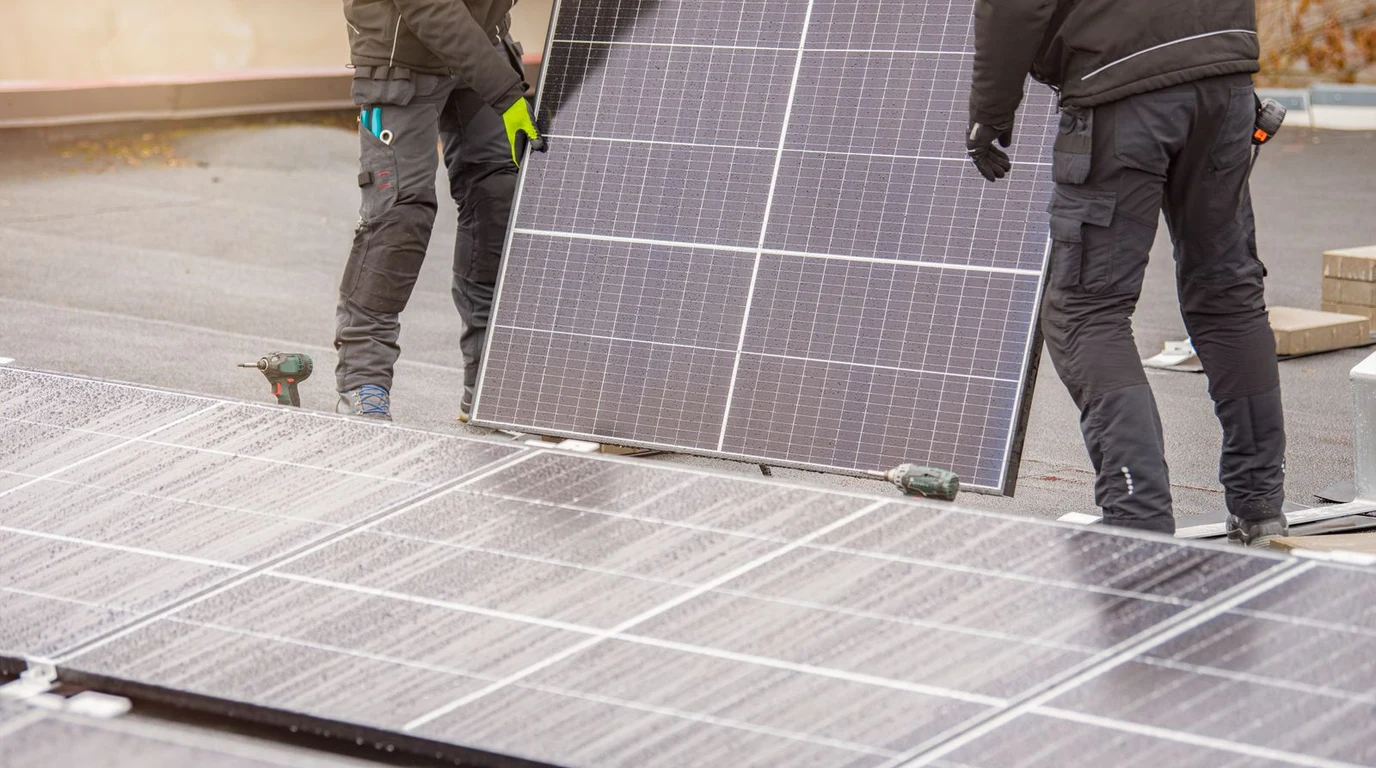
Across suburban neighborhoods, door-to-door solar salespeople deliver a pitch that sounds irresistible: “Zero dollars out of pocket! We install a brand-new $30,000 premium solar system on your roof completely free. You simply pay us a low, fixed monthly payment for the clean green power it produces, immediately slashing your electric bill from Day 1.”
It sounds like free money and environmental virtue rolled into one. Thousands of well-meaning homeowners sign 25-year third-party Power Purchase Agreements (PPAs) or solar lease contracts without reading the dense, sixty-page legal disclosure documents. Buried deep within Section 4 or 5 of the contract sits an innocent-looking sentence that seems trivial: “The monthly payment shall increase by 2.9% annually on each anniversary date.”
Two point nine percent sounds like a modest, reasonable cost-of-living adjustment. However, in the mathematical realm of compound interest, that harmless-looking 2.9% annual escalator is a predatory wealth-transfer machine. Over the 25-year lifespan of the agreement, it transforms an affordable clean energy system into an agonizing financial liability that can exceed utility grid rates, saddle your property with restrictive UCC-1 fixture filings, and completely derail the sale of your home.
How Does the 2.9% Solar Escalator Clause Compound?
Direct Answer: A 2.9% annual escalator causes your monthly solar lease payment to more than double over a 25-year term. An agreement starting at an attractive $150 per month surges to $307 per month by Year 25. Because solar panels degrade and produce less electricity each year, your effective cost per kilowatt-hour increases by over 135%, frequently exceeding the local utility’s grid retail rates by Year 15.
To expose the predatory mechanics of the escalator clause, we must examine the divergence between cost and energy production over time. When you buy solar panels outright with cash or an unsecured clean energy loan, your capital cost is fixed at $0 after the payback period (typically 6 to 9 years), while the system continues generating free electricity for the remaining 16 to 19 years.
In a leased or PPA system with a 2.9% escalator, the financial trajectory is reversed:
- Year 1 (The Honeymoon Period): The system generates 10,000 kWh per year. Your initial lease payment is $150 per month ($1,800/year). Your effective cost for solar power is $0.18 per kWh. If your local utility charges $0.22/kWh, you save $400 in your first year. The sales representative looks like a financial genius.
- Year 10 (The Crossover Danger Zone): Compounding at 2.9% annually, your monthly payment has risen to $195 per month ($2,340/year). Meanwhile, solar panels naturally degrade by approximately 0.5% per year, so the array now produces only 9,550 kWh. Your effective cost per kWh has climbed to $0.245 per kWh. Any initial savings have evaporated.
- Year 20 (The Deep Negative ROI): Your monthly payment is now $259 per month ($3,108/year). System production has degraded to 9,080 kWh. You are now paying an astonishing $0.342 per kWh for solar power from twenty-year-old hardware on your own roof—frequently higher than utility peak rates.
- Year 25 (The Cumulative Total): Over the full 25-year contract, you will have paid over $64,800 to lease a system that could have been purchased outright for $22,000 (or $15,400 after the 30% federal clean energy tax credit). The solar leasing company pocketed the federal tax credits, depreciation benefits, and extracted more than $42,000 in pure unearned profit from your household budget.
| Contract Year | Monthly Lease Payment | Annual Lease Outlay | Array Production (kWh) | Effective Cost per kWh |
|---|---|---|---|---|
| Year 1 (Initial) | $150.00 / mo | $1,800 | 10,000 kWh | $0.180 / kWh |
| Year 5 | $168.17 / mo | $2,018 | 9,800 kWh | $0.206 / kWh |
| Year 10 | $194.02 / mo | $2,328 | 9,550 kWh | $0.244 / kWh |
| Year 15 | $223.83 / mo | $2,686 | 9,310 kWh | $0.288 / kWh |
| Year 20 | $258.23 / mo | $3,099 | 9,080 kWh | $0.341 / kWh |
| Year 25 (Final) | $306.91 / mo | $3,683 | 8,850 kWh | $0.416 / kWh |
The Real Estate Nightmare: UCC-1 Liens and Transfer Roadblocks
While the long-term mathematical drag is brutal, the real crisis of a solar lease hits when you attempt to sell your home. Very few homeowners stay in the same residential property for 25 consecutive years; according to the National Association of Realtors (NAR), the average homeowner moves every eight to ten years.
When you place your home on the market with an existing solar lease or PPA, you encounter two immediate, severe roadblocks:
1. The UCC-1 Fixture Filing (Title Cloud)
When a solar leasing company installs equipment on your roof, they file a UCC-1 financing statement in your county land records. This filing declares that the solar panels, inverter, and wiring are the personal commercial property of the leasing company, not part of your real estate. When prospective buyers apply for a mortgage, their title company discovers the UCC-1 fixture filing. Mortgage lenders (Fannie Mae, Freddie Mac, FHA) will refuse to fund a buyer’s mortgage until the solar leasing company agrees to subordinate its lien or the contract is fully resolved.
2. Buyer Refusal and Credit Disqualification
Under the terms of the lease, the prospective homebuyer must formally apply to the solar leasing company, pass a rigorous credit check, and legally assume the remaining 15 to 20 years of escalating monthly payments. In today’s educated housing market, savvy buyers adamantly refuse. A buyer’s agent will bluntly state: “Why would my client assume a mandatory $220/month contract with a 2.9% annual price hike for 12-year-old solar panels? If you want to sell this house, you must buy out the remaining lease balance in cash before closing.”
Because early termination buyout schedules in solar leases are priced aggressively based on “expected future cash flows” rather than depreciated equipment value, buying out an existing lease in Year 8 can require an unexpected $18,000 to $28,000 lump-sum cash penalty, wiping out a massive chunk of your home equity at the closing table.
Comparing capital allocation strategies between direct cash purchase, unsecured bank loans, and power purchase agreements is foundational to clean energy ROI. Explore our complete forensic financial breakdown on Solar PPA vs. Cash Purchase: 25-Year Escalator Forensics.
The Actionable Field Playbook: How to Protect Your Clean Energy Capital
If you are evaluating solar proposals or currently trapped in an escalating lease contract, execute this tactical checklist:
- Demand a 0% Escalator Quote: If you must lease due to an inability to monetize federal tax credits, refuse to sign any contract containing an escalator clause. Demand a flat, fixed-payment agreement (0% escalator). While the initial monthly payment will be slightly higher in Year 1, your payment will remain fixed for 25 years while inflation erodes the real cost of debt.
- Prioritize Direct Ownership via Clean Energy Loans: Compare the lease proposal against a direct ownership solar loan from a local credit union. With a direct loan, you own the asset, claim the 30% federal clean energy tax credit directly on your tax return, build equity, and add measurable market value to your home without third-party UCC-1 title clouds.
- Audit the Early Termination Buyout Formula: Before signing any lease or PPA, inspect Section 9 (Termination / Buyout). Verify whether the buyout price is determined by an independent Fair Market Value (FMV) appraisal or an arbitrary corporate formula discounting future expected payments at a punitive rate.
- Demand an “Automated Lien Subordination” Clause: Ensure the agreement explicitly states that the solar leasing company will provide rapid, fee-free UCC-1 subordination to accommodate future mortgage refinancing or home equity lines of credit (HELOC) within 5 business days.
The 2.9% solar lease escalator is a financial trap disguised as environmental stewardship. It preys on consumers’ natural human tendency to focus entirely on Year 1 monthly payments while ignoring the mathematical certainty of 25-year exponential compounding. If an installer insists that leasing is your only option and refuses to remove the 2.9% escalator clause, walk away immediately. Own your power, own your equipment, claim your tax credits, and keep your home title clean.
Avoiding utility panel upgrade fees directly improves total electrification payback. Learn how financing contracts impact returns in our guide on Leviton Smart Panel vs SPAN: Breaker Box Upgrade.