
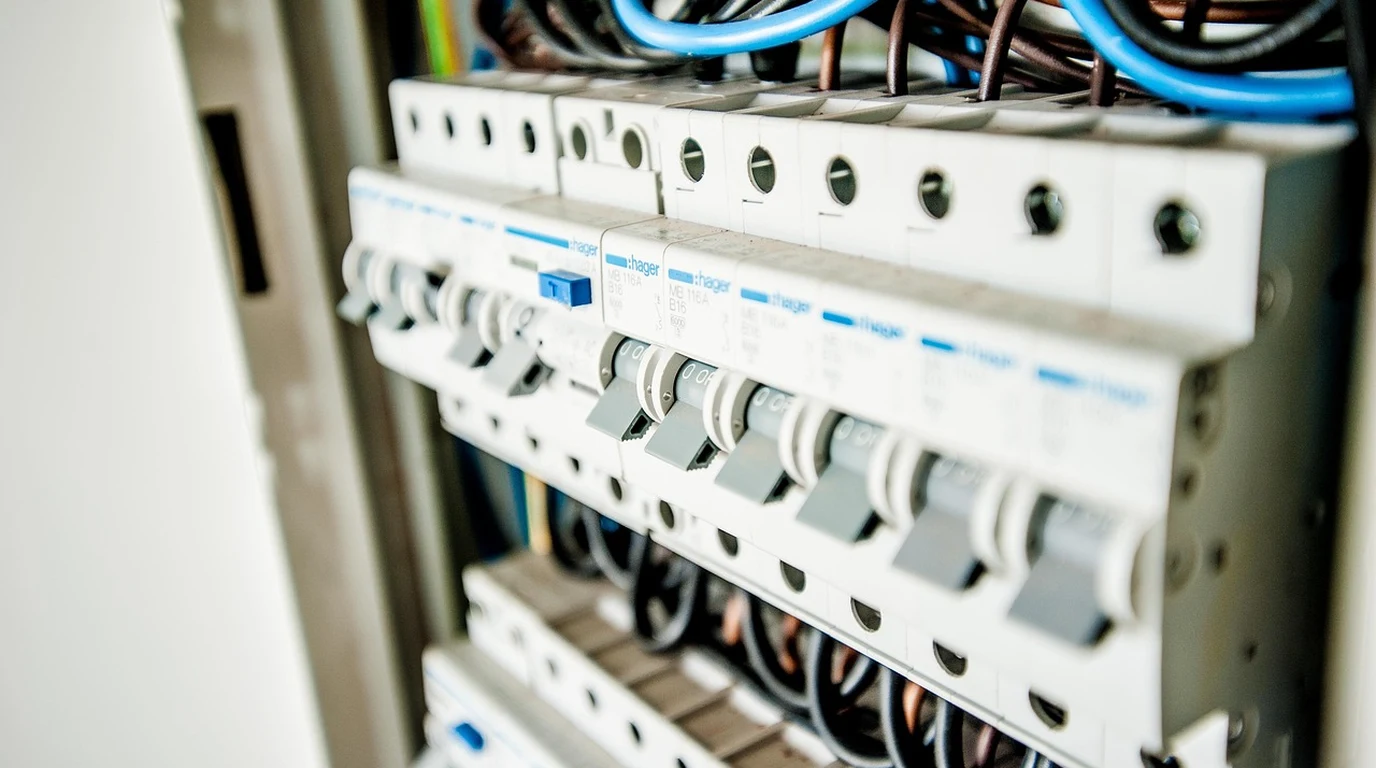
For over seven decades, the residential electrical service panel has remained virtually unchanged. A heavy metal grey enclosure mounted in a basement or utility closet, filled with thermal-magnetic mechanical circuit breakers that trip only when a circuit is catastrophically overloaded or shorted. These legacy breaker boxes are completely blind: they cannot measure power consumption, cannot communicate with home automation systems, cannot shed non-essential loads during a grid blackout, and cannot prioritize solar or battery power.
Today, as homeowners aggressively electrify—installing 48-amp EV chargers, cold-climate heat pumps, induction ranges, heat pump water heaters, and home battery storage systems—standard 100-amp and 200-amp electrical panels are hitting a hard capacity ceiling. Upgrading a residential service from 100A or 200A to 400A often requires costly utility transformer upgrades, underground trenching, and months of permitting delays, with costs easily exceeding $5,000 to $15,000.
Smart electrical panels solve this crisis through software-defined digital energy management. By monitoring and controlling every circuit in real time, smart panels dynamically shed non-critical loads to prevent service overloads, allowing homeowners to fully electrify on existing 200A service. The two dominant market contenders in North America are the SPAN Smart Panel and the Leviton Smart Load Center. While both promise full digital home energy control, their engineering architectures, hardware modularity, installation costs, and smart breaker mechanics represent completely divergent philosophies.
What Is the Difference Between the Leviton Smart Panel and SPAN?
SPAN approaches home electrification from a clean-sheet Silicon Valley hardware perspective. Founded by former Tesla engineers, SPAN replaces mechanical toggle switches with a sleek, sealed enclosure containing 32 digitally controlled circuits, built-in current transformers (CTs), digital relays, and an onboard computing processor. Every single circuit in a SPAN panel is smart from day one, capable of sub-second load shedding, granular power metering, and direct API integration with home batteries like Tesla Powerwall and Enphase IQ Battery.
Leviton, an electrical industry titan with over 115 years of manufacturing history, took a diametrically opposed modular approach. Leviton designed the Smart Load Center as an evolution of traditional electrical infrastructure. The panel enclosure itself is a standard mechanical box, but it accepts Leviton’s proprietary all-white hydraulic-magnetic circuit breakers. Homeowners can install inexpensive standard mechanical breakers on lighting or hallway circuits, while selectively inserting smart breakers on heavy-draw circuits (heat pump, EV charger, pool pump). A separate Leviton Smart Data Hub communicates with the smart breakers via Wi-Fi or Ethernet to provide energy monitoring and remote tripping capabilities.
Comprehensive Technical Architecture Comparison: SPAN vs. Leviton
To provide electrical contractors, solar designers, and homeowners with complete technical clarity, the comparison matrix below breaks down the hardware specifications, installation requirements, and operational capabilities of both platforms:
| Architecture Dimension | SPAN Smart Panel (2nd Gen) | Leviton Smart Load Center |
|---|---|---|
| System Architecture | Monolithic smart panel (integrated solid-state control) | Modular chassis with smart plug-on circuit breakers |
| Circuit Capacity | 32 controllable circuit spaces (max 90A per circuit) | Available in 30, 42, and 66 circuit spaces (up to 225A) |
| Hardware Entry Cost (Panel Only) | $3,500 to $4,500 USD (hardware MSRP) | $300 to $600 USD (panel enclosure only) |
| Smart Breaker Cost | $0 (integrated into panel price; standard breakers fit) | $60 to $120 USD per smart breaker |
| Automated Off-Grid Load Shedding | Instant, sub-second autonomous dynamic shedding | Scripted remote tripping; requires Smart Breakers + Hub |
| Battery Integration Ecosystem | Native API integration with Tesla, Enphase, SolarEdge | Third-party integration via dry contact or app automations |
| Breaker Technology | Solid-state digital relays paired with mechanical breakers | Hydraulic-magnetic trip mechanism (temperature immune) |
| Local Control During Internet Outage | Full local network processing via Bluetooth & LAN | Mechanical breaker protection persists; cloud required for remote trip |
The Hydraulic-Magnetic Advantage: Leviton’s Temperature Immunity
One overlooked engineering triumph of the Leviton Smart Load Center is its use of hydraulic-magnetic circuit breakers rather than conventional thermal-magnetic mechanisms. In standard panels (including the third-party breakers inserted into SPAN), overcurrent protection relies on a bimetallic strip that heats up and bends under electrical load. When ambient temperatures inside a garage or attic rise above 40°C (104°F) in peak summer, thermal-magnetic breakers experience “nuisance tripping”—tripping at 70% or 80% of their rated capacity simply due to environmental heat.
Leviton breakers utilize a fluid-filled dashpot and magnetic solenoid. Overcurrent trip curves are governed strictly by magnetic flux and fluid viscosity, making them virtually immune to ambient temperature fluctuations from -40°C to +85°C. For homeowners installing panels in unconditioned garages, hot southern utility closets, or freezing northern outbuildings, Leviton’s hydraulic-magnetic trip curves deliver superior industrial reliability.
The 400-Amp Dilemma and NEC 220 Dynamic Load Management
The primary financial justification for installing either SPAN or Leviton is avoiding a costly utility service upgrade under the National Electrical Code (NEC). Under standard NEC 220 load calculation methodologies, an electrical inspector sums up the connected loads of your home: 48A for an EV charger, 40A for a heat pump, 30A for a water heater, 40A for an induction range, plus general lighting. On paper, these calculations frequently total 280 to 350 amps, requiring the homeowner to upgrade to a 400-amp service.
However, under NEC Article 220.87 and NEC Article 705.13 (Energy Management Systems), an approved smart panel can dynamically throttle or shed non-critical loads before total panel demand exceeds 80% of the main breaker rating. For instance, if your heat pump and clothes dryer are running simultaneously and someone plugs in an EV, the smart panel automatically pauses the EV charger or delays water heater heating until other loads subside. By using digital load management, homeowners can legally add 80+ amps of modern electric appliances to a 200-amp service without paying the utility $10,000 for a service drop upgrade.
Off-Grid Battery Orchestration: SPAN’s Software Moat
Where SPAN unequivocally outclasses Leviton is in its off-grid software intelligence. When a winter storm knocks out the utility grid and your home switches to battery power, a standard battery system (such as a 13.5 kWh Tesla Powerwall 3) can be depleted in less than four hours if someone accidentally turns on an oven or charges an electric car.
SPAN’s software directly interfaces with the battery’s state of charge (SOC). Through the SPAN Home app, homeowners designate circuits into three dynamic tiers:
- Must Have (Tier 1): Refrigeration, internet router, medical devices, well pump, and primary lighting. These circuits remain powered until the battery reaches 0%.
- Nice to Have (Tier 2): Secondary outlets, microwave, living room entertainment, and heat pump in eco mode. These circuits automatically shut down when the battery drops below 50%.
- Non-Essential (Tier 3): EV charger, pool pump, electric dryer, and hot tub. These circuits are instantly shed the millisecond the grid disconnects.
This automated load orchestration extends battery runtime from 6 hours to 48+ hours without requiring anyone to manually flip breakers in a dark basement. Furthermore, as rooftop solar recharges the battery during the day, SPAN dynamically restores power to Tier 2 circuits, creating a self-balancing residential microgrid.
For deeper forensic comparisons on home battery storage, microinverters, and energy arbitrage payback, review our engineering analyses on Time-of-Use Battery Arbitrage: Peak Shaving Real Payback, Tesla Powerwall 3 vs FranklinWH: Home Battery Backup, and Microinverters vs String: Shading Loss, Cost & Real ROI.
If your primary objective is whole-home battery backup and seamless microgrid orchestration with Tesla Powerwall or Enphase, pay the premium for SPAN. Its software-defined solid-state load shedding is unrivaled. However, if you are a homeowner simply seeking to avoid a $12,000 utility 400-amp service upgrade, or you want clean energy monitoring on just 4 to 6 heavy appliances without replacing all 40 breakers, the Leviton Smart Load Center offers 80% of the practical utility at less than half the total installed cost.
Commissioning, Firmware Updates & Local API Protocols: Home Assistant & Modbus
A crucial differentiator for modern smart homes and off-grid microgrids is software autonomy and local control protocols. When investing in an electrical infrastructure upgrade meant to last thirty years, relying exclusively on proprietary cloud servers introduces severe long-term operational vulnerability. If a startup goes bankrupt, changes its cloud subscription terms, or suffers AWS server outages, a homeowner cannot afford to have their primary electrical distribution system rendered unmanageable.
SPAN’s onboard computing architecture operates on an embedded Linux distribution, communicating with downstream sensors and smart relays over a secure internal Controller Area Network (CAN) bus. While SPAN utilizes encrypted cloud connections for automatic over-the-air (OTA) firmware deployments and machine-learning energy forecasting, it features robust local network capabilities. The panel exposes a local REST API and WebSockets stream over your residential local area network (LAN). Through open-source home automation ecosystems like Home Assistant, homeowners can integrate SPAN data natively with zero cloud reliance. You can query instantaneous circuit wattage, voltage levels, frequency metrics, and relay contactor states every 500 milliseconds, triggering custom automations (such as pausing heat pump water heating when the EV charger draws more than 32 amps).
Leviton approaches connectivity through its Smart Data Hub (LDHUB), which communicates with smart circuit breakers via Wi-Fi 802.11 b/g/n (2.4 GHz) or an optional hardwired Ethernet expansion dongle. Leviton’s cloud ecosystem integrates with Samsung SmartThings, Google Home, and Apple HomeKit, allowing consumers to toggle smart breakers via voice or standard smart home apps. For industrial and commercial microgrid deployments, Leviton offers Modbus RTU / TCP output options, enabling supervisory control and data acquisition (SCADA) platforms to ingest circuit-level telemetry into commercial building automation controllers.
Electrical Contractor Installation Ergonomics: Wire Bending Radius & Neutral Busses
From an electrical contractor’s perspective, the physical labor and time required to wire an electrical panel directly dictate the final installation bid. In a standard 200A service panel replacement, an electrician spends six to ten hours pulling feeder cables, cutting home run branch circuits to length, stripping Romex sheathing, and landing individual neutral and ground conductors on crowded terminal bars.
Leviton revolutionized residential panel ergonomics by introducing a completely pre-wired, terminal-lug chassis with a dedicated Plug-on Neutral design. In a Leviton Smart Load Center, contractors land all branch wiring—hot, neutral, and ground conductors—directly onto terminal strip lugs built into the enclosure frame before any circuit breakers are inserted. There are no pigtail wires cluttering the gutter space. Once the rough-in wiring is inspected and sheetrock is completed, the electrician simply snaps the hydraulic-magnetic breakers onto the bus stabs. This modular workflow slashes rough-in labor by 30% to 50% compared to legacy panels.
SPAN requires an equally clean, but much more precise installation methodology. Because the SPAN panel contains 32 digital relays and integrated solid-state current transformers within a factory-sealed interior enclosure, all 32 branch circuit conductors pass through designated wire channels directly into internal terminal blocks. Contractors must observe strict wire bending radius regulations under NEC Article 312.6, particularly when routing heavy 2 AWG and 4 AWG copper feeders into the top or bottom of the enclosure. SPAN provides comprehensive pre-stamped knockouts and dedicated conduit entry plates, but retrofitting a SPAN panel into a tight, stud-bay wall cavity in an older finished basement requires careful physical layout planning.
The 4:00 PM Actionable Playbook: Choosing & Installing Your Smart Panel
- Calculate Your Connected Electrical Load: Hire a licensed master electrician to perform a formal NEC 220 load calculation. Identify whether your planned EV charger and heat pump push your connected load beyond 160 amps (80% of 200A).
- Request Utility Service Upgrade Estimates First: Contact your local electric utility to ask what they charge to upgrade your transformer and service drop to 400A. If the quote is $6,000+, a smart panel upgrade pays for itself immediately.
- Determine Your Battery Storage Intentions: If you are installing 2+ home batteries and want autonomous multi-tier load shedding, specify SPAN. If you are not installing batteries or only want circuit-level sub-metering, choose Leviton.
- Verify Local Inspection Acceptance of NEC 705.13: Confirm with your municipal electrical inspector that they accept digital energy management systems (EMS) under NEC Article 705.13 for main panel derating.
- Run Hardwired Ethernet to the Panel Location: Never rely exclusively on Wi-Fi for critical electrical panel communications. Instruct your electrician to pull a Cat6 Ethernet cable from your router directly into the panel enclosure for rock-solid connectivity.
Balancing inverter capacity with household load controls maximizes financial return on residential solar. Review our comparative forensic audit on Solar Inverter Clipping: 1.25 vs 1.4 DC-to-AC Ratio ROI.