
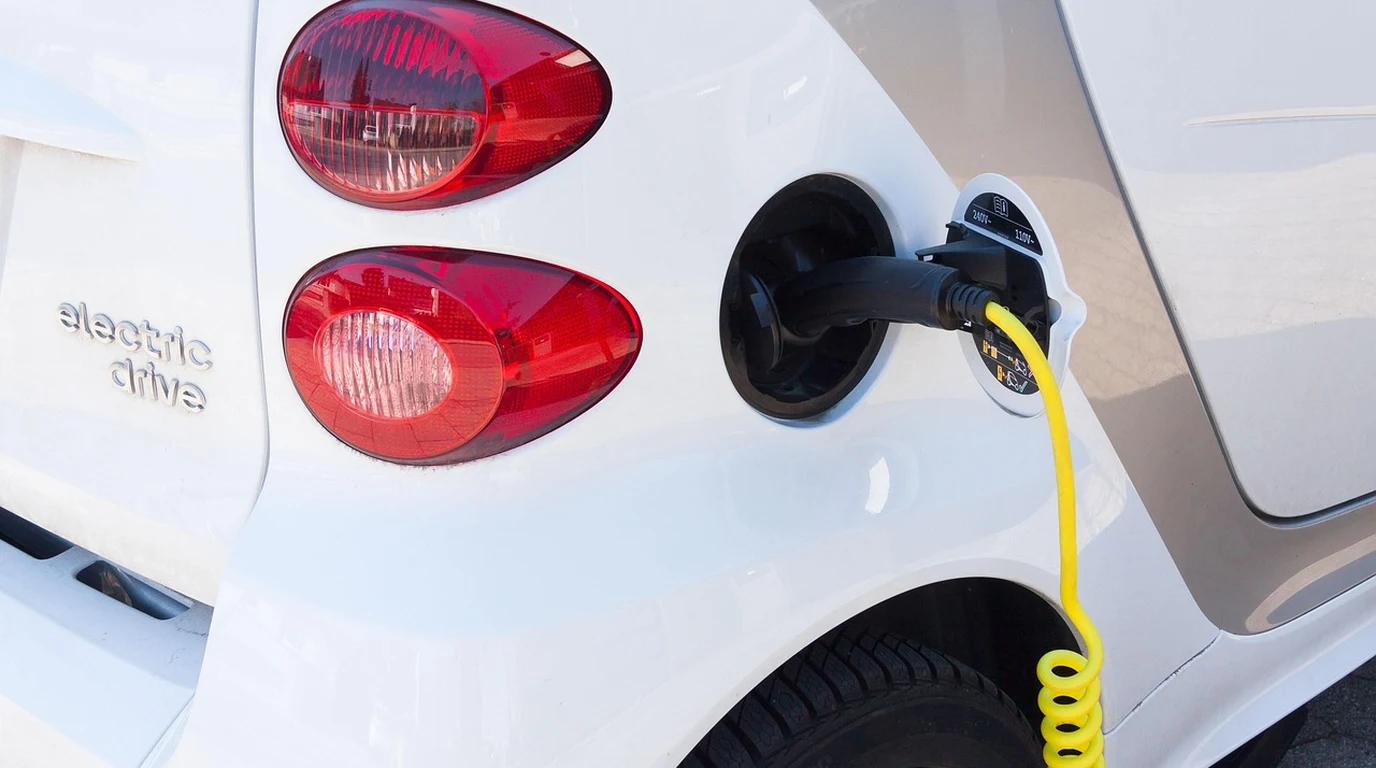
For residential clean energy adopters, the financial divergence between Vehicle-to-Home (V2H) bidirectional EV charging and stationary home battery storage has reached an unprecedented tipping point. Standing in your garage, a typical electric pickup truck like the Ford F-150 Lightning Extended Range stores a massive 131 kilowatt-hours (kWh) of usable energy in its lithium-ion traction battery—enough capacity to power an average North American home for 3 to 5 continuous days of severe winter blackouts.
To match that identical 131 kWh capacity using stationary home batteries, a homeowner would need to purchase and install nearly ten Tesla Powerwall 3 units (13.5 kWh each), resulting in a staggering equipment and installation invoice approaching $95,000 to $110,000. On paper, utilizing an electric vehicle you already own as a whole-home emergency power plant via Ford Intelligent Backup Power appears to be the ultimate financial arbitrage.
However, comparing vehicle-based backup against dedicated stationary storage is not merely an exercise in raw kilowatt-hour capacity. It is an engineering evaluation involving inverter architecture, round-trip conversion efficiency, daily commute availability, cycle-life degradation, and the real-world friction of microgrid switchgear.
- Capacity Multiplier: A 131 kWh Ford F-150 Lightning Extended Range holds nearly 10 times the storage capacity of a single 13.5 kWh Tesla Powerwall 3, offering unparalleled multi-day resilience during catastrophic power outages.
- Cost per Stored Kilowatt-Hour: Utilizing an existing EV for V2H requires approximately $4,500 to $6,500 in home integration hardware, translating to just $35 to $50 per kWh of available storage. Dedicated stationary storage costs $800 to $1,050 per kWh installed.
- The Daily Availability Dilemma: A stationary battery is permanently wired, permanently connected, and constantly cycling for daily solar optimization and time-of-use rate arbitrage. An EV only provides backup resilience when physically parked and plugged in at home.
- Sub-Cycle Transfer Speed: The Powerwall 3 islands in under 16 milliseconds with seamless zero-flicker performance. Ford Intelligent Backup Power requires a noticeable 2 to 5 second transfer cycle, requiring secondary UPS devices for sensitive computer workstations.
Is an EV with V2H Better and Cheaper Than a Tesla Powerwall 3?
For multi-day emergency blackout resilience, an EV with V2H (such as the Ford F-150 Lightning) is dramatically more cost-effective, providing 131 kWh of storage for ~$5,500 in hardware compared to ~$100,000 for equivalent stationary batteries. However, for daily solar self-consumption, TOU bill arbitrage, and seamless zero-flicker sub-16ms backup, a dedicated stationary battery like the Powerwall 3 is mechanically superior.
To conduct an objective engineering comparison, we must analyze how these two systems handle power conversion and microgrid isolation. The Tesla Powerwall 3 is an integrated high-voltage DC-coupled energy storage system featuring an onboard 11.5 kW solar inverter, 6 maximum power point trackers (MPPT), and a microgrid interconnection device. It executes instantaneous, sub-16ms islanding, allowing it to seamlessly ride through grid disruptions without resetting digital clocks or dropping computer servers.
In contrast, the Ford F-150 Lightning Intelligent Backup Power system requires an elaborate multi-component balance-of-system architecture: the 80-amp Ford Charge Station Pro, the external Ford Home Integration System (co-developed with Siemens and Sunrun), a dark-start 12V battery, an external bidirectional DC-to-AC inverter, and a manual/automatic microgrid transfer switch. When grid power drops, the system initiates a multi-step digital handshake that mechanically decouples the home and ramps up the external inverter over a 2 to 5 second window.
Forensic Comparison: Ford Lightning V2H vs Tesla Powerwall 3
The following engineering matrix compares the operational, electrical, and economic specifications of the Ford F-150 Lightning V2H system against a dual Tesla Powerwall 3 installation:
| Engineering Parameter | Ford F-150 Lightning Extended (V2H) | Dual Tesla Powerwall 3 System |
|---|---|---|
| Usable Battery Capacity | 131 kWh | 27 kWh (2 x 13.5 kWh) |
| Continuous Power Output | 9.6 kW (40A @ 240V) | 23.0 kW (96A @ 240V) |
| Peak Motor Start Surge | 12.8 kW (Limited Duration) | 60.0 kW (Massive LRA Surge) |
| Grid Transfer Latency | 2 to 5 Seconds (Noticeable Drop) | < 16 Milliseconds (Zero-Flicker) |
| Daily Solar Cycling & TOU Arbitrage | Poor (Accelerates Traction Pack Wear) | Exceptional (Automated Daily Cycling) |
| Availability During Outages | Conditional (Must Be Parked at Home) | 100% Guaranteed 24/7/365 Standby |
| Turnkey Balance of System Cost | $5,000 – $7,500 (Vehicle Owned) | $19,500 – $24,000 Installed |
Cycle Life Economics: EV Traction Pack vs Stationary Battery Warranty
A critical financial calculation frequently overlooked when comparing V2H to stationary home batteries is the marginal cost of battery cycle degradation. An electric vehicle traction battery is designed to deliver high specific energy for vehicular propulsion across an expected lifespan of 150,000 to 200,000 miles (approximately 1,200 to 1,500 full equivalent cycles).
When a homeowner uses an EV battery for daily residential time-of-use rate arbitrage—discharging 20 kWh every evening during peak utility rates and recharging during cheap midnight hours—they accumulate 365 additional deep cycles every year. Over 5 years, this adds nearly 1,800 cycles to the vehicle battery pack, potentially consuming half of the vehicle’s remaining battery cycle life and accelerating vehicular range degradation.
In contrast, stationary storage systems like the Tesla Powerwall 3 use Lithium Iron Phosphate (LFP) cells warrantied for 10 years of unlimited daily cycles with a guaranteed 70% retention threshold. The levelized degradation cost of cycling an LFP stationary battery is approximately $0.05 to $0.08 per kWh, whereas cycling an expensive EV traction battery carries an opportunity degradation cost exceeding $0.16 to $0.22 per kWh. Consequently, V2H is economically brilliant for rare emergency backup (costing pennies), but economically counterproductive for continuous daily utility rate arbitrage.
The Daytime Commute Friction Factor & Optimal Hybrid Battery Architecture
The second major operational vulnerability of vehicle-to-home backup is commuter availability. Electrical grid outages do not politely wait until 7:00 PM when family vehicles are parked in the garage. Severe storms, grid line collapses, and transformer explosions frequently occur during midday hours when the vehicle is commuting, parked at an office workplace, or running errands.
If an outage hits at 2:00 PM while your V2H-enabled truck is 15 miles away at work, your home sits in complete darkness until you return. Refrigerators warm up, home Wi-Fi networks fail, and home heating systems shut down. Furthermore, during a catastrophic regional natural disaster (such as an ice storm or hurricane), you may need to use your electric vehicle for emergency evacuation or family logistics. If your vehicle has spent the last 48 hours powering your home heating system and sits at 18% state-of-charge, your mobility is severely crippled.
For these reasons, the gold-standard residential microgrid architecture of 2026 is the hybrid storage topology: installing a modest, single stationary battery (such as a 13.5 kWh Powerwall 3 or Enphase IQ 5P) paired with a bidirectional V2H vehicle. The stationary battery permanently provides sub-cycle zero-flicker islanding, runs daily solar optimization, and bridges daytime outages until the vehicle returns to provide 100+ kWh of prolonged multi-day energy reserves.
Explore clean energy resilience by reviewing our engineering teardown of Enphase IQ Bidirectional EV Charger: V2H Backup Setup and our deep dive on Home Battery Round-Trip Efficiency: AC vs DC Losses TCO.
The 4:00 PM Actionable Playbook: Choosing the Right Backup Architecture
Homeowners deciding between bidirectional V2H and stationary battery storage should follow this decision matrix:
- Audit Your Daily Energy Consumption: Calculate your home’s baseline daily kilowatt-hour demand. A typical energy-efficient home consumes 25 to 35 kWh daily. A single Powerwall provides approximately 10 to 12 hours of backup; an F-150 Lightning provides 4 full days.
- Consider the “Hybrid Sweet Spot”: The ultimate architectural resilience pairs a single stationary home battery (13.5 kWh Powerwall) with a bidirectional EV. The Powerwall handles instantaneous sub-16ms islanding and daily solar cycling, while the EV acts as a massive auxiliary DC generator during prolonged multi-day blackouts.
- Verify Smart Electrical Panel Compatibility: Pairing either system with a smart electrical panel (such as SPAN) allows dynamic software-defined circuit shedding, extending battery runtimes by 40% by automatically shedding secondary loads like EV charging and pool pumps.
- Calculate Turnkey Balance of System Costs: Ensure you obtain complete quotes for bidirectional switchgear. Connecting an F-150 Lightning requires the 80A Charge Station Pro, Home Integration System inverter, and transfer switch, totaling $5,000 to $7,500 installed before rebates.
Technical FAQ: F-150 Lightning V2H vs Powerwall 3
Q: Can the Ford F-150 Lightning charge from rooftop solar while powering the home?
A: Yes, if the Home Integration System is installed alongside a compatible rooftop solar array, excess daytime solar generation flows through the inverter to recharge the truck’s battery while simultaneously powering home circuits.
Q: Does using my Ford Lightning for V2H home backup void the battery warranty?
A: No. Ford explicitly covers Intelligent Backup Power usage under its standard 8-year / 100,000-mile electric vehicle battery warranty, provided installation is performed using certified Ford Home Integration System components.
Q: Can a Tesla Powerwall 3 start a 4-ton or 5-ton central air conditioner?
A: Yes. The Powerwall 3 delivers an exceptional 30 kW motor start surge capability (Locked Rotor Amps / LRA), allowing it to start large central air conditioners and geothermal heat pumps without requiring external soft-start kits.
Q: Can an F-150 Lightning perform automated daily time-of-use utility bill arbitrage?
A: While software updates allow scheduled discharging, cycling an EV battery daily for minimal utility bill savings is not recommended due to battery degradation costs ($0.16+/kWh) exceeding typical peak/off-peak rate differentials.
Q: What happens if an EV battery gets too cold during a winter power outage?
A: In freezing temperatures, the vehicle internal thermal management system consumes a small portion of exported power (approx. 1 to 2 kW) to maintain cell temperatures above freezing, ensuring safe continuous discharge during multi-day sub-zero winter storms.