
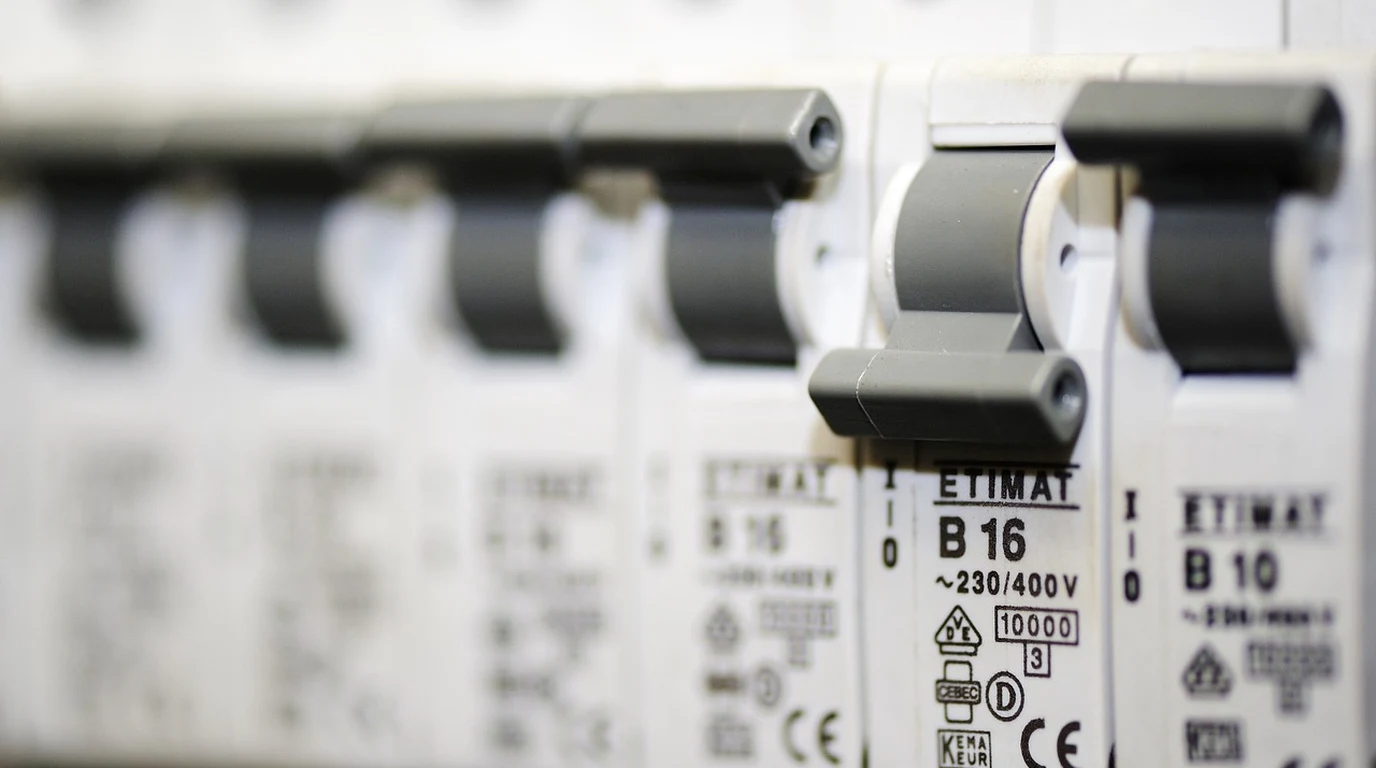
You’re standing in your garage, looking at a gray metal box that hasn’t changed much since the 1970s, and you’re feeling that familiar knot of frustration. You want to do the right thing—plug in a new Level 2 EV charger, swap that aging gas furnace for a high-efficiency heat pump, maybe finally pull the trigger on a home battery system. But then the quote comes in. Your electrician tells you your 100-amp or 200-amp service is “maxed out.” To move forward, you’re looking at a $5,000 to $10,000 utility transformer upgrade, months of waiting for permits, and a torn-up driveway. It feels like the transition to a clean energy home is being held hostage by a piece of legacy hardware.
I’ve sat across the kitchen table from dozens of homeowners facing this exact “service upgrade trap.” It’s an expensive, bureaucratic nightmare that kills electrification projects before they start. But here’s the good news: the “dumb” breaker box is finally getting an overdue brain transplant. Smart panels like the Span Panel and the Schneider Electric Pulse (Square D Energy Center) aren’t just fancy circuit breakers; they are digital traffic controllers. They allow you to bypass those massive utility costs by intelligently managing how and when your home uses power. Instead of upsizing the “pipe” coming into your house, these panels ensure your appliances never try to drink more than the pipe can handle at any given second.
Direct Practical Verdict:
Choose Span if you want a software-first, integrated experience with deep battery optimization and granular circuit control. Choose Schneider Pulse if you prefer a modular, hardware-backed ecosystem from a legacy giant that uses standard breakers and offers easier long-term serviceability for traditional electricians. Both successfully eliminate the need for costly utility service upgrades.
How do smart panels avoid a $10,000 utility service upgrade?
To understand why these panels are a game-changer, we have to talk about the National Electrical Code (NEC) 220 load calculation. Traditionally, an electrician adds up the “nameplate” rating of every appliance in your home. If you have a 50A range, a 30A dryer, and you want to add a 50A EV charger, the math quickly exceeds a standard 100A or even 200A service. The code assumes—however unlikely—that you might turn everything on at the exact same moment. Span and Schneider Pulse change the math through “Dynamic Load Management.” They are recognized by the NEC as digital energy managers. If the panel senses your home is approaching its 200A limit because the AC kicked on while the EV was charging, the panel’s software automatically “sheds” or pauses the EV charger for a few minutes. Because the panel guarantees the total draw will never exceed the service limit, you can legally install $20,000 worth of new electric appliances on your existing service. You’re trading a massive, one-time infrastructure cost for a smart piece of hardware that manages your home’s “energy budget” in real-time.Is the Span Panel 32-circuit the right choice for my home?
Span is often called the “iPhone of electrical panels,” and for good reason. It was designed from the ground up by former Tesla engineers who realized that the electrical panel is the natural hub of the home. The Span Panel replaces your entire existing breaker box with a sleek, connected unit that monitors all 32 circuits individually. The real magic of Span happens during a power outage. If you have a home battery (like a Tesla Powerwall or SolarEdge Home Battery), Span allows you to choose which circuits are “must-have,” “nice-to-have,” or “non-essential” directly from an app. In a typical backup setup, you’re limited to a small “critical loads” sub-panel. With Span, every circuit is a backup circuit. If the grid goes down, Span can automatically shut off your water heater and dryer to extend your battery runtime by 40% or more, ensuring your lights and fridge stay on for days instead of hours. However, Span is a proprietary ecosystem. It uses its own internal components, and while it works with standard 1-inch breakers, the “brains” are baked in. If the company were to disappear, or if the software glitches, you are reliant on their specific support structure. It’s a premium, high-performance choice for the homeowner who wants total digital transparency.What makes the Schneider Pulse (Square D Energy Center) different?
Schneider Electric is the “old guard,” and I mean that as a compliment. Their Square D brand is the gold standard for reliability in the electrical industry. The Schneider Pulse (often integrated into the Square D Energy Center) takes a modular approach. Instead of a single, proprietary computer-box, Schneider uses a more traditional panel architecture and adds “smart” modules. The Pulse is essentially an intelligent relay and monitoring system that sits alongside or inside the Square D ecosystem. The biggest advantage here is modularity. If the “smart” part of the Schneider system fails in fifteen years, you still have a high-quality Square D panel that any electrician in the country can service with parts from a local hardware store. It uses standard QO breakers—the industry favorite for their “trip-to-center” window that makes it easy to spot a blown circuit. Schneider’s software is focused more on the “Energy Center” concept—combining solar, battery, and EV charging into a single enclosure. It’s less about the “cool factor” of an app and more about industrial-grade reliability and meeting the needs of the “pro” installer.The Costly Trap: What most homeowners get wrong about smart panels
The biggest mistake I see is homeowners looking only at the “sticker price” of the hardware. A Span panel might cost $3,500 to $4,500 for the unit alone, while a Schneider setup can vary based on the modular components you choose. A “dumb” panel is only $500. The trap is failing to account for the “Avoided Cost.” If you spend $4,000 on a smart panel but avoid a $7,000 utility upgrade and a $2,000 sub-panel installation for your battery, you haven’t “spent” money—you’ve saved $5,000. Furthermore, many homeowners don’t realize that these panels qualify for the 30% federal tax credit under the Inflation Reduction Act (Section 25C), which can knock over $1,000 off the total installed cost.| Feature | Span Panel (Gen 2/3) | Schneider Pulse / Energy Center | The Winner |
|---|---|---|---|
| Core Philosophy | Software-first, integrated “iPhone” approach. | Hardware-first, modular “Industrial” approach. | Tie (Preference based) |
| Circuit Control | 32 circuits of granular, app-based control. | Modular; control depends on specific relay modules. | Span |
| Battery Integration | Best-in-class; dynamic shedding extends runtime. | Strong; focuses on the Square D ecosystem. | Span |
| Serviceability | Requires Span-certified technicians. | Uses standard QO breakers; any electrician can fix. | Schneider |
| Installation Complexity | High; requires full panel replacement. | Moderate; modular options for existing panels. | Schneider |
| App Experience | Exceptional; real-time appliance-level data. | Functional; focused on utility and monitoring. | Span |
Can I install a Span or Schneider Pulse myself?
In a word: No. This isn’t like installing a smart thermostat or a Ring doorbell. You are dealing with the main service entrance of your home. Both Span and Schneider require certified installers to maintain the warranty and ensure the dynamic load management is configured correctly to satisfy your local building inspector. Span, in particular, is very protective of its brand. They require electricians to go through a specific training program to become “Span Authorized.” This is actually a benefit to you; it means the person working on your high-tech panel actually knows how the software interacts with the hardware. Schneider is more accessible to the general electrical trade, but you still want someone who understands the “Wiser” energy management platform that powers the Pulse.The Actionable Playbook: Your 3-Step Electrification Plan
If you’re ready to stop worrying about your 100A service and start building your future-proof home, follow this sequence. It will save you thousands in missteps.Step 1: The “Data First” Audit
Before buying any hardware, have an electrician perform a “Load Calculation” based on NEC 220.87. This involves looking at your actual utility bills for the last 12 months to find your “peak demand.” If your peak demand is consistently low (e.g., under 40A), you might not even need a smart panel yet. However, if you’re planning to add an EV and a Heat Pump, you’ll likely see that your “theoretical” load exceeds your service. This is your “Green Light” to invest in a smart panel rather than a utility upgrade.Step 2: Choose Your Ecosystem
Ask yourself one question: “How much do I care about battery backup?” – If you are planning a large solar + battery array (like 2+ Tesla Powerwalls) and want to manage your home like a microgrid during a blackout, get the Span Panel. The ability to turn off your dishwasher from your phone while you’re sitting in the dark is a game-changer for peace of mind. – If you want a reliable, “set it and forget it” system that uses industry-standard parts and integrates with a wider range of traditional electrical hardware, get the Schneider Pulse.Step 3: The “Future-Proof” Install
When you have the panel installed, don’t just swap the box. Have the electrician run “conduit capacity” to your garage and your HVAC location, even if you aren’t buying the EV or Heat Pump today. The labor cost of a panel swap is the perfect time to prep the “runs” for your future appliances. Because you have a smart panel, you don’t need to worry about the “load” of these future items—the panel will handle the budgeting later.Frequently Asked Questions
Do smart panels work without the internet? Yes. Both Span and Schneider Pulse are designed to perform their core safety and load-shedding functions locally. You won’t be able to use the app to toggle circuits remotely if your Wi-Fi is down, but the panel will still protect your home and manage your energy budget to prevent tripping the main breaker. Will a smart panel lower my monthly electric bill? Indirectly, yes. By providing circuit-level monitoring, these panels show you exactly which “vampire loads” are sucking power. Most users find they can reduce their consumption by 10-15% simply by identifying and turning off inefficient appliances or heaters they didn’t realize were running. Is Span compatible with all EV chargers? Span works with any EV charger, but it has “deep integration” with certain brands (like Wallbox) that allow it to throttle the charging speed rather than just cutting the power entirely. This is a smoother way to manage load than a hard “on/off” switch.
Electric Vehicle Energy Management & Smart Panel Integration
Managing high-load EV charging and domestic energy draw requires smart load-shedding breaker technology. For intelligent electrical panel comparisons (Span vs Schneider Pulse), review our guide on EV Winter Range Loss: Heat Pump vs Resistive Cabin.