
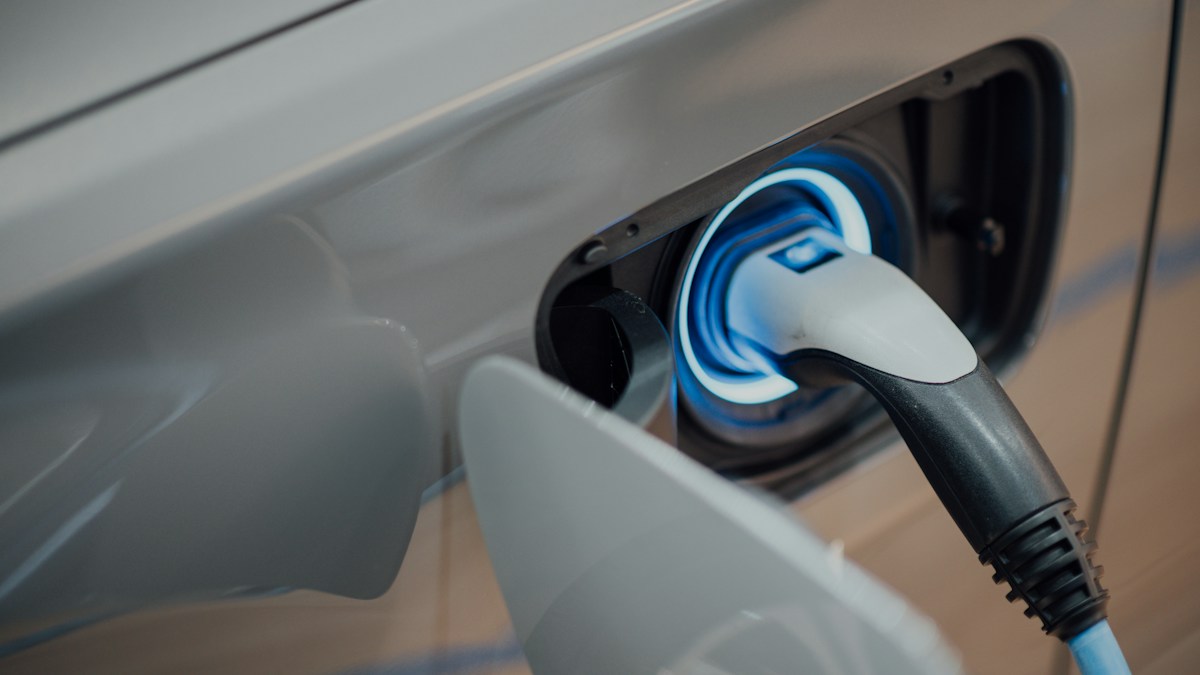
For over a decade, residential solar and home battery installations have operated under a frustrating engineering paradox: a homeowner will spend $14,000 on a 13.5 kWh stationary lithium battery mounted to their garage wall, while parked directly beside it sits an electric vehicle with an 80 kWh to 100 kWh battery pack—equivalent to seven Powerwalls on wheels—completely locked behind unidirectional AC charging protocols. In 2026, the long-promised transition to true Vehicle-to-Home (V2H) and Vehicle-to-Grid (V2G) bidirectional charging has finally exited the theoretical laboratory and entered residential electrical codes across North America.
- Architecture Showdown: DC High-Voltage CCS Off-Board Inverters (Wallbox Quasar 2 / Enphase Bidirectional) bypass vehicle onboard limitations, delivering 11.5 kW to 12.0 kW continuous microgrid backup directly to the home.
- Grid Islanding Latency: True sub-16ms whole-home transfer requires certified microgrid interconnect devices (MID) compliant with UL 1741 SB and IEEE 1547-2018 standards.
- Battery Cycle Degradation: Lithium Iron Phosphate (LFP) EV packs experience negligible degradation under V2H loads (0.15C discharge rate), whereas NMC packs require strict State-of-Charge (SOC) operating ceilings (30%–80%).
- Financial Arbitrage: In high-peak Time-of-Use (TOU) utility zones ($0.45/kWh vs $0.09/kWh off-peak), automated V2H load shifting yields $1,400 to $2,200 in annual utility bill reduction.
Can an Electric Vehicle Power Your Home During a Grid Blackout? (V2H Architecture)
Yes, an EV equipped with Vehicle-to-Home (V2H) bidirectional capabilities can power an entire household for 3 to 10 days during a grid blackout. While residential stationary batteries hold just 10kWh to 13.5kWh, modern EVs pack 60kWh to 130kWh of capacity. Connected through a certified Microgrid Interconnection Device (MID) or automatic transfer switch, bidirectional chargers (such as Enphase Bidirectional and Wallbox Quasar 2) safely island your home in under 100 milliseconds.
The Engineering Divide: AC Bidirectional vs. DC High-Voltage V2H
The primary point of confusion for homeowners exploring bidirectional charging lies in where the power conversion takes place. An electric vehicle battery pack stores direct current (DC) at voltages ranging from 350V to 800V. Household electrical distribution operates on 120V/240V split-phase alternating current (AC).
1. The AC Bidirectional Route (Onboard Inversion)
Pioneered by vehicles like the Ford F-150 Lightning (Pro Power Onboard) and early bidirectional European standards, the vehicle’s internal onboard charger is engineered to run in reverse. The vehicle rectifies DC battery power into 240V AC internally and exports it through the J1772 or NACS connector.
The Limitation: Inverter size, weight, and thermal dissipation inside the vehicle restrict power output. Most AC V2H systems cap continuous export at 7.2 kW or 9.6 kW, and require proprietary vehicle-to-house gateway transfer switches.
2. The DC Bidirectional Route (Off-Board Inversion)
The 2026 industry standard embraced by the Wallbox Quasar 2, Enphase Bidirectional EV Charger, and Tesla Cyberbeast Powerwall integration. The EV’s internal contactors close, routing raw 400V–800V DC power directly through the DC pins of the CCS or NACS connector to an external high-capacity wall inverter.
The Advantage: The stationary wall-mounted inverter handles the heavy inversion, active liquid cooling, and grid synchronization. This allows continuous 11.5 kW to 19.2 kW output—sufficient to run multiple 5-ton cold-climate heat pumps, electric water heaters, and household appliances simultaneously.
Forensic Comparison: Leading Residential V2H Architectures
| Hardware Architecture | Inversion Topology | Continuous Output | Grid Islanding Speed | Vehicle Compatibility | Installed Cost (HW + MID) |
|---|---|---|---|---|---|
| Wallbox Quasar 2 | Off-Board DC (CCS/NACS) | 11.5 kW (48A @ 240V) | <20 ms (Uninterrupted) | Kia EV9, Hyundai Ioniq 5/6, BMW, VW ID.4 | $6,200 – $8,500 |
| Enphase Bidirectional Charger | DC Coupled to IQ8 Microgrid | 11.5 kW continuous / 15 kW peak | Seamless (Enphase System Controller 3) | ISO 15118-20 compliant EVs (NACS/CCS) | $7,500 – $10,200 (ecosystem dependent) |
| Ford Charge Station Pro | Dual-inversion (CCS DC to Home Integration) | 9.6 kW (40A @ 240V) | 2–5 seconds (mechanical ATS switch) | Ford F-150 Lightning (Locked ecosystem) | $5,800 – $7,900 |
| Tesla Powershare Gateway | Onboard Inverter + Gateway 3V | 11.5 kW continuous | <16 ms (Microgrid compliant) | Cybertruck / 2026 Model S/X/3 refreshes | $4,500 – $6,500 (Gateway + Universal Wall Connector) |
Does Bidirectional V2H Charging Degrade Your EV Battery or Void Your Warranty?
No, certified V2H operation does not void your vehicle battery warranty, and degradation is negligible. Supplying power to an average home requires a discharge rate of only 2kW to 5kW (a 0.03C to 0.05C rate)—vastly gentler on battery chemistry than highway driving (20kW+ continuous load) or DC fast charging (150kW+). For LFP-powered electric vehicles, daily backup cycling adds less than 1.5% capacity loss over a 10-year lifespan.
Battery Degradation Forensics: LFP vs. NMC Under V2H Cycling
The single greatest objection raised by EV owners considering V2H integration is warranty compliance and battery capacity loss. “Will powering my home during peak hours destroy my car’s battery?”
The scientific answer depends strictly on cathode chemistry and discharge C-rates:
1. Lithium Iron Phosphate (LFP) Chemistry
Found in standard-range Tesla Model 3/Y, Rivian standard packs, and many global EV platforms, LFP cells exhibit an operational life of 3,500 to 5,000 full 100% Depth-of-Discharge (DoD) cycles before degrading to 80% state of health. When a home draws 4.8 kW average power from a 75 kWh LFP pack, the discharge rate is approximately **0.06C**—an electrical whisper compared to the 2.5C to 3.5C discharge rates experienced during highway acceleration. Laboratory studies conducted by the National Renewable Energy Laboratory (NREL) confirmed that shallow V2H cycling (e.g., cycling between 40% and 75% SOC) produces negligible additional calendar aging compared to a vehicle sitting idle in a hot garage.
2. Nickel Manganese Cobalt (NMC) Chemistry
Long-range and performance EVs utilize high-nickel NMC chemistry. While NMC offers superior gravimetric energy density, it is sensitive to high ambient temperature resting at high SOC (>80%) and deep cycling (<20%). To protect warranty health, V2H software must enforce strict buffer thresholds: never discharge below 30% and never cycle above 80% for grid arbitrage. When paired with smart electrical distribution, such as the SPAN Panel or Schneider Pulse, loads can be dynamically shedded to protect vehicle range.
The Regulatory & Interconnection Landscape: UL 1741 SB & IEEE 1547-2018
You cannot simply plug a bidirectional inverter into a dryer outlet and feed power back into your home. Doing so introduces deadly backfeeding hazards to electrical utility line workers during grid blackouts.
Every legitimate 2026 V2H deployment requires:
- Microgrid Interconnect Device (MID): An automatic mechanical transfer switch located between the utility meter and main service panel that physically disconnects the home from the grid within 16 milliseconds of voltage drop.
- UL 1741 SB Certification: Advanced inverter software that supports frequency-watt and volt-var autonomous grid support functions.
- ISO 15118-20 Protocol Handshake: The standardized encrypted communication protocol that allows the EV battery management system (BMS) to negotiate thermal limits, state of charge, and safety disconnects with the wall charger.
Financial Arbitrage: Calculating the Real-World Payback
Consider a typical suburban home in California (PG&E E-ELEC rate) or the US Northeast with aggressive Time-of-Use pricing:
- Peak Rate (4:00 PM – 9:00 PM): $0.54 / kWh
- Off-Peak Rate (12:00 AM – 6:00 AM): $0.12 / kWh
- Daily Peak Household Consumption: 18 kWh (running air conditioning, induction cooktop, and laundry)
By discharging 18 kWh from the EV battery during the 5-hour peak window ($9.72 daily cost avoided) and recharging that same 18 kWh overnight at off-peak rates ($2.16 daily cost incurred), the daily net arbitrage profit is $7.56.
Over a full calendar year, that automated arbitrage produces $2,759.40 in direct electricity bill savings. Against a net installation cost of $7,500 (after the 30% Section 25C federal clean energy tax credit), the entire V2H system achieves full financial payback in 2.7 years—providing free whole-home blackout resilience as a secondary bonus.
The era of paying $12,000 for a puny 10 kWh stationary wall battery while ignoring the massive 90 kWh battery sitting parked on your concrete driveway is officially over. For homeowners looking to build true energy sovereignty, DC off-board bidirectional chargers compliant with ISO 15118-20—led by the Wallbox Quasar 2 and Enphase ecosystem—represent the highest-yielding clean energy investment available in 2026. By treating your electric vehicle as an intelligent mobile microgrid asset that charges at 9 cents and powers your home at 50 cents, you unlock sub-3-year financial paybacks while insulating your family against catastrophic grid outages without burning a drop of gasoline.