
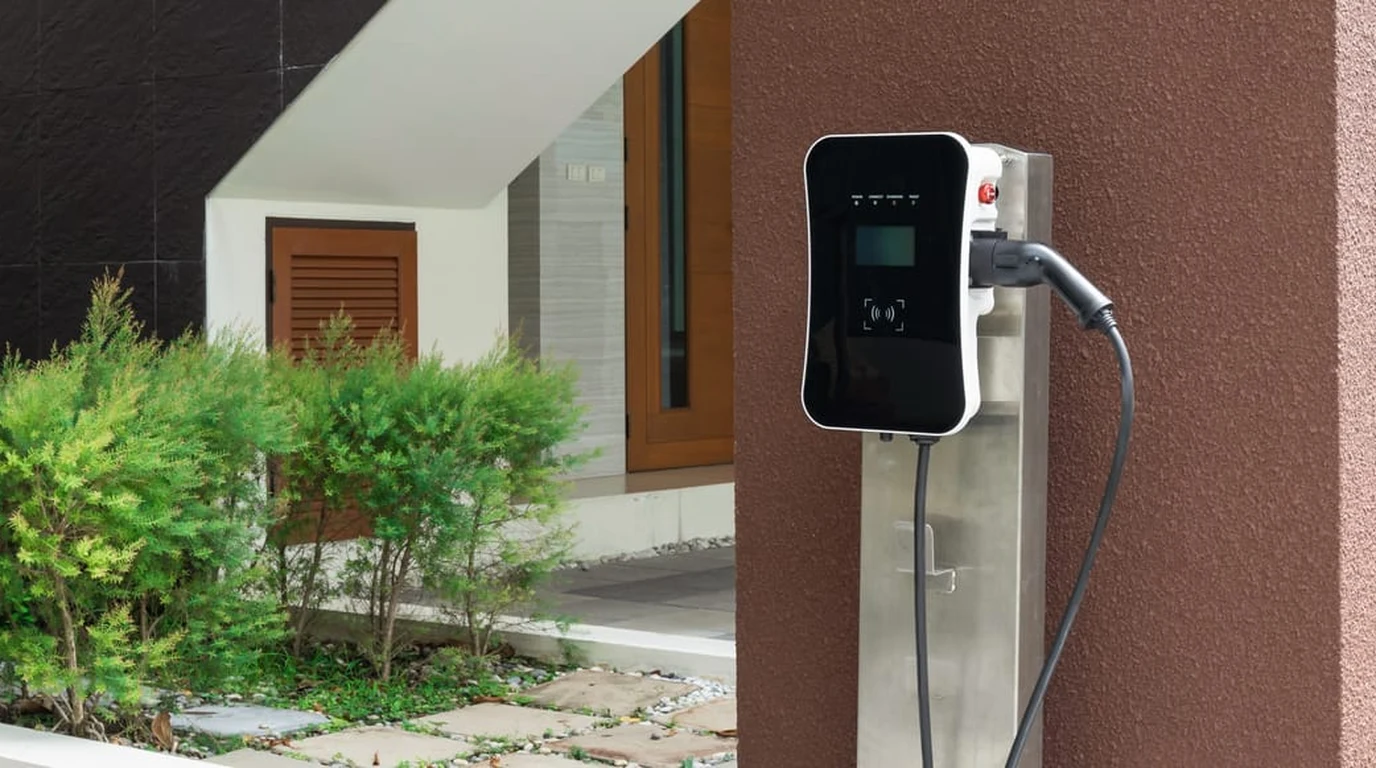
You’re standing in your garage, looking at a $50,000 electric vehicle that essentially functions as a massive, high-tech paperweight while your house sits in total darkness. It is one of the great engineering ironies of the modern era: you have 70 or 80 kilowatt-hours of lithium-ion energy sitting three feet from your kitchen, yet you’re still hunting for candles and worrying about the food in your freezer. For years, the “missing link” has been a piece of hardware that can bridge the gap between the Direct Current (DC) in your car’s battery and the Alternating Current (AC) your home’s refrigerator and HVAC system crave.
The frustration isn’t just about blackouts; it’s about the wasted economic potential. You’re buying power from the utility at peak rates while your car—a literal mobile power plant—sits idle. The Enphase Bidirectional EV Charger is the first serious attempt to solve this by shrinking a massive industrial power plant into a sleek, wall-mounted box. But before you call your electrician, you need to understand that this isn’t a “plug and play” appliance in the traditional sense. It is a fundamental architectural shift in how your home interacts with the energy grid.
Direct Practical Verdict:
The Enphase Bidirectional Charger uses Gallium Nitride (GaN) technology to enable Vehicle-to-Home (V2H) backup and Vehicle-to-Grid (V2G) export. To function, it requires an Enphase IQ System Controller 3 for grid isolation and an EV compliant with the ISO 15118-20 protocol. It effectively turns your EV into a whole-home battery, providing massive resilience during outages.
How does Gallium Nitride (GaN) change the bidirectional game?
If you’ve ever seen a traditional DC fast charger or an early-generation bidirectional inverter, you know they are typically the size of a small refrigerator and sound like a jet engine due to the massive cooling fans required. This is because traditional silicon-based power electronics lose a significant amount of energy as heat during the conversion process. Enphase took a different path by leveraging Gallium Nitride (GaN). If silicon is a reliable workhorse, GaN is a thoroughbred. It allows for much higher switching frequencies with significantly lower energy loss. In plain English: the charger can convert power from your car’s DC battery to your home’s AC circuits (and vice versa) with such high efficiency that the hardware can be smaller, lighter, and run much cooler. This charger is essentially a “mega-microinverter.” It utilizes the same software-defined architecture found in Enphase’s IQ8 series microinverters. By using GaN, Enphase has managed to integrate the power conversion, the communication logic, and the safety disconnects into a form factor that doesn’t require a structural reinforcement of your garage wall. This isn’t just an aesthetic win; it’s an engineering necessity. High efficiency means more of your car’s energy actually makes it into your home’s lights rather than being wasted as heat in the garage.What is the difference between V2H and V2G in the Enphase ecosystem?
I often hear homeowners use these terms interchangeably, but from a regulatory and technical standpoint, they are worlds apart. Understanding the distinction is the difference between having a resilient home and having a complicated legal headache with your utility provider. Vehicle-to-Home (V2H) is about “islanding.” When the grid goes down, the Enphase IQ System Controller 3 physically disconnects your home from the utility lines. This is a safety requirement to prevent your car from sending electricity back onto the wires where a utility worker might be making repairs. Once islanded, the bidirectional charger pulls energy from your EV to power your “critical loads”—or even your whole house, depending on your car’s output capacity. This is essentially a massive, mobile version of an Enphase IQ Battery. Vehicle-to-Grid (V2G) is a financial play. This happens while the grid is perfectly healthy. Your utility might offer a program where they pay you to “peak shave.” During a hot Tuesday afternoon when everyone’s AC is cranking, the utility can signal your Enphase system to export a few kilowatts from your car back to the grid. You get paid the premium peak rate, and the utility avoids a brownout. V2G requires a specific interconnection agreement with your utility, whereas V2H is primarily about your own domestic resilience.Why do most EV owners get the “Compatibility Trap” wrong?
Here is the “costly trap” I promised to warn you about: Just because your car has a CCS or NACS plug does not mean it can do bidirectional charging today. Many early EV adopters assume that a software update will magically enable this. The reality is more nuanced. Bidirectional charging requires the vehicle’s onboard Battery Management System (BMS) to support the ISO 15118-20 communication protocol. This is the “handshake” that allows the charger and the car to talk about voltage levels, state of charge, and safety limits. While the Enphase hardware is ready, many vehicles currently on the road lack the internal contactors or the software stack to allow energy to flow out of the battery port.| Feature | Standard Level 2 Charger | Enphase Bidirectional | DC Fast Charger (Public) |
|---|---|---|---|
| Primary Function | One-way charging only | V2H Backup & V2G Export | High-speed one-way charging |
| Power Conversion | Happens inside the car | Happens in the charger (GaN) | Happens in the large station |
| Grid Interaction | Passive Load | Active Grid Asset | Industrial Load |
| Hardware Needed | Standard 240V Circuit | IQ System Controller 3 | Commercial 480V Service |
| Efficiency | 85-90% | 96%+ (via GaN) | 92-95% |
Can your home’s electrical panel handle a bidirectional charger?
When you install a standard EV charger, you’re adding a “load”—something that consumes power. When you install an Enphase Bidirectional Charger, you are adding a “generation source.” This changes the math for your electrical panel. The Enphase system integrates into the IQ System Controller 3. Think of this controller as the brain of your home’s microgrid. It manages the connection between the utility, your solar panels, your stationary batteries (like the IQ Battery 5P), and now your car. If you have an older 100-amp or 125-amp main service panel, you will almost certainly need an upgrade or a “main lug only” subpanel configuration to accommodate the bidirectional flow. Furthermore, the wiring between the charger and the System Controller isn’t just standard Romex. You’re looking at a dedicated power circuit plus a communications cable (usually shielded twisted pair or a proprietary Enphase wireless link) to ensure the charger can receive the “Go/No-Go” signal from the controller during a grid failure.The Actionable Playbook: Preparing Your Home for V2H Today
If you want to be ready for the Enphase bidirectional rollout, you don’t wait for the box to arrive. You prepare the infrastructure now so the final installation is a simple “hang and commission” job. 1. The Infrastructure Audit: Verify your main service panel capacity. To truly utilize V2H, you should ideally have a 200-amp service. If you are installing solar now, ensure you are using the IQ System Controller 3 (not the older versions), as this is the only one designed to handle the specific communication requirements of the bidirectional charger. 2. Pre-Wire for Comms: Most electricians forget the data. Ensure there is a conduit run between your garage (where the charger will live) and your main electrical service (where the System Controller lives). You’ll need this for the Enphase Communications Kit 2, which allows the devices to talk in real-time. 3. Vehicle Verification: Check your EV’s technical specifications for “ISO 15118-20 compliance.” If you are shopping for a new EV, ask the dealer specifically about V2H support. Vehicles like the Ford F-150 Lightning and certain Hyundai/Kia models are leading the way, but the Enphase charger is designed to be the universal translator for any vehicle that follows the standard. 4. Critical Loads Strategy: Decide what you actually want to power. A 100kWh EV battery can power a whole house for days, but if you try to run your pool heater and your double-oven simultaneously, you’ll trip the internal breakers of the charger. Work with your installer to designate a “Critical Loads” subpanel if you want to maximize your backup duration.What about the vehicle’s battery warranty?
This is the most common question I get at the “coffee table.” Will using your car to power your house void your car’s warranty? For a long time, the answer was a murky “maybe.” However, the tide is turning. Manufacturers realize that V2H is a massive selling point. Enphase’s software is designed to be “battery-friendly.” It doesn’t just rip power out of the car; it manages the discharge rate to minimize thermal stress. Most modern EV warranties specify a total “Energy Throughput” (measured in MWh). Using your car for V2H does contribute to this throughput, but because home loads (typically 1-5 kW) are much lower than the loads experienced during highway driving (30-100 kW), the “wear and tear” on the battery is actually quite minimal.Frequently Asked Questions
Does the Enphase Bidirectional Charger work without solar panels? Yes. While it is designed to be part of the Enphase Energy System, you can use the bidirectional charger and an IQ System Controller 3 to provide backup power from your EV even if you don’t have a single solar panel on your roof. Can I use this charger with a Tesla? Currently, Tesla uses its own proprietary communication for V2H (Powerwall-centric). However, as Tesla migrates toward the NACS (SAE J3400) standard and opens up its software, the Enphase charger is hardware-ready to support any vehicle that adopts the ISO 15118-20 protocol. How fast does it charge the car compared to a standard charger? In “charging mode,” it functions as a high-end Level 2 charger, typically providing around 9.6 kW to 11.5 kW of power, depending on your circuit breaker size. This is enough to fully charge most EVs overnight.
Microgrid Solar Generation & Bidirectional EV Integration
Seasonal solar production dips highlight the need for flexible storage and bidirectional charging assets. For vehicle-to-home charging hardware and V2H capabilities, review our analysis on Solar Panel Snow Shedding: Tilt Angles & Production.