
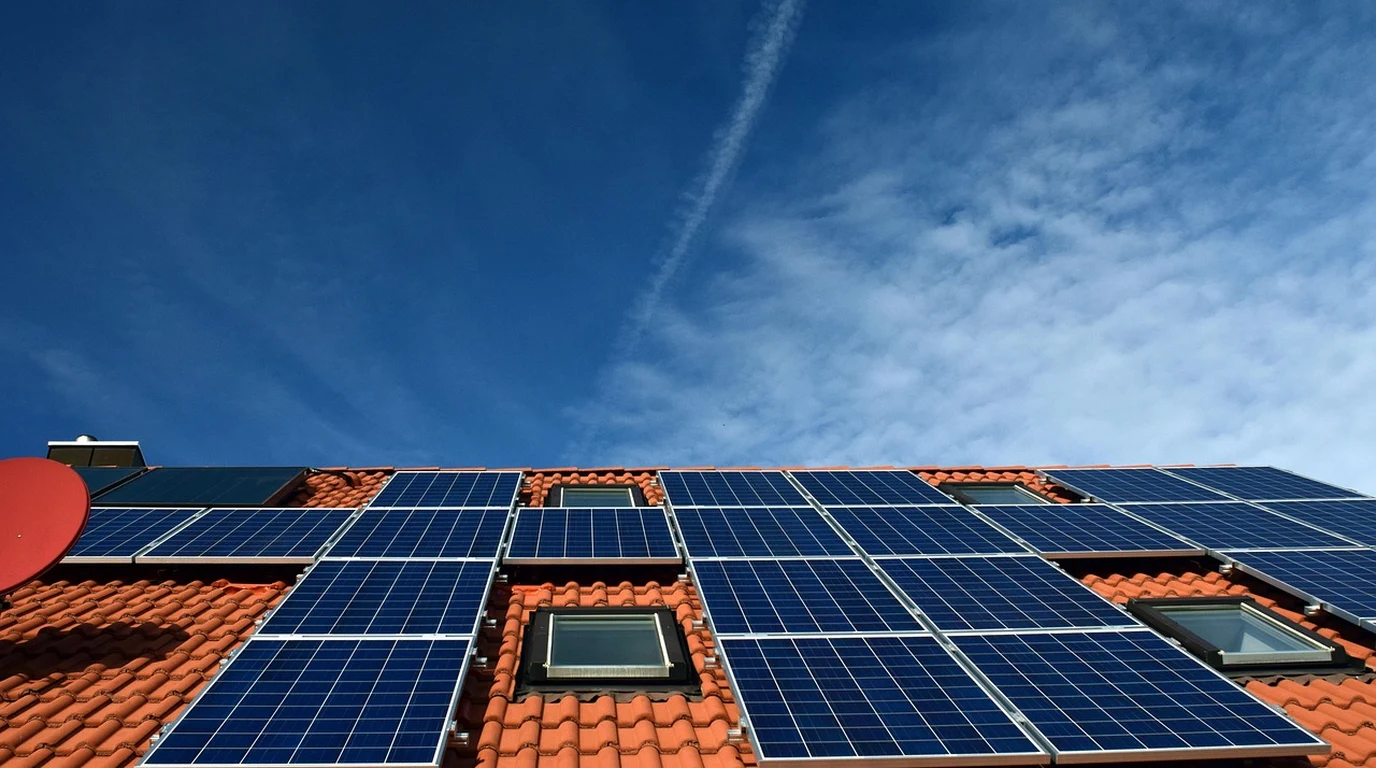
You wake up after a heavy Nor’easter, look out the window at your roof, and your heart sinks. Your high-tech, high-efficiency solar array—the one you spent months researching and thousands of dollars installing—is buried under six inches of heavy, wet snow. It looks less like a power plant and more like a series of expensive white rectangles. Your monitoring app shows a flatline of zero watts, and the anxiety starts to set in. You start wondering if you should grab a ladder and a broom, or if you’ve just made a massive financial mistake by going solar in a northern climate.
I’ve sat across the kitchen table from hundreds of homeowners and facility managers facing this exact “winter panic.” The sight of a dormant system during a bright, crisp winter day feels like watching money evaporate. But here’s the truth I’ve learned from nearly two decades in forensic solar engineering: that snow isn’t the ROI-killer you think it is. In fact, the way you react to that snow is often more dangerous to your system’s long-term health than the snow itself. We’re going to look at the physics of shedding, the “magic” of bifacial modules, and why your tilt angle is the single most important decision you’ll make before the first flake falls.
For optimal snow shedding, a tilt angle of 40° to 60° is the “gold standard.” While snow cover looks alarming, it typically accounts for only a 1% to 4% loss in annual yield. Use bifacial panels to trigger “bottom-up” melting, and never manually scrape panels, as this voids warranties and causes invisible micro-cracking.
Does Snow on Solar Panels Actually Ruin Your Annual ROI?
Let’s start by lowering your blood pressure. The most common misconception in the solar industry is that a snow-covered winter means a failed investment. It’s an easy trap to fall into because we tend to think of “lost days” as equal units of value. They aren’t. In northern latitudes, the sun is low on the horizon in December and January, and the days are punishingly short. Even if your panels were bone-dry and perfectly clean, they would only be producing a tiny fraction of what they generate in the long, high-intensity days of June or July.
Empirical studies from organizations like the Northern Alberta Institute of Technology (NAIT) have shown that even in regions with heavy snowfall, the total annual energy loss due to snow is remarkably low—usually between 1% and 4%. Why? Because by the time the “productive” sun returns in March and April, the ambient temperatures have risen enough that snow doesn’t stick for long. You are losing pennies in January to save dollars in July. If you’re stressing over a week of zero production in the dead of winter, you’re missing the forest for the trees. The system is designed for the annual cycle, not the daily snapshot.
Why Do Some Solar Panels Shed Snow Faster Than Others?
If you’ve ever watched a sheet of snow slide off a metal roof, you’ve seen the physics of shedding in action. Solar panels are essentially high-tech glass slides. They are topped with tempered, low-iron glass that is incredibly smooth. However, snow doesn’t just “slide” because it’s heavy; it slides because of a phenomenon called the “boundary layer melt.”
As soon as a tiny sliver of the dark solar cell is exposed to sunlight—even through a thin layer of snow—it begins to absorb photons and generate heat. Solar cells are dark for a reason; they are designed to be perfect black-body absorbers. This heat conducts through the glass, melting the microscopic layer of snow directly touching the panel. This creates a thin film of water that acts as a lubricant. Once that friction is broken, gravity takes over. This is why you’ll see an array stay covered for three days, and then suddenly, the entire mass slides off in a single, thunderous “whoosh.”
What Is the Best Solar Panel Tilt Angle for Snow Shedding?
This is where the “Costly Trap” comes in. Many installers optimize for the “average” annual sun position, which often lands between 30° and 35° for much of the US and Canada. While this is great for mid-summer production, it’s a “sticky” angle for snow. At 30°, the static friction of heavy, wet snow often overcomes the pull of gravity. You end up with “snow damming,” where the snow piles up at the bottom frame of the panel and prevents the rest of the sheet from sliding off.
If you move to a 45° or 60° tilt, the physics change dramatically. At these angles, the gravitational vector is much stronger. More importantly, a steeper angle reduces the “normal force” (the pressure pushing the snow down onto the glass), making it much easier for that water lubricant layer to do its job. In my experience, a 60° tilt will shed snow up to 5x faster than a 30° tilt, often clearing the array before the morning coffee is cold.
| Tilt Angle | Shedding Speed | Annual Yield Impact | Structural Load Risk | Best Use Case |
|---|---|---|---|---|
| 0° – 15° (Flat) | Very Poor | High (5-10% loss) | High (Snow Accumulation) | Arid climates only |
| 30° (Standard) | Moderate | Low (2-4% loss) | Medium | Residential Roofs |
| 45° (Steep) | Fast | Minimal (1-2% loss) | Low | Off-grid / High Snow |
| 60° (Vertical-ish) | Immediate | Negligible (<1% loss) | Very Low | Ground Mounts / Arctic |
Are Bifacial Solar Panels the Secret to Winter Energy Production?
If you are building a system in a snowy climate today and you aren’t using bifacial modules, you are leaving money on the table. Bifacial panels have glass on both the front and the back, allowing them to capture light that reflects off the ground (the albedo effect). In winter, snow is a literal mirror, reflecting up to 80-90% of sunlight back up toward the underside of your panels.
But the “secret” isn’t just the extra 10-15% of energy production from the back side. The secret is thermal activation. When the back of the panel starts generating electricity from the reflected snow-light, the entire cell warms up. This means the panel is being heated from both sides. This “bottom-up” melting is the most effective way to break the ice bond. I’ve seen bifacial arrays clear themselves in 20-degree weather while traditional monofacial panels stayed buried for a week. It is the single most effective passive snow-clearing technology we have.
Why You Should Never Use a Snow Rake on Your Panels
I need to be the “bad guy” mentor for a second: Put the snow rake down. I know it’s tempting. I know there are products marketed specifically as “Solar Rakes” with foam heads. Here is why I hate them: Micro-cracking.
Solar cells are made of crystalline silicon, which is essentially as brittle as a thin wafer of glass. When you apply uneven pressure to the surface of a panel—especially when it’s cold and the materials are contracted—you cause microscopic fractures in the silicon. You won’t see them with the naked eye. The panel will look fine. But under an electroluminescence (EL) test, the panel will look like a shattered mirror. These cracks create “hot spots” that degrade your production over the next 5 to 10 years and, in extreme cases, can lead to fire risks. Furthermore, most manufacturers (like LG, Hanwha Q Cells, or REC) explicitly state that manual snow removal can void your warranty. If you scratch that anti-reflective coating or crack a cell, you’re on your own.
The 4:00 PM Resolution: Your Winter Solar Maintenance Playbook
If you’re reading this because you’re worried about your current or future system, here is the concrete, three-step plan to handle snow like a pro. No ladders required.
- The Design Phase (Pre-Installation): If you are still in the planning stages, insist on a minimum 35° tilt, but aim for 40°+ if your local codes and roof allow. Specify bifacial modules with a clear backsheet or glass-on-glass construction. Ensure your installer uses a “frameless” or “low-profile frame” module if possible, which prevents the “lip” at the bottom of the panel from catching snow and starting a dam.
- The “Wait and See” Protocol (Active Snowfall): When the snow hits, do nothing. Monitor your inverter’s app. You are looking for the “tipping point”—that moment when a few watts start trickling in. This indicates the cells are warming. Once that happens, the system will likely clear itself within 24 hours of the sun coming out. If you have a ground mount, you can safely clear the snow underneath the panels to ensure the bifacial backside can see the ground, but leave the glass alone.
- The Structural Safety Check (Post-Storm): Instead of worrying about production, worry about load. Solar arrays are rated for specific snow loads (usually measured in Pascals, e.g., 5400 Pa). If you have an unprecedented “storm of the century” with three feet of wet, heavy snow, your concern isn’t the electricity—it’s the racking and your roof’s structural integrity. In these rare, extreme cases, hire a professional solar O&M (Operations and Maintenance) firm that uses specialized thermal equipment to clear the panels safely.
Frequently Asked Questions
Do solar panels melt snow?
Yes, but not like a heater. They melt snow through passive heat absorption. As dark surfaces, they absorb sunlight (even through thin snow), which warms the cells and creates a lubricated layer of water that allows the snow to slide off.
Will snow damage my solar panels?
Generally, no. Quality panels are tested to withstand heavy snow loads (up to 112 lbs per square foot). The danger isn’t the snow itself, but “uneven loading” or homeowners trying to scrape the snow off with hard tools, which causes micro-cracking.
Is it worth it to get solar in snowy states?
Absolutely. Some of the best solar markets in the world, like Germany and Massachusetts, have significant snowfall. The high efficiency of panels in cold temperatures (solar loves the cold!) often offsets the small percentage of energy lost during snow days.
Water heating energy profiles represent an ideal flexible load for residential solar arrays. For maximizing winter solar capture and panel clearing strategies, see our guide on Heat Pump Water Heaters: Cold Climate Basement COP.