
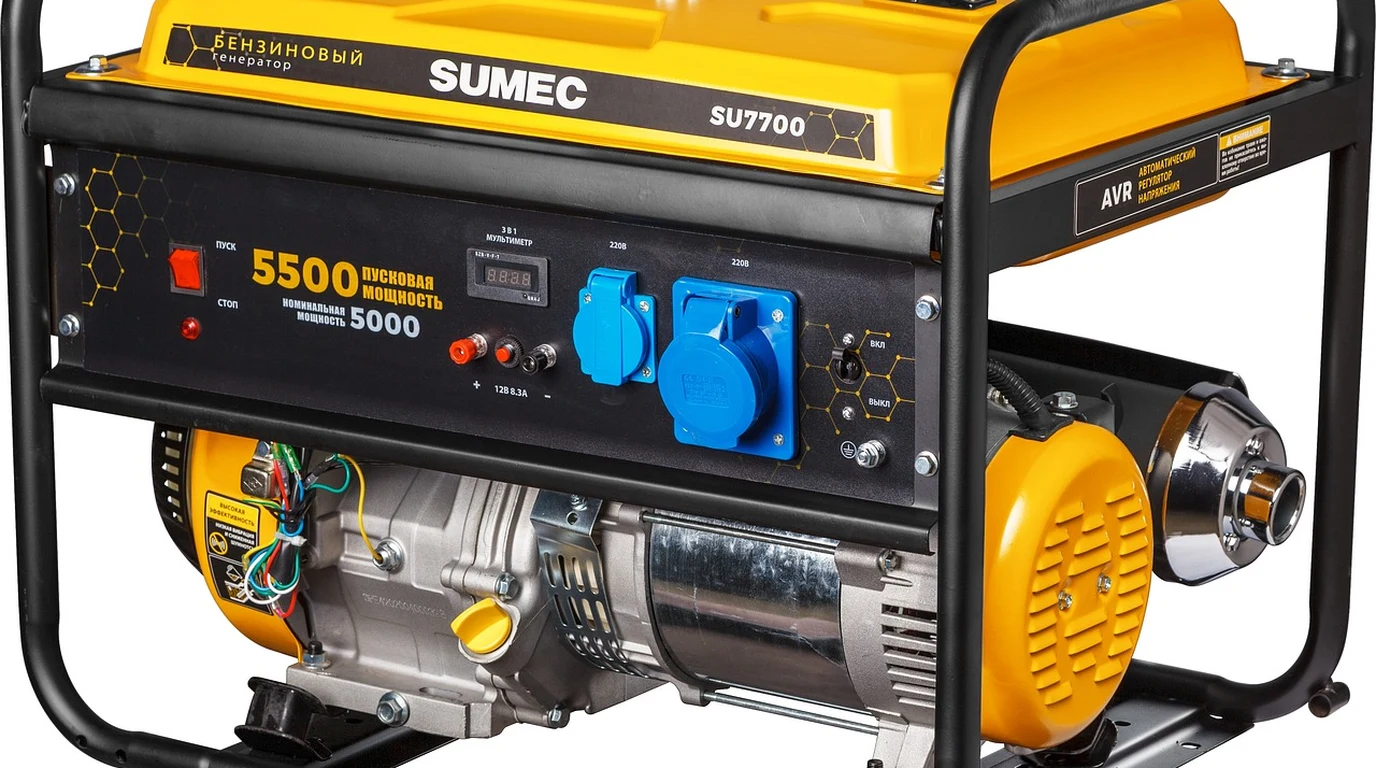
It’s 2:15 AM on a Tuesday in mid-January. Outside, a Nor’easter is screaming, and the weight of the ice has finally snapped the local feeder line. The house goes silent—that heavy, sudden silence that makes your heart sink because you know the thermal envelope of your home is now on a countdown. Within four hours, the air will turn crisp. Within twelve, you’re worrying about the copper pipes in the basement.
I’ve sat across the kitchen table from hundreds of homeowners facing this exact anxiety. You want to “fix” the power problem once and for all. You’ve looked at the shiny brochures for 22kW standby generators and the sleek, minimalist casing of a Tesla Powerwall or a FranklinWH battery. One feels like a rugged, old-school engine; the other feels like the future. But when the temperature is ten degrees below zero and the grid is down for the count, you don’t need “the future”—you need a solution that works without draining your retirement account or failing when the regulator freezes.
The table reveals a startling truth: the battery is actually the cheaper financial play over a decade, provided you can utilize the tax credit and you live in an area with high electricity rates where you can use the battery to avoid “Peak” pricing (Time-of-Use arbitrage).
However, TCO isn’t just about dollars. It’s about the “Cost of Failure.” If you live in a rural area where a snowstorm can knock out power for seven days and the roads are impassable for fuel trucks, a battery without a massive solar array is a liability. In that scenario, the generator’s higher TCO is essentially an insurance premium for indefinite survival.
Direct Practical Verdict:
For multi-day winter outages, a standby generator remains the TCO leader at $18,000–$22,000 over ten years. However, if your outages are frequent but shorter than 12 hours, a $25,000 battery system (post-incentives) offers superior reliability, zero maintenance, and silent operation that a mechanical engine simply cannot match in freezing conditions.
Why does the upfront price tag of a home battery feel so much higher than a generator?
Let’s talk about the “Sticker Shock” gap. When you call a local installer for a 22kW Generac or Kohler standby generator, they’ll likely quote you somewhere between $12,000 and $16,000 for a “turnkey” installation. That includes the unit, the automatic transfer switch (ATS), the gas plumbing, and the electrical labor. It feels manageable. Then, you ask about a battery. For a system capable of backing up a whole house—usually requiring at least two or three units like the Tesla Powerwall 3 or the Enphase IQ 5P—the quote jumps to $25,000 or even $35,000. Here is where most people stop. They see a 2x price multiplier and assume the battery is a luxury toy. But as your mentor in this space, I need you to look at the “Net Cost.” Thanks to the Inflation Reduction Act (IRA), home battery systems qualify for a 30% Federal Tax Credit (the Residential Clean Energy Credit). A $30,000 battery system suddenly has a $9,000 “discount” come tax season, bringing your effective cost down to $21,000. Standby generators, unless they are part of a very specific solar-hybrid configuration, generally do not qualify for this credit. The gap isn’t $20,000; it’s closer to $5,000 or $7,000. When you factor in that the battery has zero fuel costs and zero scheduled maintenance visits, that gap starts to evaporate by year five.What are the hidden maintenance costs of a standby generator during a week-long winter outage?
This is the “Costly Trap” that 80% of homeowners fall into. They think of a generator like a furnace—something that just sits there until it’s needed. In reality, a standby generator is a high-performance internal combustion engine. Imagine driving your car at 60 miles per hour, non-stop, for three days straight in a blizzard. That is exactly what a generator does during a major outage. Most manufacturers require a full oil and filter change every 50 to 100 hours of continuous run-time. If the power is out for four days, you are technically supposed to shut down the unit in the middle of the storm, let it cool, and crawl out into the snow to change the oil. If you don’t? You risk voiding the warranty or, worse, “slugging” the engine. I’ve seen $15,000 units turn into expensive lawn ornaments because the owner didn’t realize that “standby” doesn’t mean “maintenance-free.” Then there is the fuel. A 22kW generator running at half-load consumes about 2.5 to 3 gallons of propane per hour, or roughly 250 to 300 cubic feet of natural gas. In a prolonged winter event, you could easily burn through $100 to $150 of fuel per day. Over a decade of intermittent outages and weekly “exercise” cycles (where the generator runs for 10-20 minutes to keep the seals lubricated), you will spend thousands on fuel and professional servicing. Batteries, by contrast, have no moving parts. There is no oil to change. There are no spark plugs to gap. There is no “exercise” cycle that wakes up the neighbors at 10 AM every Saturday.How do lithium batteries actually perform when the temperature drops below freezing?
I hear this concern more than any other: “Graham, my cell phone dies in the cold. Why would I trust a giant battery to run my heater?” It’s a fair question. Lithium-ion chemistry—specifically the Lithium Iron Phosphate (LFP) cells used in modern units like the FranklinWH or Powerwall 3—does not like to be charged when the internal temperature is below freezing. However, the engineers anticipated this. Modern home batteries are equipped with internal thermal management systems. They use a small portion of their own stored energy (or grid power) to run internal heating blankets or liquid cooling/heating loops. As long as the battery has some charge, it will keep itself warm enough to function perfectly. The real “winter trap” for batteries isn’t the cold; it’s the load. In winter, your “baseload” is higher. Your furnace fan is running, your heat pump is working harder, and you’re spending more time indoors with the lights on. A 13.5 kWh battery can be drained in 3 hours if you’re trying to run an electric clothes dryer and a space heater simultaneously. To survive a winter outage with a battery, you must be a “load manager,” whereas a 22kW generator allows you to live almost as if the power never went out.Is a 10-year Total Cost of Ownership (TCO) comparison actually fair to both technologies?
To give you the “Gold Standard” answer, we have to look at the numbers side-by-side. We are assuming a standard 2,500 sq. ft. home with average backup needs.| Cost/Performance Metric | 22kW Standby Generator (Gas/LP) | 27kWh Battery System (2 Units) | 10-Year TCO Winner |
|---|---|---|---|
| Initial Installed Cost | $13,500 – $16,000 | $24,000 – $28,000 | Generator (Upfront) |
| Federal Tax Credit (ITC) | $0 (Typically) | -$7,200 to -$8,400 (30%) | Battery |
| Annual Maintenance | $250 – $500 (Oil, filters, plugs) | $0 (Solid state) | Battery |
| Fuel/Operating Cost | $100 – $600 per year (Usage dependent) | $0 (or ROI via TOU arbitrage) | Battery |
| Outage Duration | Indefinite (as long as fuel flows) | 12-24 hours (without solar recharge) | Generator (Resilience) |
| 10-Year Estimated TCO | $19,500 – $23,000 | $17,500 – $21,000 | Battery (Long-term) |
Can a solar-plus-battery system really keep the lights on during a five-day blizzard?
This is where I have to be the “honest mentor” and burst the marketing bubble. Many solar companies will tell you that a battery “charges from the sun so you have infinite power.” In July? Yes. In a January blizzard? Probably not. If your solar panels are covered in six inches of snow, they are producing zero watts. Even if you climb up and scrape them off, the winter sun is low on the horizon and the days are short. You might only get 20% of your typical daily production. If you’re pulling 1kW of power to keep your furnace and fridge running, but your snow-dusted solar array is only producing 800W for five hours a day, your battery is on a slow march to zero. For true winter resilience with a battery, you need to either: 1. Oversize the array: Have enough solar that even a “bad” day fills the battery. 2. Aggressive Load Shedding: You must be willing to turn off everything except the furnace, the fridge, and a few LED lights. No oven, no dishwasher, no EV charging. If you aren’t prepared to live like you’re “camping in your house,” a battery-only system for a week-long winter outage is a risky bet.The 4-Tier Home Resilience Playbook: Which one are you?
I’ve categorized the decision-making process into four tiers. Find where you fit, and you’ll have your answer.Tier 1: The “Budget Protector” (Priority: Lowest Upfront Cost)
If your main goal is to prevent the pipes from freezing and you have a tight capital budget, the 22kW Standby Generator is your winner. You accept the noise, the maintenance, and the fuel costs in exchange for a lower “entry fee” and the peace of mind that you can run your whole house indefinitely. * Action: Get three quotes from local electrical contractors who specialize in Generac or Kohler. Ensure they include the gas plumbing in the bid.Tier 2: The “Urban Professional” (Priority: Convenience & Reliability)
If you live in a suburb where outages happen 3-4 times a year but rarely last more than 12 hours, the Home Battery (e.g., Tesla Powerwall 3) is the superior choice. You won’t even notice the power went out (the switchover is <20ms, so your clocks won't even blink), and you never have to worry about engine maintenance. * Action: Look for a certified installer for FranklinWH or Tesla. Ask for a “whole home backup” design and verify your electrical panel has space for a gateway.Tier 3: The “Off-Grid Aspirant” (Priority: Energy Independence)
If you already have solar or are planning to install it, the Battery is a no-brainer. The synergy between the two—using the battery to store excess solar and the solar to recharge the battery during an outage—creates a “microgrid.” * Action: Ensure your solar inverter is compatible with your battery choice (AC-coupled vs. DC-coupled). The Powerwall 3 is particularly efficient here as it has a built-in solar inverter.Tier 4: The “Fortress Home” (Priority: Absolute Resilience)
If you have the budget and live in a high-risk climate (e.g., Maine, Buffalo, the Rockies), the “Gold Standard” is a Hybrid System. You install a battery for the immediate, seamless backup and a smaller, portable or standby generator to “top off” the batteries if the sun doesn’t shine for three days. * Action: This requires a sophisticated “Automatic Transfer Switch” or a smart panel like Span.io that can manage multiple power sources.Frequently Asked Questions
Does a home generator add more value to a home than a battery? Currently, standby generators have a slight edge in “perceived value” for traditional homebuyers because the technology is well-understood. However, in markets with high energy costs (California, Massachusetts), a battery system integrated with solar is increasingly seen as a premium asset that commands a higher resale price. Can I install a home battery myself to save on the TCO? I strongly advise against it. High-voltage DC systems and LFP battery chemistry require specialized training and permitting. Furthermore, to claim the 30% Federal Tax Credit, you generally need professional documentation of the installation. How loud is a standby generator during a winter night? Most modern units operate at 65–75 decibels. For context, that’s about the volume of a vacuum cleaner running in your yard. In a quiet, snow-covered neighborhood, this can be disruptive to neighbors. Batteries are completely silent, which is a significant “quality of life” factor. What happens to a battery if it hits 0% charge during a cold snap? This is a critical failure state. If a battery reaches 0% and cannot recharge (due to no sun or no grid), the internal heater will shut off. If the cells then freeze while at 0% SoC (State of Charge), it can permanently degrade the battery. Most smart systems will “reserve” 10-20% of power specifically to prevent this, but it’s a risk to monitor during long outages.
Winter Energy Resilience & Generator Hybrid Economics
Battery efficiency losses compound under low-temperature conditions and extended outages. For total cost comparisons between battery systems and backup generators, read our guide on Battery Round-Trip Efficiency: AC vs DC Loss Math.