
It is 4:15 PM on a humid August Tuesday when the utility grid goes dark. Outside, transformers hum and die under the strain of a regional heat wave. Inside, your $18,000 solar-plus-storage setup immediately islands itself from the grid. For ten seconds, everything feels like a triumph. Then, reality sets in. Your central air conditioner cycles on, drawing a massive locked rotor amp surge. Downstairs, the electric water heater elements kick in to restore thermal energy, while the garage EV charger continues pulling 48 amps. Within four hours, your 13.5 kWh battery bank is completely depleted, leaving your home dark, warm, and vulnerable for the rest of the night.
This frustrating scenario happens every week to homeowners who install cutting-edge battery storage behind legacy mechanical subpanels. You were likely told that a traditional “critical loads panel” was all you needed to weather power outages. In reality, static circuit breaker selection forces an impossible compromise: hardwire only a tiny fraction of your home’s circuits and live like you’re camping, or include heavy appliances and risk draining your storage capacity in a matter of hours.
Choosing a SPAN Smart Panel over a mechanical subpanel replaces static 10-circuit breaker configurations with dynamic, real-time software control across all 32 circuits. While SPAN costs roughly $5,500 installed versus $1,800 for a traditional subpanel, its automated load shedding extends a single 13.5 kWh battery’s runtime from 8 hours to over 24 hours without costly physical rewiring.
How Does a SPAN Smart Panel Actually Differ From a Critical Loads Subpanel?
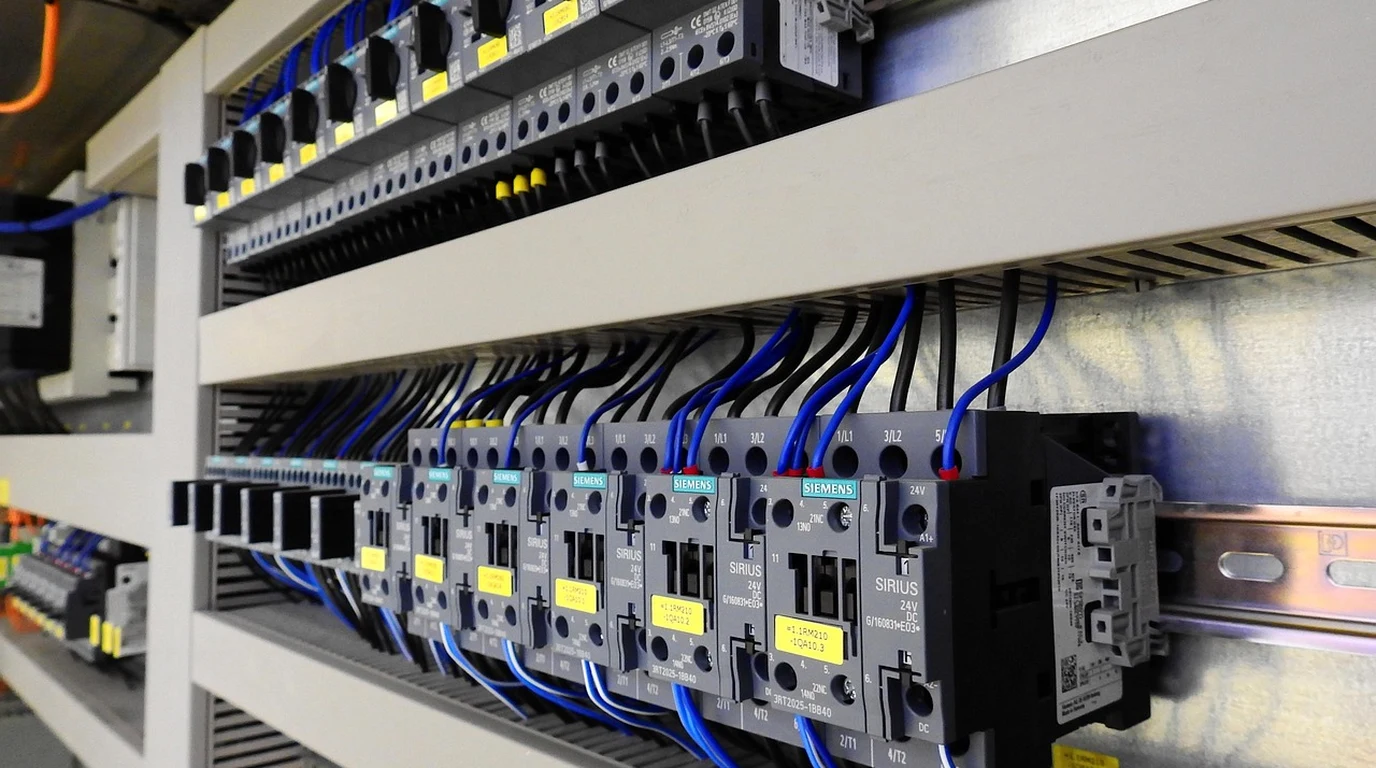
To understand why traditional energy storage setups fail during extended outages, you have to look at the physical architecture inside your electrical panel. For nearly a century, residential power distribution has relied on mechanical thermal-magnetic circuit breakers snapped onto dual busbars. When an electrician installs a traditional “critical loads subpanel,” they physically sever 8 to 12 select circuits from your main breaker box—typically the refrigerator, a few lighting runs, the internet router, and gas furnace blowers—and wire them into a separate metal box connected to your battery inverter.
Once those copper conductors are landed inside a standard subpanel, your energy topology is frozen in metal and plastic. If a major multi-day ice storm hits and you decide you would rather power your kitchen microwave than the upstairs guest bedroom lights, you cannot change your mind without opening up live electrical enclosures with a screwdriver. More importantly, mechanical subpanels are blind. They cannot report how many watts an individual appliance is drawing, nor can they react dynamically when battery capacity drops below critical thresholds.
The SPAN Smart Electrical Panel eliminates this physical wall by digitizing power distribution at the busbar level. Standard mechanical branch breakers still provide fundamental overcurrent protection inside the SPAN enclosure, but each of the 32 branch circuit slots is wired through high-speed solid-state relays paired with dedicated current transformers (CTs) and voltage sensing hardware. This embedded hardware measures current and voltage waveforms on every circuit in real time, executing local telemetry processing directly on the panel’s internal gateway.
Instead of hardwiring a tiny subset of your home into a tiny secondary subpanel, the SPAN Smart Panel directly replaces your primary 200-amp main service panel or downstream main subpanel. Every circuit in your house remains physically landed inside a single main enclosure, but every circuit becomes individually programmable through software micro-controllers. Instead of relying on static copper pathways, your microgrid architecture operates on programmable logic controllers that can shed, throttle, or prioritize any line-level load in milliseconds.
Why Do Traditional Subpanels Cause Solar Battery Drain During Blackouts?
The core mathematical flaw of traditional critical load subpanels comes down to the stark difference between continuous power draw and instantaneous energy capacity. Consider a standard, high-performance residential battery storage unit like the Tesla Powerwall 2, Tesla Powerwall 3, or Enphase IQ Battery 5P. A single storage module typically provides approximately 13.5 kWh of usable continuous energy capacity with a continuous power delivery output ceiling between 5.0 kW and 11.5 kW.
Let’s run the actual energy balance equations under real-world household conditions. In a standard microgrid setup without dynamic load management, a mechanical subpanel might contain the following 240V and 120V circuits:
- Central Air Conditioner / Variable Speed Heat Pump: 3,500W continuous operating draw (with peak LRA motor start spikes up to 15,000W).
- Electric Clothes Dryer: 4,500W continuous draw while tumbling and heating.
- Standard Refrigerator & Garage Freezer: 300W baseline combined average draw.
- Lighting, Wi-Fi Routers, & Home Office: 450W combined draw.
- Level 2 Electric Vehicle Charger: 7,600W (32 amps at 240V continuous).
If grid power drops while the EV is plugged in and the heat pump is running, your total continuous demand instantly spikes to 15,800 watts (15.8 kW). A single 13.5 kWh battery operating without automated software intervention will immediately trip its internal circuit breaker due to overcurrent protection, dropping your home into total darkness within seconds. Even if the EV charger is turned off and the aggregate load sits at a moderate continuous 4,500 watts, simple energy division shows the cold hard truth:
13.5 kWh Total Capacity / 4.5 kW Average Load = 3.0 Hours Total Operating Runtime
This rapid drain is where SPAN’s software intelligence fundamentally transforms microgrid economics. When the SPAN panel detects a grid disconnection signal via its low-latency integration with your battery gateway, its local microcontroller immediately executes an automated shedding protocol across three custom software priority tiers:
- Must-Have Tier (Shed Priority 3 – Never Shed): Medical equipment, well pumps, refrigeration, internet routers, and essential kitchen outlets. Total baseline draw: ~400 watts.
- Nice-to-Have Tier (Shed Priority 2 – Dynamic Throttling): Primary HVAC systems, main living space lighting, and garage door openers. Active only when battery State of Charge (SoC) remains above 50%.
- Non-Essential Tier (Shed Priority 1 – Instant Shed): EV chargers, electric water heaters, hot tubs, pool pumps, and secondary bedroom circuits. shed within 50 milliseconds of grid loss.
By dropping high-draw heating elements and motor loads immediately upon islanding, SPAN shrinks the home’s baseline continuous power consumption from 4,500 watts down to a clean 450 watts. Recalculating that same battery capacity yields astonishing gains:
13.5 kWh Total Capacity / 0.45 kW Average Load = 30.0 Hours Total Operating Runtime
Without purchasing a second $10,000 battery module or running a single additional foot of Romex wire through your drywall, intelligent automated load shedding quadruples your operational survival window during grid failures.
Is a SPAN Smart Panel Worth the Extra $3,500 Cost Over a Traditional Subpanel?
When evaluating the financial justification for smart hardware against conventional mechanical equipment, you must analyze both upfront capital expenditures and hidden downstream balance-of-system installation costs. A surface-level quote from an electrical contractor often makes the mechanical subpanel appear drastically cheaper, but that single line item hides severe architectural tradeoffs.
A standard 125-amp or 200-amp mechanical critical loads subpanel costs roughly $250 to $400 for the physical box and breaker hardware. However, the labor required to identify, trace, disconnect, and re-route 10 to 12 individual branch circuits from your existing main panel into a secondary subpanel location routinely adds $1,200 to $1,800 in electrician labor. When paired with an upstream manual or automatic transfer switch enclosure, the realistic turnkey cost for a traditional subpanel install sits between $1,800 and $2,400.
In contrast, the hardware MSRP for a SPAN Smart Panel sits at approximately $3,500. Installation labor generally ranges from $1,800 to $2,500, depending on whether the job requires a full main service panel replacement, meter socket reconfiguration, or service entrance conductor upgrades. Total turnkey installation for a SPAN panel averages between $5,300 and $6,000.
While this leaves a net upfront cost premium of roughly $3,500 for the SPAN setup, the smart panel frequently yields immediate net-positive savings across three critical microgrid infrastructure vectors:
First, avoiding battery oversizing. To achieve 24 to 36 hours of off-grid resiliency using static subpanels, homeowners are typically forced to purchase a second or third battery module purely to handle unmanaged surge spikes and un-sheddable background loads. Adding a second 13.5 kWh storage unit costs between $9,000 and $12,000 fully installed. Spending $3,500 on dynamic software shedding to unlock 30+ hours from a single battery saves $5,500 to $8,500 in total system capital outlay.
Second, bypassing service panel upgrade mandates (NEC 220 Load Calculations). Under National Electrical Code (NEC) Article 220, adding high-amp electrification loads like heat pumps, induction ranges, and Level 2 EV chargers often forces a homeowner to upgrade their utility grid connection from 200 amps to 400 amps. Utility transformers, trenching, and larger service drop conductors can easily push service upgrade costs beyond $8,000. SPAN features an integrated digital load management feature (SPAN Power Director) certified under NEC 220.61 and 220.87. This system automatically throttles or sheds controllable loads (such as EV chargers) whenever total panel draw approaches the 200-amp main service limit, completely eliminating the regulatory requirement for a costly physical utility service upgrade.
Third, leveraging Federal Tax Credits. Under the Inflation Reduction Act (IRA) Section 25D, energy storage systems installed with smart load management panels eligible under microgrid interconnect standards qualify for the 30% Residential Clean Energy Credit. Additionally, standalone electrical panel upgrades performed in conjunction with qualified electrification improvements can leverage Section 25C tax credits, further narrowing the net cash delta.
| Architecture Dimension | Traditional Mechanical Subpanel | SPAN Smart Electrical Panel | Microgrid System Impact |
|---|---|---|---|
| Circuit Capacity & Control | Static 8–12 hardwired circuits; manual breaker switching required. | Dynamic software control across all 32 branch circuits. | Whole-home circuit visibility without physical rewiring limitations. |
| Off-Grid Load Management | None; continuous draw from landed circuits until battery dies. | Automated Priority Tier shedding based on live battery State of Charge. | Extends 13.5 kWh battery backup runtime from 8 hours to 24+ hours. |
| Hardware & Install Cost | $1,800 – $2,400 total installed cost. | $5,300 – $6,000 total installed cost. | Upfront cost premium offset by eliminating 2nd battery requirements. |
| NEC 220 Load Calculation Relief | No; high-amp additions require formal utility panel size upgrades. | Yes; certified digital load throttling prevents service main overloads. | Bypasses $4,000–$8,000 400A utility service upgrades for home electrification. |
| Grid Arbitrage & Time-of-Use | Passive; reliant entirely on inverter-level schedule capabilities. | Active line-item load scheduling to maximize peak rate avoidance. | Saves $300–$700 annually on utility electric bills via peak shaving. |
How Should You Design Your Home Microgrid Load Management Step-by-Step?
Designing a resilient, ultra-efficient home microgrid using a smart panel requires a methodical approach to energy balancing, circuit mapping, and code compliance. Below is the precise engineering playbook to follow when executing your system setup.
Step
Smart Microgrids, Panel Load Shedding & Home Power Management
Hardware electrification frequently collides with utility service limits unless dynamically managed by smart panel logic. Read our teardown on Home Electrical Panel 100A to 200A Upgrade Costs.
Residential Panel Sizing, Load Calculations & Electrical Safety
Continuous electrical loads from electric vehicle charging require strict adherence to branch circuit ampacity tables. See our engineering teardown on Level 2 EV Charger Wire Gauge: 40A vs 50A Breakers.
Hardware electrification frequently collides with utility service limits unless dynamically managed by smart panel logic. Read our teardown on Home Electrical Panel 100A to 200A Upgrade Costs.
Continuous electrical loads from electric vehicle charging require strict adherence to branch circuit ampacity tables. See our engineering teardown on Level 2 EV Charger Wire Gauge: 40A vs 50A Breakers.