
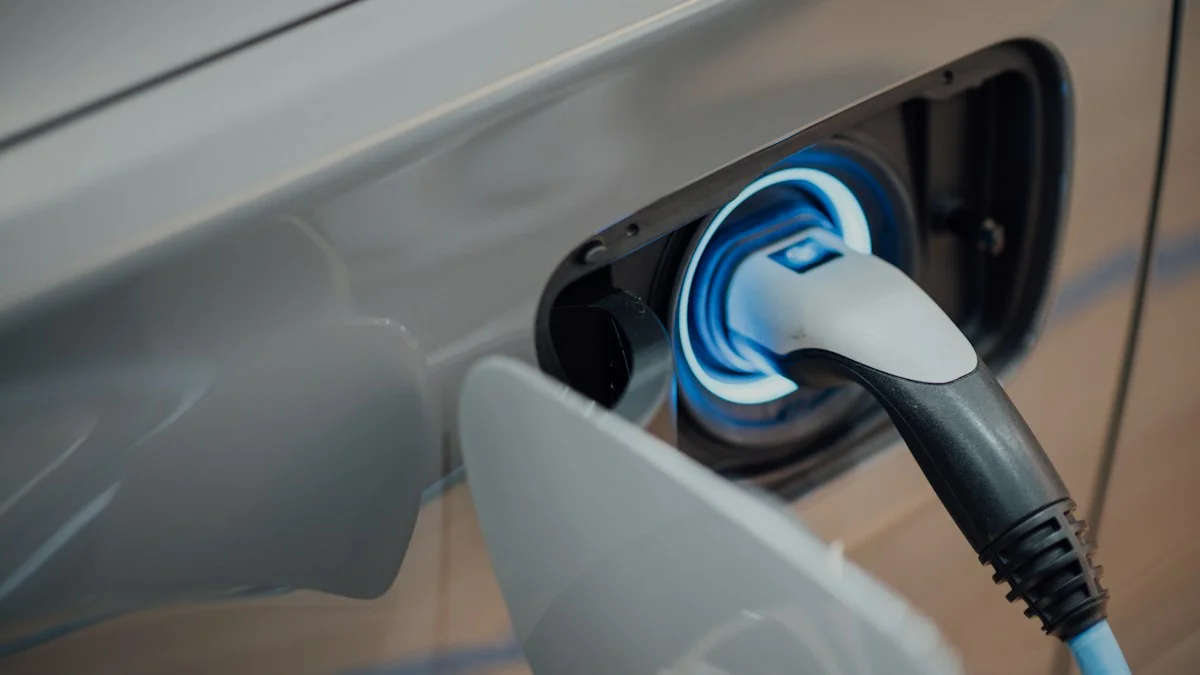
- Standardization Milestone: ISO 15118-20 establishes the first universal, interoperable digital protocol standardizing Vehicle-to-Home (V2H) and Vehicle-to-Grid (V2G) bidirectional power flow.
- Architecture Split: Enables both high-power DC off-board discharge (up to 22 kW directly into home hybrid inverters) and AC on-board bidirectional power flow.
- Grid Disconnection Mandate: Requires automated UL 1741 CRD microgrid isolation switches to prevent fatal backfeeding into utility distribution lines during blackouts.
What is ISO 15118-20 and Why is it Essential for V2H?
Historically, early bidirectional charging projects relied on proprietary Japanese CHAdeMO connectors or closed manufacturer ecosystems (such as Ford’s proprietary Charge Station Pro). These bespoke systems locked homeowners into specific vehicle models and dedicated wall boxes that could not communicate with standard third-party home energy storage systems.
ISO 15118-20 solves this fragmentation by formalizing standardized data schemas for bidirectional power scheduling, dynamic state-of-charge (SoC) reporting, vehicle battery degradation boundaries, and cryptographic authentication. This enables a universal NACS or CCS bidirectional wall box to draw backup power from any compliant vehicle manufacturer, aligning directly with our findings on NACS bidirectional V2H.
AC Bidirectional vs. DC Bidirectional V2H Architecture
While AC V2H simplifies the wall charger (reducing EVSE hardware costs to $1,000–$1,500), it restricts continuous discharge capacity to the thermal limits of the vehicle’s onboard inverter (typically 7.6 kW to 9.6 kW). Furthermore, onboard inverters add weight, cost, and complexity to the automobile itself.
Conversely, DC V2H extracts high-voltage direct current directly from the vehicle’s traction battery contactors. An external stationary hybrid inverter—such as Enphase’s upcoming IQ Bidirectional EV Charger or SolarEdge’s DC Bi-Di EVSE—handles rectification and islanding at power ratings up to 19.2 kW or 22 kW, allowing an EV battery to power large air conditioners, heat pumps, and cooking appliances simultaneously.
| Architecture Dimension | DC Bidirectional V2H (Off-Board) | AC Bidirectional V2H (On-Board) | Engineering Reality |
|---|---|---|---|
| Peak Discharge Capacity | 11.5 kW – 22.0 kW (Full Home) | 7.6 kW – 9.6 kW (Critical Loads) | DC runs high-tonnage heat pumps |
| Hardware Location | Wall-mounted stationary inverter | Inside vehicle chassis | DC keeps vehicle curb weight lower |
| Wall Box Equipment Cost | $3,500 – $6,000 | $1,200 – $2,000 | AC requires significantly lower capex |
| Vehicle Battery Wear Impact | Managed via ISO 15118-20 C-rate cap | Managed via vehicle BMS limits | Negligible (under 0.2C discharge) |
| Connector Compatibility | NACS (J3400) / CCS Combo 1 | NACS (J3400) / J1772 | NACS standardizes both pin sets |
Does V2H Discharging Void Your EV Battery Warranty?
A typical residential home consumes 15 to 30 kWh per day, drawing a modest continuous average load of 1.5 to 2.5 kW. For an 80 kWh EV battery, this corresponds to an exceptionally gentle discharge rate of less than 0.05C—far milder than highway driving or 250 kW DC fast-charging. Laboratory cycling data confirms that discharging an EV for home backup degrades the battery cell chemistry far less than rapid DC road trips.
When paired with an automated microgrid islanding switch or stationary home battery storage, an electric truck with a 130 kWh battery pack can power an energy-efficient home for 5 to 7 days during catastrophic winter grid failures.
People Also Ask
Can any EV do Vehicle-to-Home backup?
No. The vehicle’s onboard battery management software and connector pins must support bidirectional power flow. Current compliant models include the Ford F-150 Lightning, Tesla Cybertruck, GM Ultium vehicles (Silverado EV), and Hyundai Ioniq 5/6 (V2L/V2H).
What extra hardware is needed for V2H at home?
You need an ISO 15118-20 compliant bidirectional charger, an automated microgrid interconnection device (MID / transfer switch) with sub-second islanding, and a critical loads subpanel or smart electrical panel.
How long can an EV battery power an average house?
An EV with an 80 kWh battery pack can power an average home (consuming 20 kWh/day) for 3 to 4 days during an emergency, or up to 7 days if non-essential loads are shed.