
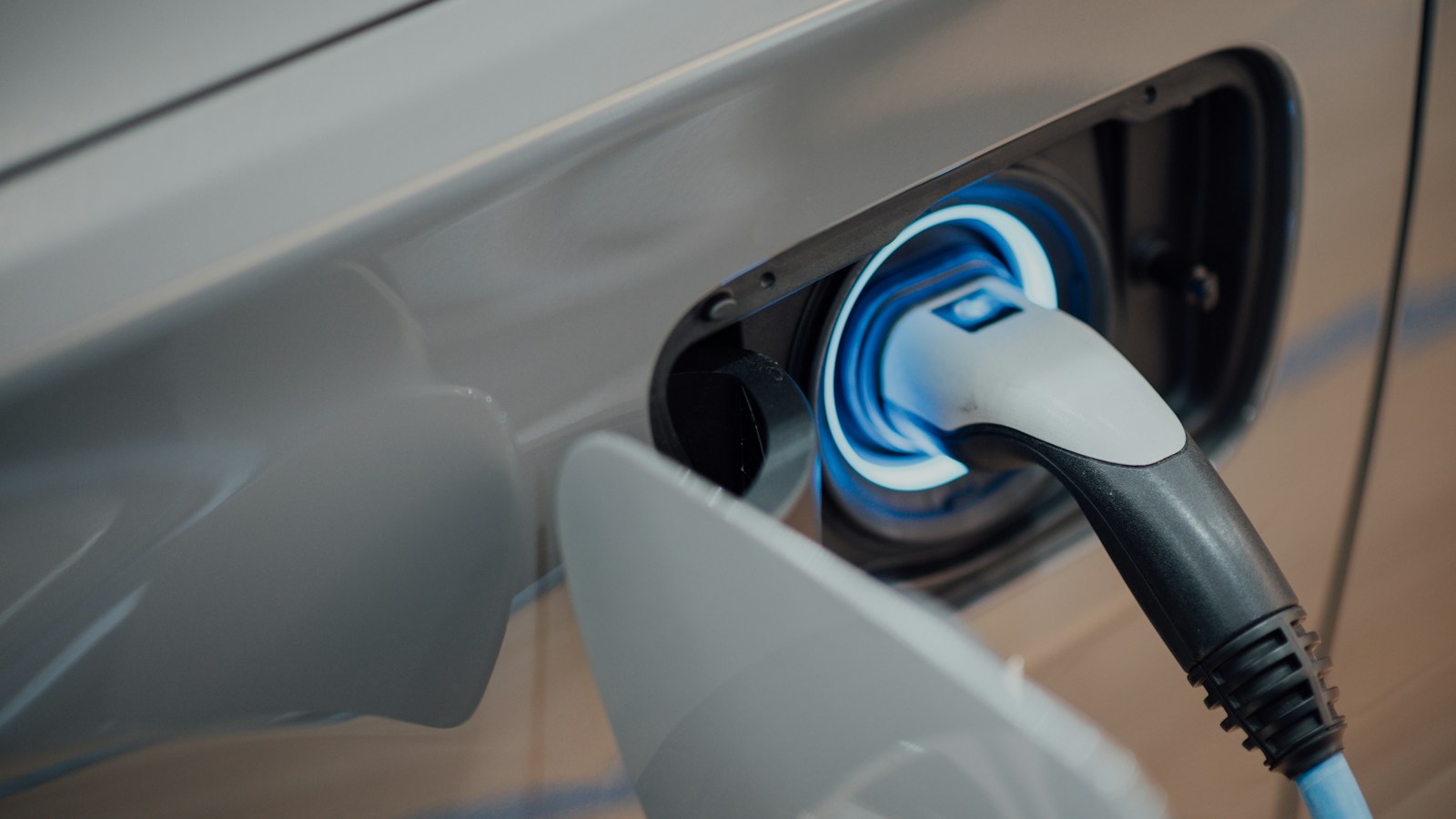
For over a decade, clean energy advocates pointed to a glaring thermodynamic absurdity: homeowners spent $15,000 to $25,000 installing 13.5kWh stationary battery packs on their garage walls while a 100kWh battery pack sat parked right beside it inside their electric vehicle, completely unable to export a single watt back into the house.
In 2026, the convergence of the SAE J3400 (NACS) standard, the universal rollout of ISO 15118-20 digital communication protocols, and dedicated bidirectional DC residential gateways has finally dismantled this artificial boundary. Vehicle-to-Home (V2H) technology transforms an electric vehicle from a passive transportation load into the active, primary battery storage anchor of the home.
Architectural Approaches: AC-Coupled vs. DC-Coupled V2H
Not all bidirectional charging systems operate on the same electrical topology. To understand installation complexity, examine the two competing hardware architectures in the 2026 residential market:
| System Metric | AC-Coupled V2H (On-Board Inverter) | DC-Coupled V2H (Off-Board Inverter) | Electrical Engineering Takeaway |
|---|---|---|---|
| Primary Conversion Point | Inside the Vehicle (On-Board Charger) | Wall-Mounted External Gateway | DC systems remove vehicle weight & heat penalties |
| Maximum Discharge Power | 9.6 kW (40A @ 240V) | 19.2 kW (80A @ 240V) | DC output effortlessly starts high-surge HVAC compressors |
| Connector Standard | Proprietary dual-channel or modified J1772 | NACS (SAE J3400) / CCS Combo 1 | Direct high-voltage DC contactors bypass onboard limits |
| Round-Trip Efficiency (RTE) | 78% – 82% | 88% – 92% | Direct DC integration minimizes AC-DC-AC conversion losses |
| Installed Hardware Cost | $3,500 – $5,000 (Switch + Smart Box) | $6,500 – $9,500 (Full Inverter Gateway) | Still 50% cheaper than buying 80kWh of home batteries |
The Protocol Backbone: ISO 15118-20 and PLC Communication
Historically, bidirectional charging was hobbled by proprietary walled gardens (such as early Nissan Leaf CHAdeMO systems or Ford’s proprietary Home Integration System). In 2026, the entire industry has converged on ISO 15118-20 (Road Vehicles — Vehicle to Grid Communication Interface).
Operating over Power Line Communication (HomePlug Green PHY) injected directly onto the Control Pilot (CP) pin of the NACS / CCS connector, ISO 15118-20 enables digital handshakes between the EV’s Battery Management System (BMS) and the home gateway:
# ISO 15118-20 Bidirectional Digital Handshake Sequence:
1. SupportedAppProtocolRequest -> Mutual TLS Authentication (mTLS)
2. ServiceDiscovery -> Identifies BPT (Bidirectional Power Transfer) Capability
3. DynamicPowerLimitNegotiation -> Wall Gateway requests MaxDischarge (e.g., 400V @ 48A DC)
4. CableCheck & PreCharge -> Match DC contactor voltages within 10V
5. BPT_DischargeLoop -> Real-time P/Q active power tracking & anti-islanding heartbeats (20ms)
This automated digital protocol allows homeowners to set reserve battery floors directly on their smartphone. For instance, you can program the system to export power during peak utility rate hours ($0.45/kWh) down to a 50% state-of-charge (SoC), guaranteeing at least 150 miles of driving range remains in the battery for morning commutes.
Grid Islanding & Neutral-Ground Bonding Safety Realities
Deploying a 15kW bidirectional inverter into a residential split-phase (120V/240V) electrical panel is not as simple as plugging into an appliance outlet. In an off-grid scenario, utility lines drop, and the home must physically disconnect from the grid within 16 milliseconds to prevent back-feeding fallen power lines and electrocuting line workers (violating IEEE 1547 and UL 1741 standards).
Furthermore, an active EV battery pack operates floating with respect to earth ground. When connected to the grid, the home panel’s neutral-to-ground bond establishes the system ground reference. During an outage, the Microgrid Interconnection Device (MID) must disconnect utility hot and neutral lines while maintaining or establishing a local neutral-ground bond for the inverter, preventing deadly floating voltage potentials on residential branch circuits.
Pairing a high-capacity V2H setup with efficient residential HVAC, such as sub-zero cold-climate heat pumps, ensures that even during multi-day winter blizzards at -20°C, the vehicle’s massive 80kWh+ battery bank easily carries heating and critical loads without requiring noisy, fossil-fuel-guzzling standby generators.
Battery Degradation Forensics: LFP vs. NMC Under V2H Cycling
The number one objection from EV owners is battery wear: “Will powering my home degrade my car’s battery?”
The answer depends entirely on the underlying cell chemistry, as detailed in our forensic analysis of LFP vs. NMC battery storage chemistry. Average residential power draw is remarkably gentle on an EV battery. Running a typical 2kW continuous whole-home load on an 80kWh battery represents a microscopic discharge rate of 0.025C—compared to 1.5C to 2.5C during highway driving or DC fast charging.
On vehicles utilizing Lithium Iron Phosphate (LFP) cells, calendar aging and cyclic degradation from V2H usage are mathematically negligible. LFP packs easily survive 3,500 to 5,000 full cycles before reaching 80% state of health. Even on traditional Nickel Manganese Cobalt (NMC) packs, restricting V2H discharge to the 30%–70% SoC window virtually eliminates mechanical cathode stress, costing less than 0.8% additional capacity loss over five years of active home backup service.
Where to Expand Your Energy Architecture Next
Deepen your residential electrification and microgrid engineering with these core blueprints:
- LFP vs. NMC Home Battery Storage: Chemical Safety & Cycle Life Forensics
- Cold-Climate Heat Pumps at -25°C: Vapor-Injection & Sub-Zero COP
People Also Ask
Does V2H bidirectional charging void my electric vehicle warranty?
No, provided you use automaker-approved bidirectional equipment. Major manufacturers (including Ford, Tesla, Hyundai, and GM) explicitly support V2H backup in their modern vehicle warranties, provided maximum cycle limits or approved smart gateways are utilized.
Can an EV power a whole home during a winter power outage?
Yes. An average single-family home consumes between 15kWh and 25kWh of electricity per day (including heating with an efficient heat pump). A fully charged 80kWh to 100kWh EV battery can easily provide 3 to 5 full days of complete off-grid power without rationing.
What is the difference between V2L, V2H, and V2G?
V2L (Vehicle-to-Load): Provides standard 120V/240V outlets directly on the car to plug in individual appliances. V2H (Vehicle-to-Home): Connects into the home electrical panel via an automatic transfer switch to power the entire building during an outage. V2G (Vehicle-to-Grid): Exports stored vehicle energy back to the public utility grid for revenue or grid balancing.
Thermal Systems Update (2026): For deep analysis of how whole-home heating loads interact with microgrids during extreme winter conditions, read our teardown: Cold-Climate Heat Pump COP Curves at -25°C: Vapor-Injection vs. Gas Auxiliary.