
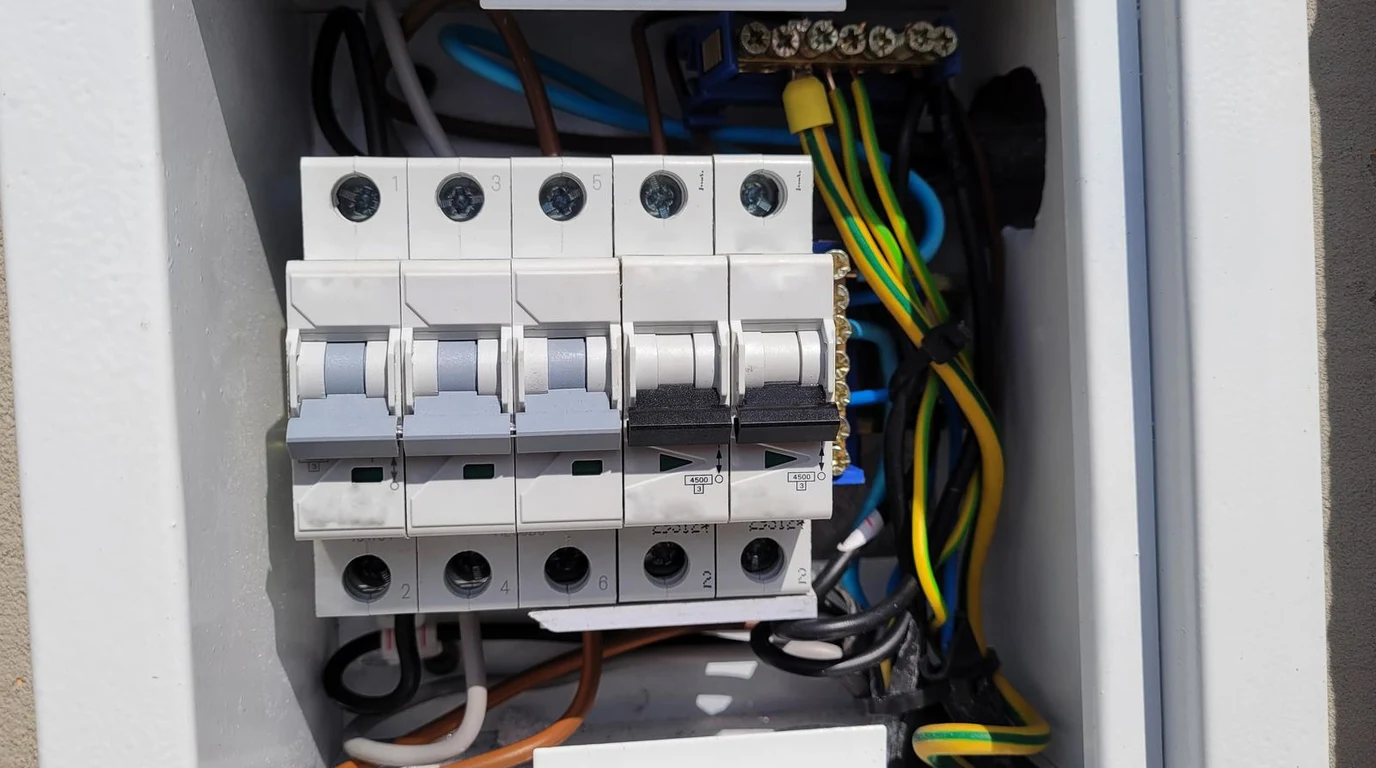
For millions of homeowners in 2026, the ambitious dream of whole-home clean electrification—installing a cold-climate heat pump, an induction range, a Level 2 EV charger, and a solar battery backup system—inevitably crashes into an unyielding electrical bottleneck: the 100-amp or 150-amp electrical service panel.
Under traditional National Electrical Code (NEC Article 220) load calculation formulas, adding an electric vehicle charger (40A continuous) and a whole-home heat pump (30A) to an existing 100A home service triggers an immediate mathematical violation. When an electrical contractor visits, their default quotation is predictably staggering: “You need a 200A service upgrade. We have to dig a trench to the utility pole, replace the meter base, pay the utility engineering fee, and rewire your main panel. That will be $4,500 to $8,500, and the utility company won’t schedule the grid transformer upgrade for another six to nine months.”
That $6,000 utility upgrade delay kills clean energy adoption in its tracks. But in 2026, you do not need to upgrade your utility service to electrify your home. By deploying modern smart electrical panels and dynamic load management controllers, homeowners can safely add an EV, a heat pump, and battery storage to an existing 100A or 150A panel without spending a single dollar on utility transformer upgrades. The two dominant market contenders are SPAN Panel and Lumin Smart Panel. This forensic engineering and ROI audit compares SPAN’s complete panel replacement against Lumin’s modular retrofit architecture.
- Utility Upgrade Cost Avoidance: Deploying dynamic load shedding eliminates the need for 200A utility service upgrades, saving homeowners an average of $4,850 in utility trenching, permits, and engineering delays.
- SPAN Architectural Footprint: SPAN completely replaces your existing breaker box with a sleek, 32-circuit relay-driven computer panel ($3,500 equipment + $2,500 labor), delivering circuit-level metering and automated microsecond load shedding.
- Lumin Modular Advantage: Lumin installs as an external companion subpanel wired to your existing breaker box ($1,850 equipment + $1,200 labor), controlling up to 12 high-draw 240V circuits without tearing out existing wiring or breaking utility meter seals.
How Does a Smart Panel Prevent a 200A Service Upgrade?
Traditional electrical panel design is static and “dumb.” When an electrical inspector evaluates your home’s capacity, they calculate the theoretical worst-case scenario: assuming every burner on your stove, your clothes dryer, your water heater, your air conditioner, and your car charger are all running at maximum power simultaneously. In the real world, this catastrophic coincidence virtually never happens. Your clothes dryer runs for 45 minutes; your EV charges at 2:00 AM while you sleep; your heat pump cycles intermittently.
Under NEC Article 750 (Energy Management Systems), the electrical code officially recognizes active digital load control. If a smart panel is certified to monitor total service entrance current and automatically throttle or shed non-essential loads before the main breaker reaches 80% continuous capacity, the inspector allows you to connect more electrical appliances than the physical 100A rating would normally permit.
When you plug in your electric car at 6:00 PM, a smart panel might initially permit full 48A charging. But at 6:30 PM, when you turn on an induction range and your heat pump kicks on, the smart panel instantly throttles EV charging down to 16A (or pauses it entirely). Once dinner is cooked and the stove shuts off, EV charging resumes at full speed. Your home never trips the 100A main breaker, you never notice an interruption, and you completely avoid paying the utility company thousands of dollars for thicker overhead service lines.
SPAN vs. Lumin Smart Panel: Engineering & Financial Matrix
The matrix below provides a detailed comparison between a complete SPAN panel replacement and a Lumin Smart Panel companion retrofit:
| Engineering & Financial Vector | SPAN Smart Electrical Panel | Lumin Smart Panel (Companion Retrofit) | Forensic Decision Factor |
|---|---|---|---|
| Installation Architecture | Full main panel replacement (32 controllable circuits) | Companion retrofit subpanel (6 to 12 controllable circuits) | Lumin preserves existing breaker box; SPAN replaces it |
| Hardware Equipment Cost | $3,500 – $4,000 (MSRP) | $1,850 – $2,200 (MSRP) | Lumin hardware is ~45% less expensive |
| Electrician Installation Labor | $2,000 – $3,500 (Full rewiring of all home home circuits) | $800 – $1,400 (Wired as a subpanel in 3 to 4 hours) | Lumin cuts electrical labor costs by over 60% |
| Total Installed Cost | $5,500 – $7,500 | $2,650 – $3,600 | Lumin saves $2,850 to $3,900 net out-of-pocket |
| Circuit-Level Control Depth | 100% of circuits in the home monitored and switchable | Only targeted heavy loads (EV, heat pump, dryer, stove) | SPAN controls everything; Lumin controls heavy loads |
| Battery Outage Extension | Dynamically sheds lighting, outlets, and AC via app | Automated shedding of high-draw 240V appliances | Both extend battery life during blackouts by 40%–60% |
When to Choose SPAN vs. Lumin
The decision between SPAN and Lumin comes down to the condition of your existing electrical service panel and your budget:
- Choose SPAN if: Your existing 100A breaker box is physically damaged, obsolete (such as a hazardous Federal Pacific or Zinsco panel), out of physical breaker slots, or located in an area where you want a showcase, modern architectural look. If you must replace your main electrical panel anyway, paying the incremental premium for SPAN gives you complete whole-home circuit control and seamless battery integration.
- Choose Lumin if: Your existing 100A or 150A electrical panel is modern, in good physical condition (e.g., Square D QO or Siemens), but simply lacks capacity under NEC load calculations to add an EV charger and heat pump. Lumin installs beside your existing panel in half a day without disturbing your main service entrance, saving you nearly $3,500 compared to a full panel replacement.
The 4:00 PM Actionable Implementation Playbook
If you are staring at an expensive 200A service upgrade quote from an electrician, execute this 4-step smart electrification roadmap:
- Request an NEC Article 220 Load Calculation with NEC 750 EMS Credits: Challenge your electrical contractor to incorporate dynamic energy management into their permit submission. Most jurisdictions permit smart load shedding to satisfy panel capacity rules without utility upgrades.
- Leverage Inflation Reduction Act (IRA) 25C Tax Credits: Under the Energy Efficient Home Improvement Credit, qualified smart electrical panel upgrades qualify for a **30% federal tax credit up to $600**, further offsetting hardware costs.
- Map Out Your Heavy 240V Appliance Priorities: Identify your top four highest-draw circuits: (1) EV Charger, (2) Heat Pump Auxiliary Heat, (3) Electric Clothes Dryer, and (4) Water Heater. In a Lumin installation, wire only these four circuits through the smart controller to maximize savings.
- Establish Time-of-Use (TOU) Automated Shedding: Configure your smart panel app to lock out high-draw appliances during your utility’s peak tariff hours (e.g., 4:00 PM to 9:00 PM), automatically shifting heavy power usage to off-peak rates.
Paying a utility company $6,000 and waiting nine months for a 200A service upgrade is a waste of time and capital. Smart panels like SPAN and Lumin solve home electrification through intelligent software rather than brute-force copper. If your panel is obsolete, install SPAN; if your panel is sound, install Lumin and pocket the $3,500 difference.